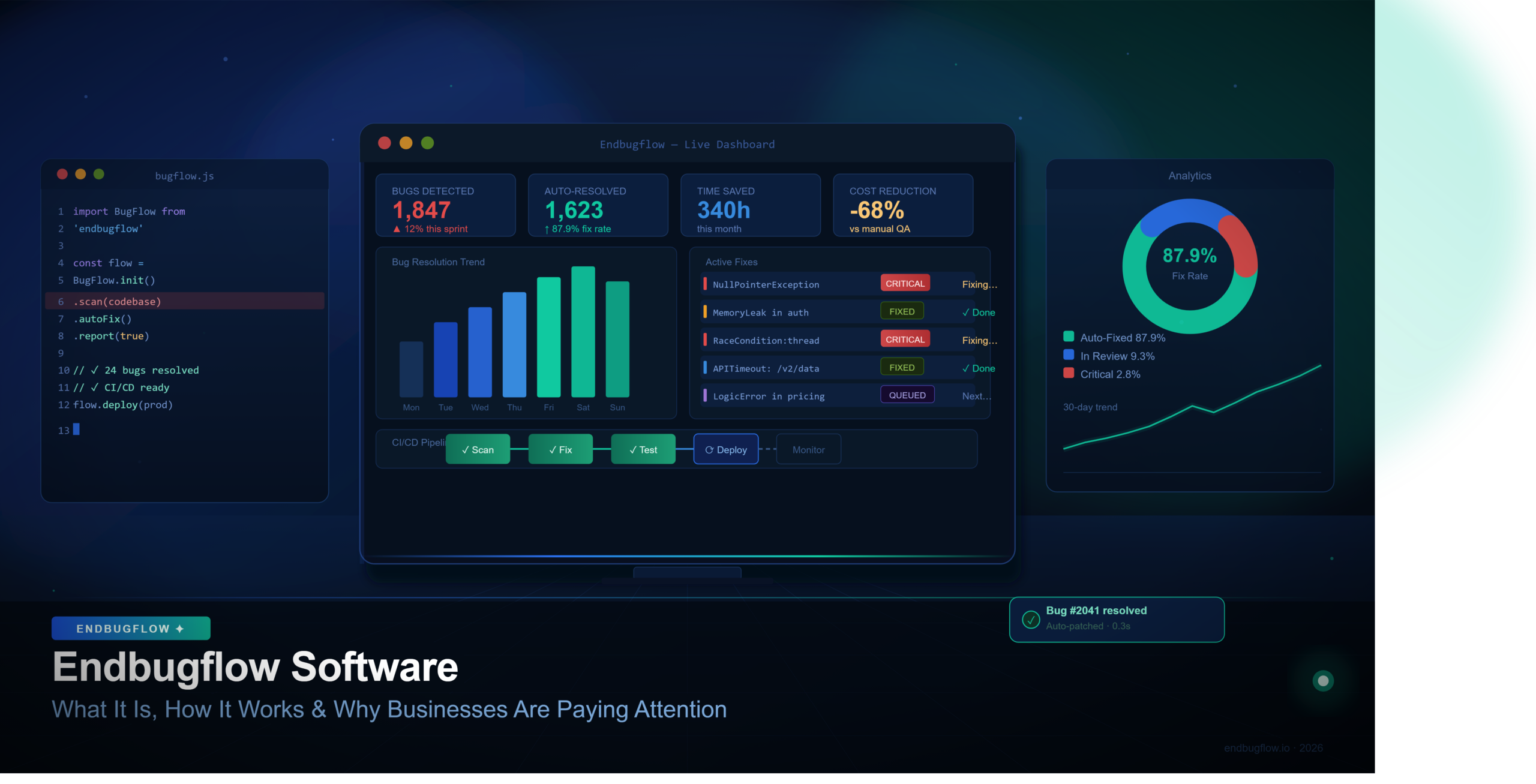
Understanding Endbugflow Software in a Modern Digital Environment
Software development has become increasingly complex. Applications are expected to perform flawlessly across devices, operating systems, browsers, cloud environments, and user scenarios. At the same time, organizations face pressure to release updates faster than ever before.
Within this environment, software testing, debugging, workflow management, and issue tracking have evolved from secondary tasks into mission-critical processes.
This is where interest in Endbugflow Software has emerged.
Many users search for Endbugflow Software because they encounter the name in technical discussions, software management conversations, development workflows, or business technology research. Yet there is often confusion about what the software actually does, who it serves, and why it matters.
Understanding the role of debugging and workflow-oriented platforms helps explain the growing attention around Endbugflow Software and similar solutions.
Organizations no longer judge software solely by features. Reliability, stability, security, and user experience have become equally important. A single unresolved bug can affect customer satisfaction, operational efficiency, revenue generation, and brand reputation.
As a result, businesses increasingly seek systems that help teams identify issues quickly, organize development processes, streamline communication, and improve release quality.
Endbugflow Software is frequently associated with these objectives.
This guide examines Endbugflow Software in depth, including its purpose, potential applications, workflow benefits, business value, implementation considerations, and best practices for maximizing results.
What Is Endbugflow Software?
Endbugflow Software can be understood as a software workflow and bug-management solution designed to support the identification, tracking, resolution, and management of technical issues throughout the software development lifecycle.
The concept combines two critical areas:
- Bug detection and tracking
- Workflow management and process optimization
Rather than treating software defects as isolated problems, platforms in this category aim to integrate issue management directly into development operations.
The name itself suggests a focus on:
- Managing software bugs efficiently
- Creating structured workflows
- Improving development visibility
- Reducing resolution time
- Enhancing team collaboration
For organizations managing complex applications, such capabilities can significantly improve productivity and software quality.
Why Bug Management Matters More Than Ever
Software systems have become interconnected ecosystems rather than standalone products.
Modern applications often involve:
- Cloud infrastructure
- APIs
- Mobile apps
- Web platforms
- Databases
- Third-party integrations
- Artificial intelligence services
Every additional layer introduces potential failure points.
Without structured bug management, teams may experience:
| Challenge | Impact |
|---|---|
| Missed defects | Reduced software quality |
| Poor communication | Delayed releases |
| Duplicate issue reports | Wasted resources |
| Lack of visibility | Management uncertainty |
| Slow debugging | Increased costs |
| Unclear priorities | Development bottlenecks |
Endbugflow Software addresses these challenges by centralizing issue tracking and workflow control.
Core Functions of Endbugflow Software
While implementations may vary, most workflow-based debugging platforms include several essential functions.
1. Bug Reporting
Effective issue management begins with accurate reporting.
Users, testers, developers, and support teams can submit reports containing:
- Error descriptions
- Screenshots
- Logs
- Reproduction steps
- Severity ratings
- Device information
Comprehensive reporting reduces ambiguity and accelerates troubleshooting.
2. Issue Tracking
After a bug is reported, tracking becomes critical.
A robust workflow system allows teams to monitor:
- Open issues
- In-progress fixes
- Resolved bugs
- Verification status
- Release schedules
This visibility prevents important problems from being overlooked.
3. Workflow Automation
One of the most valuable features of modern software management platforms is automation.
Examples include:
- Automatic ticket assignment
- Priority escalation
- Notification workflows
- Status updates
- Approval routing
Automation minimizes administrative work and allows technical teams to focus on problem-solving.
4. Team Collaboration
Software quality is rarely the responsibility of a single individual.
Endbugflow Software can facilitate collaboration among:
- Developers
- QA engineers
- Product managers
- Customer support teams
- Project managers
- Executive stakeholders
Centralized communication reduces misunderstandings and accelerates issue resolution.
5. Analytics and Reporting
Organizations increasingly rely on data-driven decisions.
Analytics modules may provide insights into:
- Average resolution times
- Defect frequency
- Team productivity
- Release quality
- Risk areas
- Development trends
These metrics help leadership identify opportunities for improvement.
How Endbugflow Software Fits Into the Software Development Lifecycle
To understand its business value, it helps to view the platform within a complete development cycle.
Planning Phase
Teams define:
- Requirements
- Project scope
- Features
- Release objectives
Workflow systems ensure planning activities remain organized.
Development Phase
Developers create and modify code.
As issues arise, bugs can be documented immediately rather than relying on informal communication channels.
Testing Phase
QA teams identify defects through:
- Functional testing
- Integration testing
- Security testing
- Performance testing
- User acceptance testing
Endbugflow Software becomes a central repository for discovered issues.
Release Phase
Before deployment, teams verify:
- Critical bugs are resolved
- Risks are minimized
- Release standards are met
Workflow visibility improves confidence in production readiness.
Maintenance Phase
After deployment, user feedback and operational monitoring often reveal additional issues.
Structured issue management supports continuous improvement.
Key Benefits of Endbugflow Software
Organizations invest in workflow-driven debugging platforms because the advantages extend beyond bug fixing.
Faster Resolution Times
Centralized information reduces investigation delays.
Developers spend less time locating issue details and more time implementing solutions.
Improved Product Quality
Consistent issue tracking ensures defects are addressed systematically.
This contributes to:
- Better reliability
- Higher customer satisfaction
- Fewer production incidents
Greater Team Accountability
Every issue receives ownership.
Managers can see:
- Who is responsible
- Current status
- Deadlines
- Progress updates
Transparency improves execution.
Better Resource Allocation
Data-driven reporting helps leadership prioritize work based on business impact.
Resources can be directed toward:
- High-severity issues
- Customer-facing problems
- Revenue-related functionality
Reduced Operational Costs
Software defects become increasingly expensive the longer they remain unresolved.
Early detection and resolution reduce:
- Support expenses
- Downtime costs
- Emergency development efforts
Industries That Can Benefit from Endbugflow Software
Although software companies are obvious users, many industries benefit from structured debugging workflows.
Technology Companies
Software vendors use issue-tracking systems to maintain product quality and accelerate releases.
Financial Services
Banks and fintech organizations require reliable software due to regulatory and security demands.
Even minor defects can create significant risks.
Healthcare
Healthcare systems depend on accurate software operations.
Workflow-based issue management helps reduce operational errors and compliance concerns.
E-Commerce
Online retailers rely heavily on application stability.
Problems affecting checkout processes, payments, or inventory systems can directly impact revenue.
Manufacturing
Manufacturers increasingly use software-driven automation systems.
Bug management contributes to operational continuity and production efficiency.
Practical Example: How Endbugflow Software Improves Operations
Imagine a SaaS company with:
- 50 developers
- 15 QA specialists
- Multiple product teams
- Weekly software releases
Before implementing structured bug workflow management:
Problems
- Email-based bug reporting
- Duplicate issue submissions
- Missed deadlines
- Poor visibility
Average bug resolution time:
12 days
After adopting a workflow-oriented debugging platform:
Improvements
- Automated assignments
- Centralized tracking
- Standardized reporting
- Real-time dashboards
Average bug resolution time:
4 days
Customer complaints decline while release confidence increases.
This example illustrates why workflow-driven issue management platforms have become standard across many technology organizations.
Common Misconceptions About Endbugflow Software
Several misunderstandings often arise when discussing debugging and workflow tools.
Myth 1: It’s Only for Developers
Reality:
Project managers, QA teams, support departments, and executives often use workflow systems extensively.
Myth 2: Bug Tracking Slows Development
Reality:
Proper tracking reduces chaos and prevents recurring issues.
This often accelerates development.
Myth 3: Small Businesses Don’t Need It
Reality:
Smaller organizations frequently benefit even more because resources are limited and efficiency matters greatly.
Myth 4: Manual Tracking Is Enough
Reality:
As projects grow, spreadsheets and email threads become difficult to manage effectively.
Automation provides scalability.
Expert Analysis: Why Workflow-Based Debugging Is Becoming a Competitive Advantage
Historically, bug tracking was viewed as a technical necessity.
Today, it represents a strategic business capability.
The most successful organizations recognize that software quality affects:
- Customer trust
- Brand reputation
- Revenue growth
- Operational resilience
- Competitive positioning
Companies that resolve issues quickly often outperform competitors that struggle with fragmented development processes.
The shift toward DevOps, Agile methodologies, and continuous deployment further increases the value of integrated workflow systems.
Businesses are moving away from reactive issue management and toward proactive quality engineering.
Endbugflow Software aligns with this broader industry direction.
Best Practices for Using Endbugflow Software Effectively
Technology alone does not guarantee success.
Organizations should follow proven implementation practices.
Standardize Bug Reporting
Require consistent information such as:
- Reproduction steps
- Screenshots
- Severity levels
- Environment details
Standardization improves debugging accuracy.
Define Priority Levels
Not every bug deserves the same urgency.
Common categories include:
| Priority | Description |
| Critical | Business operations affected |
| High | Major functionality impacted |
| Medium | Noticeable but manageable issue |
| Low | Minor inconvenience |
| Enhancement | Improvement request |
Automate Repetitive Tasks
Workflow automation should handle:
- Notifications
- Assignments
- Escalations
- Status changes
This reduces administrative overhead.
Monitor Performance Metrics
Track indicators such as:
- Mean time to resolution (MTTR)
- Bug recurrence rate
- Backlog growth
- Release stability
Measurement drives improvement.
Encourage Cross-Team Collaboration
Software quality is a shared responsibility.
Encouraging communication between development, QA, support, and management teams strengthens outcomes.
How Endbugflow Software Supports Agile and DevOps Teams
Modern development methodologies emphasize speed without sacrificing quality.
Endbugflow Software supports Agile practices by enabling:
- Sprint planning
- Backlog management
- Continuous feedback
- Rapid issue resolution
For DevOps teams, integration with deployment pipelines can improve visibility throughout development and operations.
The result is a smoother path from code creation to production deployment.
Choosing the Right Workflow and Bug Management Platform
Organizations evaluating Endbugflow Software or similar solutions should consider several factors.
Ease of Use
Complex systems often suffer from poor adoption rates.
Scalability
The platform should grow alongside organizational needs.
Integration Capabilities
Compatibility with:
- Version control systems
- Testing tools
- CI/CD pipelines
- Communication platforms
is essential.
Reporting Features
Strong analytics improve decision-making.
Security
Protection of development data and project information is critical.
The Future of Bug Management and Workflow Automation
Software development continues to evolve rapidly.
Several trends are shaping the next generation of debugging platforms:
Artificial Intelligence
AI-assisted diagnostics can identify root causes faster.
Predictive Analytics
Systems may anticipate defects before deployment.
Automated Testing Integration
Workflow platforms increasingly connect directly with testing environments.
Enhanced Collaboration
Remote and distributed teams require stronger communication capabilities.
Real-Time Monitoring
Continuous monitoring creates faster feedback loops between users and development teams.
These trends suggest that workflow-driven debugging solutions will become even more important in the years ahead.
Frequently Asked Questions (FAQ)
What is Endbugflow Software used for?
Endbugflow Software is generally associated with bug tracking, workflow management, issue resolution, team collaboration, and software quality improvement throughout the development lifecycle.
Who can benefit from Endbugflow Software?
Developers, QA engineers, project managers, support teams, product leaders, and business stakeholders can all benefit from structured issue management workflows.
Does Endbugflow Software help improve software quality?
Yes. Centralized bug reporting, tracking, prioritization, and collaboration help organizations identify and resolve defects more effectively.
Is Endbugflow Software suitable for small businesses?
Absolutely. Smaller teams often gain significant efficiency improvements from organized workflows and automated issue management.
How does bug tracking support Agile development?
Bug tracking improves sprint planning, backlog prioritization, issue visibility, and continuous improvement processes within Agile environments.
Can Endbugflow Software reduce development costs?
By identifying and resolving issues earlier, organizations can reduce support costs, downtime expenses, and emergency remediation efforts.
What features should businesses look for in a workflow management platform?
Important features include issue tracking, automation, reporting, integrations, collaboration tools, scalability, and security controls.
Does workflow automation replace developers?
No. Automation handles repetitive administrative tasks while developers focus on solving technical problems and building new functionality.
Why is bug management considered a business issue rather than only a technical issue?
Software quality directly influences customer satisfaction, revenue, operational efficiency, and brand reputation, making bug management a strategic business concern.
What trends are shaping the future of software workflow management?
Artificial intelligence, predictive analytics, automated testing integration, real-time monitoring, and advanced collaboration capabilities are driving innovation in the field.
Final Thoughts
Endbugflow Software represents a broader shift toward structured, data-driven software quality management. As applications become more complex and customer expectations continue to rise, organizations need more than simple bug lists. They need systems that connect reporting, collaboration, prioritization, automation, and analytics into a unified workflow.
Whether used by startups building their first product or enterprises managing large-scale digital ecosystems, workflow-centered debugging platforms help transform software maintenance from a reactive process into a strategic advantage. The organizations that consistently deliver reliable, high-quality software are often the ones that treat issue management not as an afterthought, but as a core component of operational excellence.
About the Author