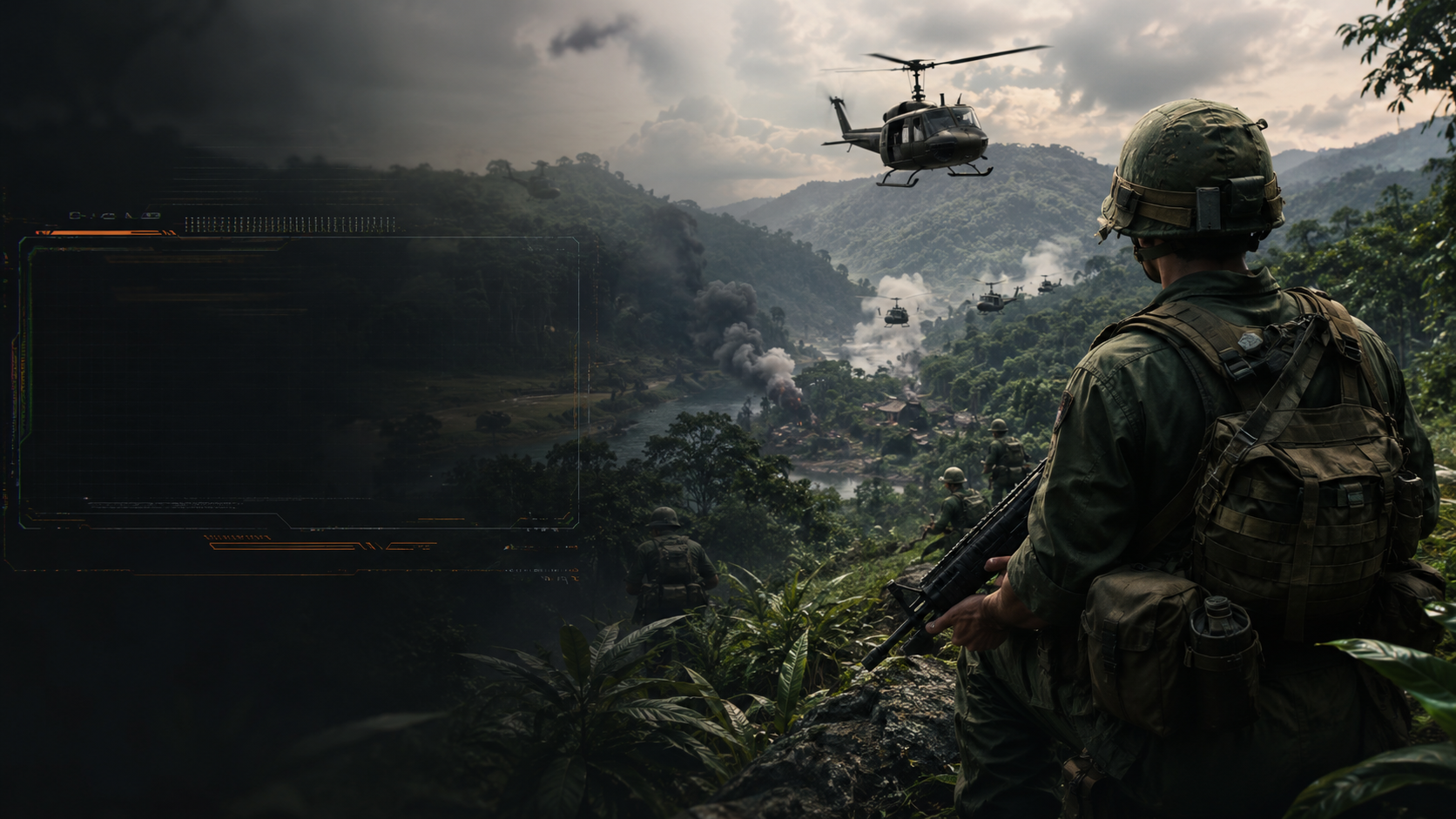
Introduction
Few tactical shooters have managed to build the kind of dedicated following that Hell Let Loose enjoys. The combination of large-scale warfare, brutal realism, squad-based coordination, and cinematic battles helped it stand apart from traditional run-and-gun shooters. So when rumors and announcements surrounding Hell Let Loose: Vietnam began circulating, veterans of the original game and military history enthusiasts immediately started asking the same questions:
- Is Hell Let Loose moving beyond World War II?
- Will Vietnam-era warfare fit the franchise’s realistic style?
- What changes can players expect compared to the original?
- Could this become the definitive Vietnam War tactical shooter?
Those questions matter because the Vietnam War offers something fundamentally different from the battlefields of Normandy, Stalingrad, or El Alamein. Dense jungles, asymmetric combat, guerrilla tactics, ambushes, helicopters, and psychological warfare create an entirely new battlefield experience.
For years, the genre has lacked a modern, large-scale Vietnam title capable of delivering authenticity without sacrificing tactical depth. Many players remember classics such as Battlefield Vietnam, Rising Storm 2: Vietnam, and Vietcong, but no recent title has attempted to combine historical realism with massive coordinated warfare in quite the same way.
Hell Let Loose: Vietnam represents an intriguing evolution of the franchise. Rather than simply changing weapons and uniforms, it has the potential to redefine how large-scale tactical shooters portray one of the most complex conflicts in modern military history.
This guide examines everything currently known, expected features, gameplay possibilities, historical context, and what fans should realistically expect from the next chapter in the series.
What Is Hell Let Loose: Vietnam?
Hell Let Loose: Vietnam is an upcoming tactical first-person shooter set during the Vietnam War. It builds upon the large-scale warfare systems that made Hell Let Loose successful while transporting players into a completely different era of combat.
Like its predecessor, the game emphasizes:
- Teamwork over individual kill counts
- Communication between squads
- Realistic gunplay
- Strategic resource management
- Combined arms warfare
- Massive multiplayer battles
Instead of World War II fronts, players will likely experience:
- Jungle operations
- Search-and-destroy missions
- Rice paddy engagements
- River warfare
- Helicopter insertions
- Guerrilla ambushes
- Tunnel networks and hidden positions
The Vietnam setting changes not just the visual atmosphere but the entire philosophy of combat.
Why Vietnam Is a Perfect Setting for Hell Let Loose
Many shooters portray Vietnam as chaos. In reality, the conflict involved intricate tactics and constant uncertainty.
That uncertainty aligns remarkably well with the design philosophy of Hell Let Loose.
Visibility Becomes a Weapon
Unlike European battlefields with open sightlines, Vietnam’s terrain forces players to fight through:
- Dense jungle canopies
- Tall grass
- Bamboo forests
- Villages and rice fields
- Rivers and swamps
Enemies may remain invisible until they fire.
Every movement carries risk.
Ambush Warfare Matters More
World War II battles often involved fixed fronts.
Vietnam warfare was far less predictable.
Players could face:
- Hidden machine gun nests
- Booby traps
- Flanking attacks
- Tunnel systems
- Hit-and-run tactics
This creates tension rarely seen in modern shooters.
Vertical Mobility Changes Combat
Helicopters transformed warfare during the Vietnam era.
Possible additions include:
| Vehicle Type | Battlefield Role |
|---|---|
| UH-1 Huey | Troop transport |
| OH-6 Loach | Reconnaissance |
| CH-47 Chinook | Supply transport |
| Gunships | Air support |
| River Patrol Boats | Water operations |
These vehicles introduce mobility unseen in the original Hell Let Loose.
Gameplay Features Players Expect
Although full details continue to evolve, fans generally expect several key systems.
Massive Team Battles
The hallmark 50v50 structure could return.
Large matches encourage:
- Organized squads
- Chain-of-command systems
- Dedicated officers
- Logistics units
- Recon teams
- Support classes
Success depends on cooperation rather than individual heroics.
Authentic Weapons
Vietnam introduced iconic firearms that differ dramatically from WWII arsenals.
American Weapons
- M16A1
- M14
- M60 machine gun
- M79 grenade launcher
- M1911 pistol
- Claymore mines
North Vietnamese and Viet Cong Weapons
- AK-47
- SKS rifle
- RPD machine gun
- RPG launchers
- PPSh-41
- Mosin-Nagant rifles
Weapon handling would likely emphasize realism rather than arcade balance.
Squad Communication
Communication remains the heart of the series.
Players may rely on:
- Proximity chat
- Squad channels
- Commander communication
- Artillery coordination
- Recon reports
Poor communication usually leads to defeat.
How Vietnam Warfare Changes Strategy
The original Hell Let Loose often rewards holding lines.
Vietnam changes that formula.
Mobility Over Frontlines
There were rarely static frontlines.
Combat zones shifted constantly.
Squads might:
- Patrol sectors
- Establish temporary bases
- Defend landing zones
- Conduct sweeps
- Search villages
Flexibility becomes essential.
Logistics Become More Dangerous
Supplies are critical.
Potential logistics objectives include:
- Ammunition transport
- Helicopter resupply
- Forward operating bases
- River routes
Disrupting enemy supply chains may become as important as direct combat.
Recon Gains Greater Importance
Recon teams could become the most valuable units on the battlefield.
Responsibilities might include:
- Spotting enemy camps
- Marking ambushes
- Calling artillery
- Tracking troop movement
Intelligence wins battles.
Historical Authenticity and Challenges
One reason players admire Hell Let Loose is its dedication to realism.
Vietnam, however, presents unique challenges.
Multiple Factions
Possible playable forces include:
United States Army
Conventional firepower and mobility.
United States Marines
Aggressive infantry operations.
South Vietnamese Forces (ARVN)
Local allies with varied equipment.
North Vietnamese Army (NVA)
Highly organized conventional troops.
Viet Cong
Guerrilla specialists relying on concealment and traps.
Each faction possesses different strengths.
Potential Maps
Vietnam offers tremendous variety.
Hue City
Urban warfare during the Tet Offensive.
Khe Sanh
Defensive combat around a remote base.
Ia Drang Valley
Large-scale battles and helicopter assaults.
Mekong Delta
River patrol operations.
Hamburger Hill
Difficult jungle engagements.
Da Nang
Combined operations and coastal fighting.
Each location provides unique tactical challenges.
The Importance of Atmosphere
Vietnam War shooters succeed when they create immersion.
Atmosphere comes from more than graphics.
Elements likely to matter include:
Sound Design
- Helicopter blades overhead
- Distant artillery
- Jungle wildlife
- Rainstorms
- Echoing gunfire
Environmental Effects
- Fog
- Monsoon weather
- Smoke
- Burning villages
- Dense vegetation
Music
Period-inspired audio can enhance authenticity without overwhelming realism.
How Hell Let Loose: Vietnam Could Differ From Rising Storm 2
Many players compare the project to Rising Storm 2: Vietnam.
| Feature | Rising Storm 2 | Hell Let Loose: Vietnam |
|---|---|---|
| Match Size | Smaller | Potentially 100 players |
| Logistics | Limited | Extensive |
| Commander Role | Moderate | Highly strategic |
| Realism | High | Very high |
| Vehicle Integration | Moderate | Potentially expanded |
| Team Coordination | Important | Essential |
| Frontline System | Dynamic | Sector-based |
The two games may appeal to similar audiences while offering different experiences.
Expert Analysis: Why This Setting Matters
Vietnam warfare wasn’t simply about firepower.
It was about uncertainty.
That uncertainty creates something modern shooters often lack:
Tension.
Players rarely know:
- Where enemies are hiding.
- Whether an area is safe.
- If an ambush is waiting ahead.
- Whether artillery support will arrive in time.
These factors naturally produce memorable stories—the kind that Hell Let Loose players often share long after matches end.
The setting encourages:
- Patience
- Communication
- Situational awareness
- Leadership
- Adaptability
Those qualities fit the franchise remarkably well.
Common Misconceptions
“Vietnam means constant jungle combat.”
Not entirely.
The war included:
- Urban battles
- Mountains
- River operations
- Villages
- Open fields
Terrain diversity was enormous.
“American forces always had technological superiority.”
Technology helped, but terrain and guerrilla tactics often neutralized advantages.
“It will play exactly like World War II Hell Let Loose.”
The weapons, mobility, and battlefield philosophy differ so much that gameplay could feel substantially different.
“Helicopters will make infantry irrelevant.”
Helicopters provide mobility, but landing zones become prime targets.
Infantry remains central to success.
Tips for Future Players
Learn Communication Early
Use voice chat.
Call out:
- Enemy positions
- Ambushes
- Supply needs
- Vehicle sightings
Information wins battles.
Stay With Your Squad
Solo players often become easy targets.
Moving together improves:
- Survival
- Revives
- Firepower
- Situational awareness
Respect Concealment
The enemy may see you before you see them.
Avoid:
- Sprinting through open rice fields
- Silhouetting yourself on ridgelines
- Ignoring cover
Think Like a Soldier, Not an Action Hero
Success in Hell Let Loose rarely comes from kill streaks.
It comes from:
- Holding objectives
- Coordinating attacks
- Building spawn points
- Supporting teammates
Pros and Potential Concerns
| Strengths | Challenges |
|---|---|
| Unique setting | Balancing asymmetrical warfare |
| Strong immersion | Dense foliage optimization |
| Tactical depth | Helicopter implementation |
| Historical authenticity | Faction balance |
| Large-scale battles | Maintaining performance |
| Fresh experience | Learning curve |
Why Fans Are Excited
The tactical shooter genre has seen relatively few Vietnam-focused titles in recent years.
Players crave:
- Historical authenticity
- Team-oriented gameplay
- Large-scale battles
- Realistic combat
- Memorable stories
Hell Let Loose: Vietnam promises a combination rarely attempted in modern gaming.
If executed properly, it could become the spiritual successor to classics while introducing a new generation to one of history’s most complex conflicts.
Final Thoughts
Moving from World War II to Vietnam isn’t simply a cosmetic shift. It changes the nature of warfare itself.
Dense jungles replace open fields. Helicopters replace slow armored advances. Ambushes replace predictable frontlines. Information becomes as valuable as ammunition.
That combination aligns perfectly with the strengths that made Hell Let Loose successful. The franchise thrives on communication, tension, and realism, and few conflicts embody those qualities more than Vietnam.
Whether you’re a veteran commander with hundreds of hours in Hell Let Loose or someone searching for a realistic military shooter with depth and atmosphere, Hell Let Loose: Vietnam has the potential to become one of the most fascinating entries the genre has seen in years.
Frequently Asked Questions
Is Hell Let Loose: Vietnam officially announced?
Information and development details continue to evolve. Players should follow official announcements for confirmed release plans and features.
Will Hell Let Loose: Vietnam have 100-player battles?
Large-scale battles are expected because they are central to the franchise, though final player counts may vary.
Will helicopters be playable?
Helicopters are strongly associated with Vietnam warfare, making them one of the most anticipated features.
Which factions could appear in the game?
Possible factions include the United States Army, Marines, ARVN, North Vietnamese Army, and Viet Cong.
Will the game be realistic?
Realism has always been one of the defining traits of the Hell Let Loose franchise, so authenticity is expected to remain a priority.
How is it different from Rising Storm 2: Vietnam?
Hell Let Loose: Vietnam focuses more heavily on logistics, command structures, and massive team battles.
Will there be jungle maps only?
No. Vietnam-era combat occurred in cities, mountains, valleys, rivers, and villages, offering diverse environments.
Is Hell Let Loose: Vietnam suitable for casual players?
Newcomers can enjoy it, but communication and teamwork are essential. The experience rewards patience more than fast reflexes.
Why are tactical shooter fans interested in this setting?
Vietnam warfare naturally creates suspense, asymmetrical combat, and unforgettable squad-based encounters that fit the tactical shooter genre exceptionally well.
About the Author