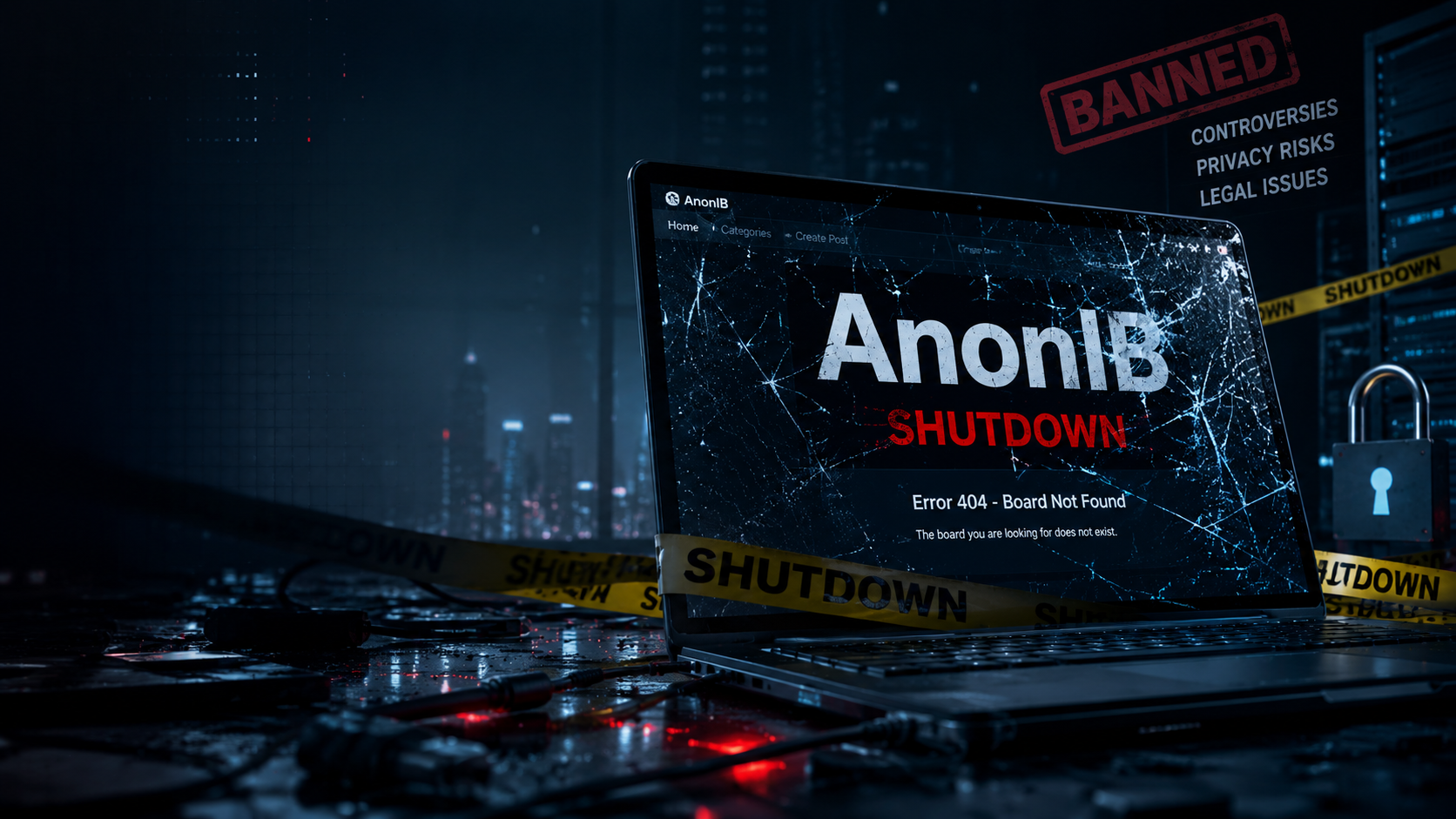
Introduction
Few websites have attracted as much controversy and public scrutiny as AnonIB. For some internet users, the name represents a forgotten corner of anonymous imageboard culture. For others, it symbolizes one of the darkest examples of how anonymity, weak moderation, and privacy violations can collide.
People searching for “AnonIB” often encounter confusion. Is the site still active? Was it shut down? Was it legal? Why did it become infamous? And why do discussions about AnonIB continue years after its decline?
The answers are complicated because AnonIB was never merely another message board. It became widely associated with non-consensual image sharing, revenge pornography, doxing, and online harassment. The controversy surrounding the platform sparked legal investigations, victim advocacy campaigns, and broader debates about privacy, digital ethics, and the responsibilities of internet platforms.
Understanding AnonIB matters for reasons that go beyond internet history. Its story illustrates how anonymous communities can evolve, how technology can be abused, and why digital privacy remains a growing concern.
This guide examines:
- What AnonIB was.
- How the platform worked.
- Why it became controversial.
- The legal issues surrounding it.
- Why authorities intervened.
- Whether the original site still exists.
- Lessons users can learn about online privacy.
What Was AnonIB?
AnonIB, short for Anonymous Image Board, was an image-sharing forum where users could post content without creating accounts.
Like other anonymous imageboards, its structure was simple:
- Topic-based boards.
- Threads created by users.
- Image uploads.
- Anonymous comments.
- Minimal user identities.
At first glance, the format resembled communities such as imageboard forums popularized during the early internet era. The lack of registration appealed to users seeking privacy and unrestricted discussions.
However, anonymity alone was not what made AnonIB infamous.
Over time, the platform became linked to:
- Revenge porn.
- Stolen photographs.
- Non-consensual intimate images.
- Doxing.
- Harassment campaigns.
- Requests for private photos of real individuals.
These issues transformed AnonIB from a niche forum into a highly controversial website.
Origins and Early Growth
AnonIB emerged during the rise of anonymous internet culture.
During the 2000s and early 2010s, imageboards became popular because they offered:
| Feature | Appeal |
|---|---|
| No accounts | Complete anonymity |
| Fast posting | Immediate discussions |
| Minimal moderation | Few restrictions |
| Image sharing | Community interaction |
| Thread-based format | Simple browsing |
The freedom attracted communities interested in:
- Memes.
- Photography.
- Discussions.
- Adult content.
- Regional communities.
Unfortunately, the same characteristics that encouraged openness also enabled abuse.
How AnonIB Worked
The site’s design was intentionally simple.
Board Categories
Users navigated through boards organized by:
- Geographic regions.
- Countries.
- States.
- Cities.
- Themes.
- Interests.
Some boards focused on specific locations, allowing users to discuss or request images related to people in those areas.
Anonymous Posting
No registration was required.
Users could:
- Open a board.
- Create a thread.
- Upload images.
- Add comments.
- Submit instantly.
This simplicity contributed to rapid content sharing.
Why Did AnonIB Become So Controversial?
The biggest reason was non-consensual image sharing.
Many threads allegedly contained:
- Private photographs.
- Revenge porn.
- Stolen images.
- Social media screenshots.
- Personal information.
Victims frequently reported finding:
- Their names.
- Schools.
- Instagram accounts.
- Workplaces.
- Phone numbers.
This practice, known as doxxing, exposed individuals to harassment and emotional distress.
The Problem With Anonymity
Anonymity itself isn’t inherently harmful.
Anonymous spaces can support:
- Free expression.
- Whistleblowing.
- Privacy protection.
- Open discussions.
Yet when moderation is weak, anonymity may also remove accountability.
Experts often describe this as the “online disinhibition effect”—people behave differently when their identities are hidden.
AnonIB became an example frequently cited in discussions about that phenomenon.
Revenge Porn and Privacy Violations
One of the most serious accusations against AnonIB involved the distribution of intimate images without consent.
Victims reported discovering photos that had originally been:
- Shared privately with partners.
- Stored on personal devices.
- Stolen through hacks.
- Circulated after breakups.
Community discussions across privacy forums reveal how emotionally devastating these experiences can be. Victims often describe feelings of anxiety, fear, shame, and loss of control.
How Personal Information Was Often Exposed
Beyond images, posts sometimes included:
- Real names.
- Social media profiles.
- University names.
- Locations.
- Workplace details.
This increased risks such as:
Harassment
Victims became targets for strangers.
Blackmail
Some individuals received threats.
Stalking
Public information enabled unwanted contact.
Emotional Trauma
Many described severe stress and humiliation.
Legal Issues Surrounding AnonIB
Whether a platform itself is “illegal” depends on jurisdiction and the content involved.
However, many activities associated with AnonIB may violate laws involving:
- Privacy rights.
- Revenge pornography statutes.
- Copyright infringement.
- Harassment.
- Doxxing.
- Distribution of illegal images.
Authorities in various countries increasingly focused on websites hosting such material.
Dutch Police Investigation and Shutdown
One of the most significant developments came when Dutch authorities investigated the platform.
Public pressure, victim campaigns, and legal scrutiny eventually led to actions against infrastructure associated with AnonIB. The platform experienced domain disruptions, investigations, and eventual decline.
These actions demonstrated that online anonymity does not necessarily guarantee immunity from legal consequences.
Why Mirror Sites Appeared
After shutdowns and domain losses, clone websites and mirror domains began emerging.
This pattern is common with controversial platforms.
Communities often attempt to:
- Rebuild archives.
- Create successor websites.
- Preserve old content.
- Maintain existing user bases.
However, researchers generally regard the original AnonIB network as effectively inactive.
Is AnonIB Still Active?
The Original Platform
Most experts consider the original platform effectively shut down.
Clone Websites
Various sites using similar names continue appearing.
Users should exercise caution because such sites may involve:
- Security risks.
- Malware.
- Fraud.
- Privacy concerns.
- Illegal content.
There is no widely recognized continuation that operates exactly like the original network.
Timeline of Major Events
| Year | Event |
|---|---|
| Early 2000s | Anonymous imageboard culture expands |
| Around 2011 | AnonIB gains popularity |
| 2014 | Associated with wider image leak discussions |
| 2017–2018 | Increased investigations and public criticism |
| 2018 | Dutch authorities intervene |
| 2019–2026 | Domain shutdowns and mirror sites emerge |
| Present | Original network largely considered inactive |
Expert Analysis: Why AnonIB Became a Case Study
Cybersecurity researchers and privacy advocates often point to AnonIB as evidence that technology itself is neutral.
Problems arise when:
- Incentives reward harmful behavior.
- Moderation fails.
- Accountability disappears.
- Users exploit anonymity.
The platform exposed tensions between:
| Value | Challenge |
|---|---|
| Privacy | Abuse prevention |
| Free speech | Harmful content |
| Anonymity | Accountability |
| Open communities | User safety |
These tensions continue to affect social media and online platforms today.
Lessons About Digital Privacy
Never Assume Images Stay Private Forever
Even trusted relationships can change.
Private images may be:
- Copied.
- Shared.
- Hacked.
- Stolen.
While victims are never responsible for violations committed against them, understanding digital risks can help reduce exposure.
Protect Metadata
Photos sometimes contain hidden information:
- GPS coordinates.
- Device details.
- Time stamps.
Removing metadata can improve privacy.
Limit Public Information
Oversharing on social media can make doxxing easier.
Consider restricting:
- Location data.
- School information.
- Workplaces.
- Family details.
Use Strong Account Security
Enable:
Strong passwords
Two-factor authentication
Device encryption
Private social profiles
Cloud security protections
Common Misconceptions About AnonIB
Myth 1: Anonymous Means Untraceable
Not necessarily.
Investigators can use:
- Server logs.
- IP addresses.
- Hosting records.
- Metadata.
Myth 2: Everything Posted Was Illegal
Not all content violated laws, but the platform became infamous because illegal and unethical material reportedly flourished there.
Myth 3: The Site Still Operates Normally
The original platform is widely considered defunct.
Myth 4: Victims Have No Options
Victims can pursue:
- Takedown requests.
- Legal remedies.
- Law enforcement assistance.
- Copyright claims.
- Search engine removals.
Community advice frequently emphasizes acting quickly and preserving evidence.
Practical Steps If Private Images Are Shared Without Consent
1. Preserve Evidence
Take screenshots and save URLs.
2. Avoid Contacting Posters
Direct confrontation may escalate harassment.
3. Report the Content
Contact:
- Platform operators.
- Hosting providers.
- Search engines.
4. Consult Legal Authorities
Many countries have laws addressing non-consensual intimate imagery.
5. Strengthen Online Accounts
Change passwords and enable multi-factor authentication.
Key Takeaways
| Topic | Summary |
|---|---|
| Meaning | Anonymous imageboard |
| Main feature | Anonymous image sharing |
| Major controversy | Non-consensual content |
| Legal issues | Privacy and revenge porn concerns |
| Investigations | Dutch police intervention |
| Current status | Original platform largely inactive |
| Legacy | Case study in online privacy and accountability |
Frequently Asked Questions
What does AnonIB stand for?
AnonIB means Anonymous Image Board, a platform where users could post images and comments without creating accounts.
Why did AnonIB become controversial?
The platform became associated with revenge porn, doxxing, and non-consensual image sharing.
Was AnonIB shut down?
The original network is widely considered inactive after investigations and legal pressure.
Is AnonIB still online?
Various clones and mirror sites exist, but the original platform no longer operates in the same form.
Was using AnonIB illegal?
Legality depended on jurisdiction and the content involved. Activities such as sharing private images without consent may violate laws in many countries.
Why did authorities investigate AnonIB?
Investigations were driven by concerns involving privacy violations and reports of harmful content.
Can anonymous users be identified?
In some circumstances, investigators can trace activity using technical and legal methods.
What can victims do if their images are posted online?
Victims may preserve evidence, seek legal advice, submit takedown requests, and report the material to relevant authorities. Community discussions often recommend acting quickly and documenting everything.
The story of AnonIB remains one of the internet’s clearest reminders that anonymity can empower expression, but without accountability and responsible moderation, it can also enable serious harm. Understanding that history helps explain why privacy, consent, and digital safety have become central issues across the modern web.
About the Author



2 thoughts on “AnonIB Explained: History, Controversies, Shutdown, Privacy Risks, and What Remains Today”