Introduction
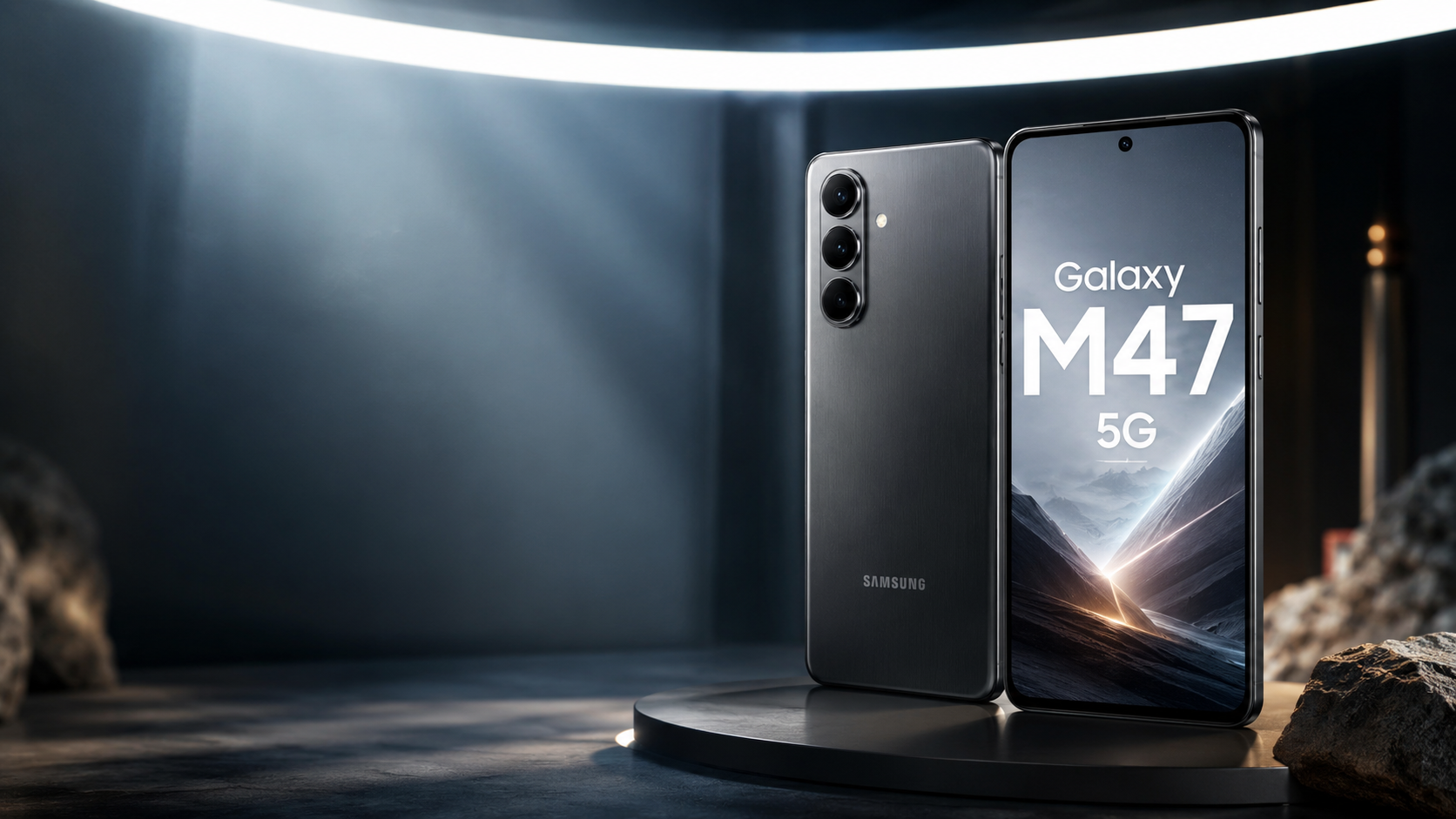
Samsung’s M-series has always been about one thing: giving you the most phone for your money, even if it means trimming a few corners elsewhere. The Samsung Galaxy M47 continues that tradition, and it launched in India on June 29, 2026, going on sale from July 4 as part of the Amazon Prime Day event.
If you’re comparing this against the outgoing Galaxy M36 or wondering whether it’s worth the jump over a Galaxy A-series phone, this guide walks through the display, chipset, cameras, battery, and software so you can decide with real numbers instead of marketing copy.
Here’s what you’ll find below: full specifications, a breakdown of what’s genuinely good, what’s disappointing, how it stacks up against rivals, pricing across every variant, and answers to the questions people actually search for before buying.
Table of Contents
- Samsung Galaxy M47 at a Glance
- Design and Build Quality
- Display
- Performance: Snapdragon 6 Gen 3
- Camera System
- Battery and Charging
- Software and Update Policy
- Connectivity and Features
- Price in India: All Variants
- Galaxy M47 vs Competitors
- Pros and Cons
- Should You Buy It?
- Frequently Asked Questions
Samsung Galaxy M47 at a Glance {#glance}
The Galaxy M47 5G sits in the ₹23,000–₹34,000 bracket in India and replaces the Galaxy M36 as Samsung’s mid-range battery-and-durability flagship. Here’s the core spec sheet before we dig into each area:
| Spec | Details |
|---|---|
| Display | 6.7″ Super AMOLED, 120Hz, FHD+ (1080×2340), Gorilla Glass Victus+ |
| Chipset | Qualcomm Snapdragon 6 Gen 3 (4nm), Adreno 710 GPU |
| RAM/Storage | 6GB/128GB, 8GB/128GB, 8GB/256GB (LPDDR5X, UFS 3.1) |
| Rear Cameras | 50MP OIS primary + 5MP ultra-wide + 2MP macro |
| Front Camera | 12MP |
| Battery | 6,000mAh with 45W wired and bypass charging |
| OS | Android 16, One UI 8.5, promised 6 OS upgrades + 6 years security patches |
| Build | IP64 rated, plastic frame, glass front and back |
| Price | Starts at ₹22,999 (launch offer) / ₹25,999 (regular) |
Design and Build Quality {#design}
The Galaxy M47 keeps Samsung’s now-familiar M-series look: a vertical camera module on the back, flat sides, and a fairly compact footprint for a 6.7-inch phone. It measures 162.4 x 78.2 x 7.8mm and weighs around 200-206g depending on the source.
What stands out: both the front and back are protected by Corning Gorilla Glass Victus+, which is unusual at this price point. Most phones under ₹30,000 use a plastic back or an older glass generation, so this is a genuine durability upgrade.
The phone carries an IP64 rating, meaning it’s dust-tight and can handle splashes, but it’s not built for submersion. Samsung also claims drop resistance up to 2 meters.
Where it falls short:
- The frame is plastic, not metal or glass, which slightly undercuts the “premium” feel of the front and back glass.
- There’s no 3.5mm headphone jack, so you’ll need Bluetooth earphones or a USB-C adapter.
- At around 200g, it’s noticeably heavier than flagship-class phones in the same screen size.
Display {#display}
This is one of the phone’s strongest areas. The M47 uses a 6.7-inch Super AMOLED panel running at 120Hz, with FHD+ resolution (1080 x 2340) and a pixel density of roughly 385 ppi.
Practical use cases:
- Streaming Netflix or YouTube looks punchy thanks to AMOLED’s deep blacks and vivid colors.
- The 120Hz refresh rate makes scrolling through social feeds and switching apps feel noticeably smoother than a 60Hz phone.
- Peak brightness figures reported around 1400 nits (HBM) mean outdoor visibility should be solid, though we’d treat this figure as a manufacturer claim until independently verified.
Limitation: it’s still an FHD+ panel, not QHD. For a phone this size, that’s the right trade-off for battery life and price, but if you’re coming from a sharper display, you may notice the difference in fine text.
Performance: Snapdragon 6 Gen 3 {#performance}
Samsung switched from the Exynos 1380 (used in the M36) to Qualcomm’s Snapdragon 6 Gen 3 (SM6475-AB) for the M47. It’s an octa-core chip built on a 4nm process, with four Cortex-A78 cores at 2.4GHz, four Cortex-A55 efficiency cores, and an Adreno 710 GPU.
Real-world usage:
- Handles everyday tasks — messaging, browsing, social media, streaming — without hiccups.
- Casual and mid-tier gaming (think Subway Surfers, BGMI on medium settings) runs smoothly.
- AnTuTu benchmark scores are reported around 868,000, which is respectable but not chart-topping for this price bracket.
Where it’s limited: the Snapdragon 6 Gen 3 is not a flagship or even upper-mid-range chip — it’s a modest generational bump. If demanding gaming or heavy video editing is your priority, this isn’t the phone for that. Samsung is clearly betting on battery life and software longevity over raw horsepower here, and that trade-off is worth understanding before you buy.
The phone also supports bypass charging, which routes power directly to the system while gaming and skips the battery — a genuine plus for anyone who games while plugged in, since it should reduce heat buildup and battery wear over time.
Camera System {#camera}
The Galaxy M47 uses a triple rear camera setup:
- 50MP primary (f/1.8, OIS, PDAF)
- 5MP ultra-wide (f/2.2)
- 2MP macro
Note: a few retail listings mention an 8MP ultra-wide instead of 5MP — this discrepancy exists across sources, so treat the ultra-wide’s exact resolution as not fully confirmed until Samsung’s official spec sheet is cross-checked at the point of purchase.
Up front, there’s a 12MP selfie camera with autofocus.
Real-world usage:
- The OIS on the primary sensor helps in low-light and video, reducing blur from hand shake.
- Video tops out at 4K@30fps on the rear camera, with a slow-motion mode at 720p@480fps.
- Selfie video caps at 1080p@30fps.
Limitations:
- The 2MP macro sensor is largely a marketing addition rather than a genuinely useful camera — this is common across the entire mid-range segment, not unique to Samsung.
- No telephoto lens, so zoom shots rely on digital cropping and lose detail quickly.
- Low-light performance on the ultra-wide and macro sensors will trail the primary camera significantly, which is typical for this price tier.
Battery and Charging {#battery}
The 6,000mAh battery is arguably the headline feature. That’s a meaningful jump from the M36’s 5,000mAh cell, and it should comfortably deliver a day and a half to two days of moderate use, though actual results depend heavily on screen-on time and network conditions.
Charging is rated at 45W wired, up from the M36’s 25W — a real quality-of-life improvement for how quickly you can top up. It also supports bypass charging, discussed above.
Advantage: for people who struggle with battery anxiety or travel frequently without reliable charging access, this is a legitimate reason to pick the M47 over lighter, thinner competitors.
Trade-off: the large cell contributes to the phone’s 200g+ weight, so you’re exchanging some in-hand comfort for battery endurance.
Software and Update Policy {#software}
The Galaxy M47 ships with Android 16 and One UI 8.5 out of the box. Samsung is promising six generations of major Android OS upgrades and six years of security updates — meaning official support through roughly 2032.
This is genuinely significant. Most competitors in this price bracket — including OnePlus and Xiaomi — typically offer two to four years of updates. Getting flagship-level software support on a sub-₹30,000 phone is one of the clearest differentiators for the M47.
Software features include Circle to Search with Google, Gemini integration, Samsung Wallet, Knox Vault hardware-backed security, and an on-device voicemail feature.
Connectivity and Features {#connectivity}
- 5G with SA/NSA/Sub6 band support
- Wi-Fi 802.11 a/b/g/n/ac (dual-band)
- Bluetooth 5.1
- USB Type-C (reported as USB 2.0 speeds by some sources)
- Side-mounted fingerprint sensor
- Expandable storage via microSD (shared SIM slot), up to 2TB
One point of inconsistency across sources: some spec sheets list NFC as absent, while several Indian retail listings (Smartprix, Croma, 91mobiles) confirm NFC support for tap-to-pay via Samsung Wallet. Given NFC is fairly central to the phone’s Samsung Wallet marketing, most retail confirmations lean toward it being present — but if NFC and contactless payments matter to your purchase decision, verify this on Samsung’s official India product page before buying.
Price in India: All Variants {#price}
| Variant | Price (approx.) |
|---|---|
| 6GB + 128GB | ₹22,999 (launch offer) / ₹25,999 (regular) |
| 8GB + 128GB | ₹28,999 |
| 8GB + 256GB | ₹33,999 |
Colors: Blaze Blue and Rogue Red.
Availability: Amazon India, Samsung’s official online store, and select retail partners. Prices include periodic bank/coupon offers, so the effective price you pay may be lower during sales events.
Galaxy M47 vs Competitors {#comparison}
| Feature | Galaxy M47 | Galaxy M36 (predecessor) | OnePlus Nord CE 6 5G |
|---|---|---|---|
| Chipset | Snapdragon 6 Gen 3 | Exynos 1380 | Varies by variant |
| Display | 6.7″ AMOLED, 120Hz | 6.7″ AMOLED, 120Hz | AMOLED, 120Hz |
| Battery | 6,000mAh, 45W | 5,000mAh, 25W | Typically smaller, faster charging |
| OS Updates | 6 years OS + security | 6 years OS + security | Fewer years typically |
| Starting Price | ~₹22,999–25,999 | ~₹17,499 (2025 launch) | ~₹23,999 |
Takeaway: against its own predecessor, the M47 is a clear upgrade in chipset, battery, and charging speed — but also costs noticeably more. Against similarly priced rivals like the OnePlus Nord CE series, the M47’s edge is almost entirely about battery capacity and software longevity, not raw performance.
Pros and Cons {#proscons}
| Pros | Cons |
|---|---|
| Large 6,000mAh battery with 45W charging | Snapdragon 6 Gen 3 isn’t a big performance leap |
| Gorilla Glass Victus+ on front and back | Plastic frame, no metal build |
| Six years of OS and security updates | No 3.5mm headphone jack |
| Bright 120Hz Super AMOLED display | 2MP macro camera adds little real value |
| Bypass charging reduces heat while gaming | NFC availability unclear across sources |
| IP64 rating for dust and splash resistance | Heavier than most phones in its class (~200g+) |
Should You Buy It? {#verdict}
The Samsung Galaxy M47 makes the most sense if battery life and long-term software support matter more to you than raw performance. If you’re the type of person who hates charging their phone daily, or you plan to keep this device for four-plus years and want it to still receive security patches, the M47’s value proposition is hard to beat at this price.
If you’re chasing gaming performance or the lightest possible phone, look elsewhere in this price bracket — the chipset and weight are the two areas where the M47 compromises the most.
Practical advice: if your budget allows it, the 8GB+256GB variant is worth the extra spend for future-proofing, since 6GB of RAM may start to feel tight given Samsung is promising six years of software updates on this device.
Frequently Asked Questions {#faq}
1. Is the Samsung Galaxy M47 a 5G phone?
Yes. It supports 5G SA/NSA/Sub6 bands alongside 4G, 3G, and 2G connectivity.
2. Does the Galaxy M47 support fast charging?
Yes, it supports 45W wired fast charging along with bypass charging for reduced heat during gaming.
3. How large is the Galaxy M47’s battery?
It has a 6,000mAh battery, up from the 5,000mAh cell in the Galaxy M36.
4. Does the Galaxy M47 have expandable storage?
Yes, via a dedicated microSDXC slot (shared with the SIM tray), with support for cards up to 2TB depending on the source.
5. Is the Galaxy M47 waterproof?
No — it carries an IP64 rating, which protects against dust and water splashes, not full submersion.
6. How many software updates will the Galaxy M47 receive?
Samsung has promised six generations of major Android OS upgrades and six years of security updates, taking support through roughly 2032.
7. What chipset does the Galaxy M47 use?
The Qualcomm Snapdragon 6 Gen 3 (SM6475-AB), a 4nm octa-core processor with an Adreno 710 GPU.
8. Does the Galaxy M47 have NFC?
Most Indian retail listings confirm NFC support, though this detail is inconsistent across sources. Check Samsung’s official product page for your specific variant before purchase if this feature is essential to you.
9. What are the RAM and storage options for the Galaxy M47?
It’s available in 6GB+128GB, 8GB+128GB, and 8GB+256GB configurations.
10. How does the Galaxy M47 compare to the Galaxy M36?
The M47 upgrades the chipset (Snapdragon 6 Gen 3 vs Exynos 1380), boosts battery from 5,000mAh to 6,000mAh, and increases charging speed from 25W to 45W — but it also launches at a higher price than the M36 did at its debut.
Conclusion
The Samsung Galaxy M47 isn’t trying to be a performance flagship — it’s built for people who want a phone that lasts all day on a single charge and keeps getting updates long after most competitors have moved on. The Gorilla Glass Victus+ build and six-year software commitment are the two features that genuinely separate it from the pack at this price.
If raw gaming power is your priority, there are better options in the same budget. But if you want a dependable, long-lasting mid-ranger you won’t need to replace in two years, the M47 earns its place on the shortlist. Before you buy, confirm the NFC and camera specs on Samsung’s official listing for your region, since a few details vary slightly across retailers.
About the Author