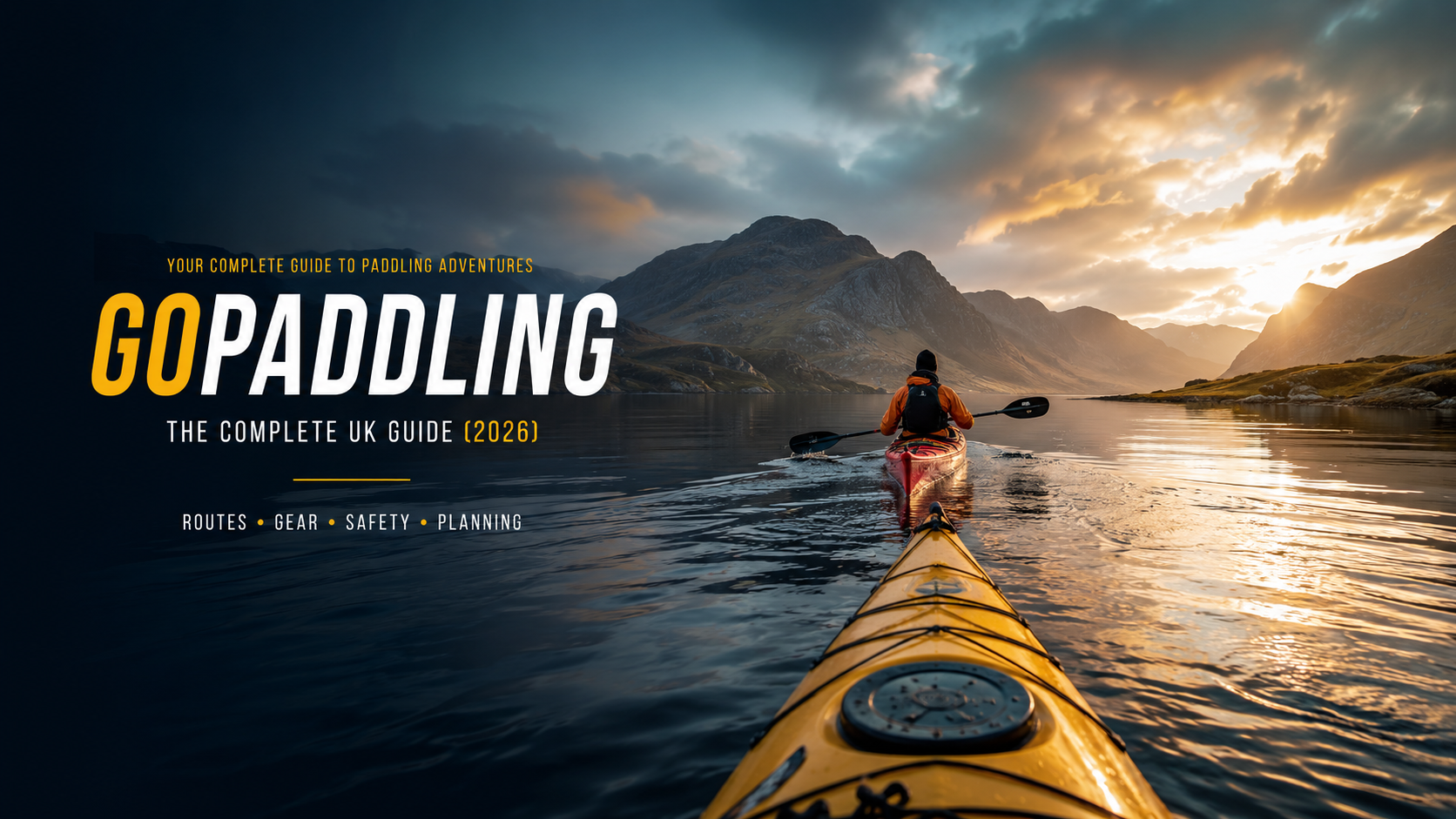
GoPaddling: Your Complete Guide to the UK’s Paddling Hub
If you’ve typed “GoPaddling” into a search bar, you’ve probably landed here because someone mentioned it at a canoe club, you saw it on a kayak forum, or you’re trying to work out whether you need a licence before you launch your paddleboard on the local canal. It’s a fair question, because “Go Paddling” isn’t a single, obvious thing — it’s the name of a UK website run by the sport’s governing body, and, confusingly, the name of an unrelated location-finder app as well.
This guide clears up exactly what GoPaddling is, what it does well, where it falls short, and how to use it to actually get on the water. I’ve gone through the live site, its membership and licensing tools, and its trail and route features to put this together, so you’re getting a practical walkthrough rather than a rehashed marketing page.
By the end, you’ll know:
- What GoPaddling.info actually is and who runs it
- How PaddlePoints and Paddling Trails work
- How the waterways licence and Paddle UK membership fit together
- What the GoPaddling site does well, and where it’s weaker
- How it compares to alternatives like AllTrails and Paddle Points-style community maps
- Answers to the most common questions paddlers ask about it
Table of Contents
- What Is GoPaddling?
- Who Runs GoPaddling, and Why It Matters
- Key Features of GoPaddling.info
- Waterways Licences and Membership Explained
- Using PaddlePoints to Find and Plan Routes
- Paddling Trails, Safety Content and Awards
- A Note on the “Go Paddling” App (Different Product)
- Pros and Cons of GoPaddling
- GoPaddling vs Alternatives
- Frequently Asked Questions
- Final Thoughts
What Is GoPaddling? {#what-is-gopaddling}
GoPaddling (found at gopaddling.info) is a free UK website dedicated to canoeing, kayaking and stand-up paddleboarding (SUP). It’s built around three main jobs: helping you find places to paddle, explaining the licences and rules for different waterways, and offering safety and skills advice for people starting out or building confidence.
The site is run by Paddle UK (formerly British Canoeing), the National Governing Body for paddlesport in the UK. That matters for trust, because the licensing information, safety guidance, and award pathways come from the same organisation that manages waterway access agreements and coaching qualifications, not from an anonymous blog.
You don’t need an account to browse GoPaddling. Casual visitors can search for routes, read tips, and look up licence requirements without signing up. Creating a free account unlocks extra features, like saving your own private routes and commenting on shared locations.
Who Runs GoPaddling, and Why It Matters {#who-runs-gopaddling}
Paddle UK grew out of British Canoeing, and it still oversees canoe slalom, sprint and paracanoe teams at international level alongside its recreational work. On the recreational side, the organisation has reported <cite index=”5-1″>a 127% increase in membership since 2020, alongside a UK-wide watersports survey suggesting around 7.6 million people had tried kayaking, canoeing or paddleboarding</cite>.
Because Paddle UK also administers the waterways licensing scheme, GoPaddling’s licence information isn’t guesswork pulled from forums — it reflects the actual agreements the organisation holds with bodies like the Canal & River Trust and the Environment Agency. That’s the main reason paddlers, clubs and instructors treat it as a reliable first stop rather than just another blog.
Key Features of GoPaddling.info {#key-features}
Route and Location Finder (PaddlePoints)
The core tool on the site is PaddlePoints, an interactive map covering rivers, canals, lakes and coastal launch spots across the UK. You can search by postcode, town, or What3Words, and filter by provider type — clubs, hire centres, course providers, or Paddle UK Delivery Partners.
Dedicated River and Waterway Pages
Major rivers, including the Thames and the Wear, have their own pages combining route maps, launch points, licensing details, and points of local interest like weirs and historic sites.
Paddling Trails (Downloadable Routes)
If building your own route on a map sounds like too much effort, Paddling Trails offers ready-made PDF guides with timings, local amenities, safety notes, and downloadable GPX files for GPS devices and fitness apps.
Licence and Membership Tools
The site explains which waterways need a licence, what one costs bought individually, and how Paddle UK membership bundles a licence with insurance.
Beginner Awards and Safety Content
GoPaddling hosts information on Paddle UK’s beginner award pathway — Start, Discover and Explore awards — plus a large blog library covering topics like paddling with a disability, family paddling, and seasonal safety.
Service and Provider Directory
A searchable directory lists clubs, equipment hire, retailers, and course providers near a chosen location, which is genuinely useful if you’re new to the sport and don’t own kit yet.
Waterways Licences and Membership Explained {#licences-and-membership}
This is the part that trips up a lot of newcomers, so it’s worth being precise about it.
In England and Wales, many rivers and canals legally require a waterways licence before you paddle on them. According to GoPaddling, buying licences individually for the different waterway bodies could cost <cite index=”21-1″>around £150</cite>, whereas Paddle UK’s On the Water membership bundles a licence covering <cite index=”21-1″>over 4,500km of waterways in England and Wales</cite> into a single annual fee.
As of the most recent published pricing on the site, membership tiers were listed as:
| Membership Type | Price |
|---|---|
| Individual Adult (over 23) | £65 |
| Young Person (18–22) | £47 |
| Youth (under 18) | £37 |
The site’s promotional messaging also references introductory pricing “from £29,” so it’s worth checking the live join page for the current offer, since sports membership pricing tends to change year to year.
What membership includes, according to the site:
- A waterways licence for the 4,500km network
- Public liability insurance, with optional add-on cover for your craft
- Discounts on paddling gear and magazines
- Access to the wider Paddle UK community and campaigns, including access-rights initiatives
Limitations to know before joining:
- The licence only covers England and Wales; Scotland, Northern Ireland and Wales each have separate national bodies (Paddle Scotland, CANI, and Canoe Wales) for local membership.
- Some waterways, particularly tidal stretches and the sea, don’t require a licence at all, so it’s worth checking before assuming you need to pay.
- Not every stretch of water is covered even within England and Wales — some private stretches and specific rivers sit outside the agreement.
Using PaddlePoints to Find and Plan Routes {#paddlepoints}
PaddlePoints works like a crowdsourced, paddling-specific map layer. Here’s the practical workflow:
- Search by postcode, town, or What3Words from the GoPaddling homepage under “Find Paddling.”
- Filter the map using icons for launches, hazards, clubs, pubs, and picnic spots.
- Check for routes — if a PaddlePoint has an associated route, a “Routes” panel appears so you can preview it on the map.
- Create a free account if you want to draw your own route, import a GPX file, or save private routes only you can see.
- Contribute back by adding new points, uploading photos, or flagging hazards for other paddlers.
Because it’s community-maintained, quality varies by area — heavily paddled rivers tend to have rich, accurate detail, while quieter waterways may have sparse or outdated entries. The site itself is upfront that PaddlePoints is built by the paddling community, not verified location-by-location by staff, so use it as a strong starting point rather than a guarantee of access rights.
Paddling Trails, Safety Content and Awards {#trails-safety-awards}
If you’d rather not build a route from scratch, Paddling Trails gives you curated, downloadable day-out guides. Each one typically includes distance, estimated time, nearby amenities, and a GPX file for navigation apps.
The blog section is genuinely broad, covering:
- Seasonal paddling advice (cold-water safety, autumn/winter considerations)
- Paddling while pregnant or with a disability
- Family and beginner-friendly guidance
- Environmental campaigns like access and water-quality initiatives
For structured skill progression, GoPaddling links out to Paddle UK’s award scheme — Start, Discover, and Explore — which are the entry-level qualifications delivered through approved course providers, findable via the site’s directory.
A Note on the “Go Paddling” App (Different Product) {#gopaddling-app}
Worth flagging clearly: there’s also a mobile app called Go Paddling, formerly known as Launch Sites, listed on the App Store and Google Play. It’s a separate product from a different developer (paddling.com), built around a large database of paddling locations rather than UK waterway licensing. It isn’t affiliated with Paddle UK’s gopaddling.info site. If you’re searching app stores, double-check you’re getting the one you actually want — the naming overlap is a common source of confusion, and user reviews suggest the app has had reliability issues with login and submissions.
Pros and Cons of GoPaddling {#pros-and-cons}
| Pros | Cons |
|---|---|
| Free to browse, no account required for basic use | Route and hazard data quality depends on community contributions |
| Backed by the UK’s national paddlesport body, so licensing info is authoritative | Licence coverage applies mainly to England and Wales, not the whole UK |
| Combines route-finding, licensing, and safety content in one place | Some pages carry a lot of membership marketing alongside the practical info |
| Downloadable GPX files and PDF trail guides for offline use | Interface can feel dated compared to modern outdoor apps |
| Strong directory of clubs, hire centres and course providers | Confusion with the separately-run “Go Paddling” mobile app |
GoPaddling vs Alternatives {#comparison}
| Feature | GoPaddling.info | AllTrails | Generic OS Maps |
|---|---|---|---|
| Focus | Paddlesport-specific (canoe/kayak/SUP) | General hiking, biking, some paddling | General terrain, no paddling data |
| UK waterway licence info | Yes, detailed and current | No | No |
| Community route mapping | Yes (PaddlePoints) | Yes, but not paddling-specific | No |
| Downloadable GPX trails | Yes (Paddling Trails) | Yes (Pro tier) | Yes, with separate GPS tools |
| Club/provider directory | Yes | No | No |
| Cost | Free to browse | Free tier + paid Pro | Free/paid depending on source |
The honest takeaway: GoPaddling wins on paddling-specific depth and licensing accuracy for UK waterways. Generalist apps like AllTrails have a more polished interface and wider international coverage, but they don’t know anything about waterways licences or paddling-specific hazards like weirs.
Frequently Asked Questions {#faqs}
Is GoPaddling free to use? Yes. Browsing routes, reading advice, and using the basic PaddlePoints map doesn’t require payment. A free account unlocks personal route-saving; a paid Paddle UK membership is only needed if you want a waterways licence and insurance.
Do I need a licence for every UK waterway? No. Licensing mainly applies to specific rivers and canals in England and Wales managed under agreements Paddle UK holds. Tidal waters, the sea, and some other stretches don’t require one — always check the specific waterway’s page before assuming either way.
Is GoPaddling the same as British Canoeing? GoPaddling.info is a website operated by Paddle UK (the renamed British Canoeing), rather than a separate organisation. Think of it as the public-facing recreational hub, while Paddle UK’s main site handles membership, competition, and governance.
Can I use GoPaddling outside England and Wales? You can browse route information UK-wide, but the bundled waterways licence through Paddle UK membership covers England and Wales specifically. Paddlers in Scotland, Wales, and Northern Ireland have separate national bodies — Paddle Scotland, Canoe Wales, and CANI — for local membership and licensing.
Is the route and hazard information on PaddlePoints verified? It’s community-contributed. The site states clearly that entries are added by the paddling community, so while popular rivers tend to have solid, current detail, less-travelled spots may be sparse or outdated. Treat it as a helpful starting point, not a guarantee.
How is GoPaddling different from the Go Paddling app on the App Store? They’re unrelated products despite the similar name. GoPaddling.info is Paddle UK’s UK-focused website; the Go Paddling app (formerly Launch Sites) is run by a separate company, paddling.com, and works as a general location-finder rather than a licensing and safety hub.
Do beginners need to buy anything before trying GoPaddling’s resources? No. You can research routes, read beginner safety content, and find local course providers entirely for free before deciding whether to buy or hire equipment.
What’s the difference between PaddlePoints and Paddling Trails? PaddlePoints is the interactive, DIY map for building or exploring your own routes. Paddling Trails is a curated library of ready-made, downloadable day-trip guides for people who’d rather follow a set plan than build one from scratch.
Does GoPaddling offer any beginner training or qualifications? It links to Paddle UK’s Start, Discover, and Explore award pathway and helps you find approved course providers through its directory, but the actual training is delivered in person by those providers, not on the website itself.
Is a Paddle UK membership worth it if I only paddle occasionally? That depends on how often you’d otherwise pay individual licence fees. If buying separate licences would cost close to or more than membership, and you value the bundled insurance, it’s generally worth it — but if you mainly paddle unlicensed waters like the coast, you may not need it at all.
Final Thoughts {#final-thoughts}
GoPaddling earns its place as a first stop for UK paddlers mainly because of who’s behind it. The licensing information is accurate because it comes from the body that actually administers those agreements, and the route data, while community-driven and therefore uneven in places, is genuinely useful for finding somewhere to launch.
If you’re new to the sport, start with the licence explainer for your local river before you buy anything, then use PaddlePoints or a Paddling Trail to pick your first outing near a recognised launch point. If you paddle regularly on licensed waterways, run the numbers on Paddle UK membership against buying individual licences — for most regular paddlers, it works out cheaper and comes with insurance you’d otherwise have to source separately. And if you’re downloading an app rather than browsing the website, double-check you’ve got the right “Go Paddling” — it’ll save you a confusing five minutes later.
About the Author