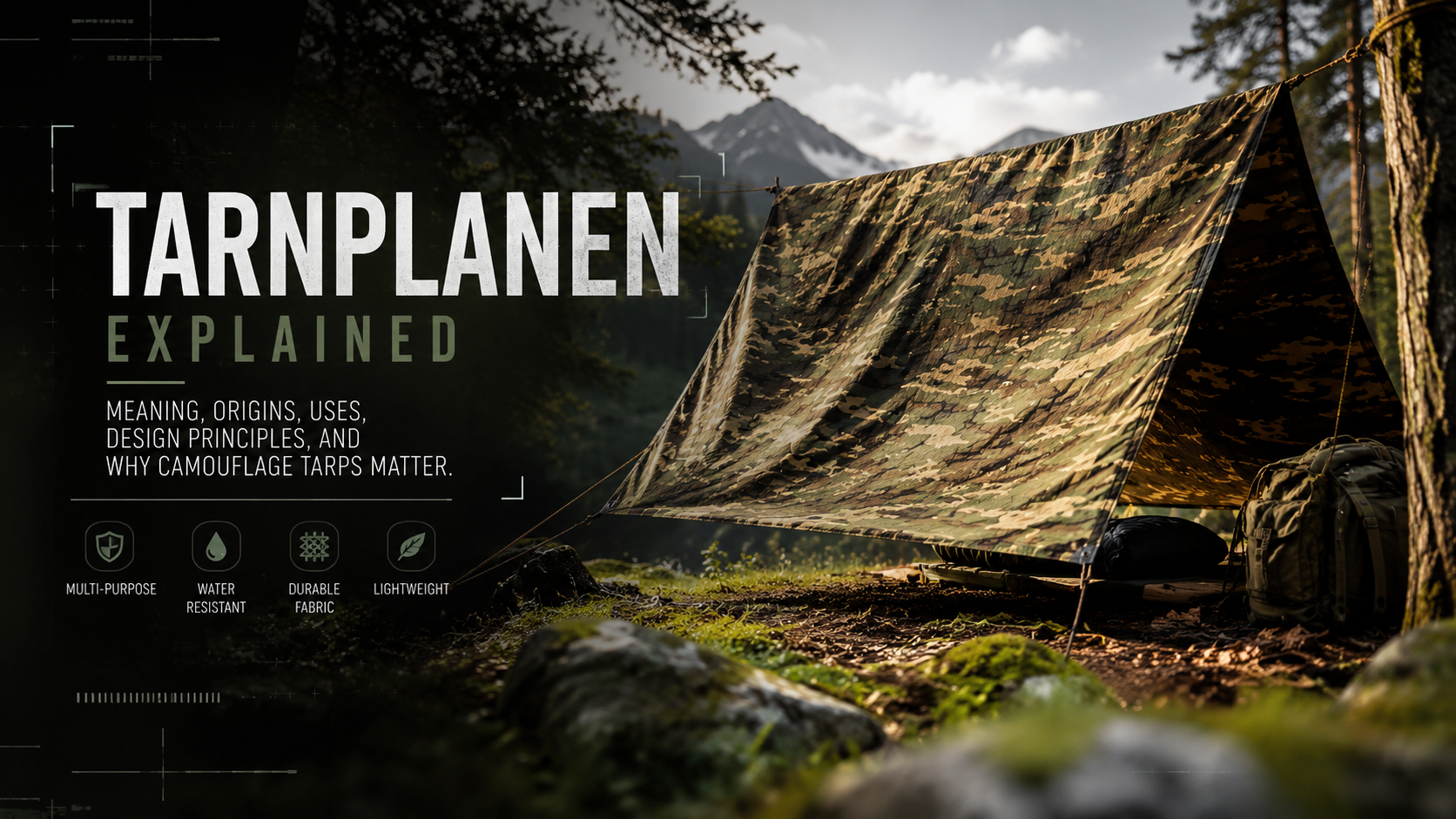
Introduction
The word tarnplanen has steadily attracted attention in online searches, yet reliable information about it remains surprisingly limited. Many people encounter the term while shopping for outdoor equipment, reading military surplus listings, researching camouflage systems, or exploring tactical gear. Others simply want to understand whether tarnplanen refers to a specific product, a military concept, or just another name for a camouflage tarp.
The confusion is understandable. The term originates from German, and depending on the context, it can describe a camouflage sheet, camouflage tarp, concealment cover, or protective field shelter material. Because online discussions often mix military terminology with camping equipment and survival gear, newcomers frequently struggle to separate historical usage from modern commercial products.
Understanding tarnplanen goes far beyond learning a translation. It involves appreciating how camouflage materials are designed, why different patterns exist, what materials perform best outdoors, and how military innovations have influenced civilian recreation. Hunters, bushcraft enthusiasts, emergency preparedness advocates, photographers, wildlife researchers, and overland travelers all use camouflage tarps for different reasons, each requiring unique features.
This comprehensive guide examines tarnplanen from every practical angle. We’ll explore its meaning, history, construction, materials, common applications, advantages, limitations, buying considerations, maintenance practices, and frequently misunderstood aspects. Whether your goal is historical knowledge, outdoor preparedness, or selecting the right camouflage shelter, this guide provides the context needed to make informed decisions.
What Does Tarnplanen Mean?
Tarnplanen is a German compound word consisting of:
- Tarn = camouflage or concealment
- Plane (plural: Planen) = tarp, sheet, or protective cover
Together, tarnplanen generally translates as:
- camouflage tarp
- camouflage cover
- concealment sheet
- military camouflage tarp
Its primary purpose is reducing visibility while protecting equipment, personnel, or temporary shelters from weather and observation.
Unlike decorative camouflage fabrics, genuine tarnplanen are engineered with durability, weather resistance, and field practicality in mind.
Why Are People Searching for Tarnplanen?
Search intent generally falls into several categories.
| User Intent | What They’re Looking For |
|---|---|
| Definition | Meaning of the German term |
| Military history | Historical camouflage equipment |
| Outdoor gear | Camping or bushcraft tarps |
| Tactical equipment | Concealment systems |
| Survival | Multipurpose shelter materials |
| Product research | Buying advice and comparisons |
This mix of informational and commercial intent explains why clear explanations are often difficult to find.
The History of Tarnplanen
Camouflage has existed in military strategy for centuries, but dedicated camouflage tarps became especially important during the twentieth century.
Early field forces relied on:
- canvas sheets
- earth-colored fabrics
- natural foliage
As aerial reconnaissance became more sophisticated, armies developed purpose-built camouflage materials that blended into forests, deserts, snow, and mixed terrain.
German military equipment popularized several camouflage designs that later influenced outdoor manufacturers worldwide.
Modern camouflage tarps now serve both military and civilian markets, with advances in:
- waterproof coatings
- lightweight synthetic fibers
- infrared reduction technologies
- UV resistance
- ripstop weaving
How Tarnplanen Work
The effectiveness of a camouflage tarp depends on several design principles rather than color alone.
Pattern Disruption
Effective camouflage breaks recognizable shapes into irregular visual fragments.
Color Blending
Natural environments contain numerous shades rather than a single green or brown.
Shadow Reduction
Proper placement minimizes unnatural shadows that reveal concealed objects.
Texture
Many modern tarps include matte finishes that reduce reflections.
Shape Concealment
Covering straight lines helps hide vehicles, shelters, or equipment.
Common Materials Used
Modern tarnplanen can be manufactured from several materials.
Polyester
Advantages:
- lightweight
- affordable
- dries quickly
- UV resistant
Best for:
- camping
- hiking
- recreational use
Nylon
Benefits include:
- high strength
- excellent tear resistance
- low weight
Often used in premium tactical shelters.
Canvas
Canvas remains popular because of:
- durability
- quiet movement
- natural appearance
However, it is considerably heavier than synthetic alternatives.
Polyethylene
Common in budget tarps because it offers:
- waterproof performance
- low cost
- easy maintenance
Its lifespan is generally shorter than higher-grade materials.
Common Camouflage Patterns
Not every tarnplanen uses the same visual design.
Popular categories include:
Woodland
Designed for forests and temperate environments.
Desert
Optimized for dry landscapes.
Snow
Primarily white with subtle gray patterns.
Multi-Terrain
Effective across changing environments.
Digital Camouflage
Uses pixel-based geometry to disrupt outlines.
Hunting Camouflage
Often incorporates leaves, bark, branches, and realistic vegetation imagery.
Practical Uses of Tarnplanen
A camouflage tarp is remarkably versatile.
Camping Shelter
Used as:
- rain fly
- lean-to shelter
- emergency roof
- cooking cover
Bushcraft
Bushcraft enthusiasts value camouflage tarps because they:
- blend into woodland settings
- create flexible shelters
- weigh less than tents
Hunting
Hunters often use camouflage covers for:
- blinds
- equipment concealment
- observation points
Wildlife Photography
Nature photographers benefit by remaining less visible to wildlife without disturbing natural behavior.
Military Training
Training exercises commonly employ camouflage tarps for:
- temporary command posts
- observation positions
- equipment storage
Emergency Preparedness
Preparedness kits often include tarps capable of functioning as:
- emergency shelter
- groundsheet
- windbreak
- rain collector
- gear protection
Advantages of Tarnplanen
Excellent Versatility
A single tarp may replace multiple pieces of equipment.
Lightweight Transport
Modern ripstop materials pack into surprisingly compact sizes.
Weather Protection
Many offer resistance against:
- rain
- wind
- sunlight
- debris
Concealment
Their primary advantage remains visual blending.
Cost Effectiveness
Compared with specialized shelters, tarps often provide outstanding value.
Potential Drawbacks
No product is perfect.
Some limitations include:
- requires setup skills
- limited insect protection
- reduced privacy
- exposure to wind if improperly pitched
- lower insulation than enclosed tents
Choosing the Right Tarnplanen
Several factors deserve careful consideration.
Size
Larger tarps provide:
- better shelter
- more versatility
Smaller options prioritize portability.
Waterproof Rating
Consider expected weather conditions.
Frequent rain demands stronger waterproof performance.
Weight
Backpackers usually prioritize lightweight construction.
Vehicle campers can comfortably transport heavier canvas options.
Reinforced Attachment Points
Strong tie-outs significantly improve durability.
Ripstop Construction
Ripstop fabrics prevent small tears from expanding.
UV Resistance
Long-term outdoor exposure can degrade untreated fabrics.
Real-World Example
Imagine a wildlife researcher conducting bird observations in a mixed forest.
Instead of using a brightly colored tent that might disturb wildlife, they erect a properly positioned camouflage tarp between trees. The irregular pattern softens the shelter’s outline, while the open configuration provides ventilation and quick access to equipment. Combined with quiet movement and careful placement, the tarp helps minimize visual disruption without guaranteeing invisibility.
Military vs Civilian Tarnplanen
| Military Versions | Civilian Versions |
| Higher durability | Often lighter |
| Tactical camouflage | Recreational patterns |
| Heavy reinforcement | Budget-friendly options |
| Specialized coatings | General weather protection |
| Greater cost | Wider variety |
Common Misconceptions
“Camouflage Makes You Invisible”
Camouflage only reduces visual detection.
Movement, sound, lighting, and positioning remain equally important.
“Any Green Tarp Works”
Effective concealment depends on matching the surrounding environment.
“Military Surplus Is Always Better”
Older surplus equipment may be heavier, less waterproof, or worn.
Modern civilian tarps sometimes outperform older military models in weight and weather resistance.
“Bigger Is Always Better”
Oversized tarps can become difficult to pitch in confined spaces and may catch more wind.
Maintenance Tips
Proper care significantly extends lifespan.
Best practices include:
- Dry completely before storage.
- Clean with mild soap.
- Avoid harsh chemicals.
- Repair small tears promptly.
- Store in a cool, dry place.
- Inspect tie-out points regularly.
Expert Perspective
The effectiveness of a tarnplanen depends less on the camouflage pattern itself and more on how it is used. Experienced outdoor professionals emphasize site selection, shelter orientation, tensioning, and environmental awareness over simply purchasing the most expensive tarp. A well-positioned mid-range camouflage tarp can outperform a premium model that is poorly deployed.
For most recreational users, the ideal balance includes durable ripstop fabric, reliable waterproofing, reinforced attachment points, manageable weight, and a camouflage pattern suited to the environments they visit most frequently.
Checklist Before Buying
Use this quick checklist:
- Appropriate size for your intended use
- Waterproof construction
- Ripstop fabric
- Reinforced corners
- Strong tie-out loops
- Lightweight if backpacking
- UV-resistant coating
- Quality stitching
- Reliable storage bag
- Suitable camouflage pattern
Frequently Asked Questions
What does tarnplanen literally mean?
It is a German term meaning “camouflage tarps” or “camouflage covers,” combining the words for camouflage (tarn) and tarp or sheet (Planen).
Is tarnplanen only military equipment?
No. While the term has military origins, camouflage tarps are widely used for camping, bushcraft, hunting, wildlife observation, and emergency preparedness.
Are camouflage tarps waterproof?
Many are waterproof or water-resistant, though performance varies depending on the fabric, coatings, and construction.
What material is best for a tarnplanen?
Ripstop nylon offers an excellent balance of strength and weight, polyester provides affordability and weather resistance, while canvas excels in durability but is significantly heavier.
Can a camouflage tarp replace a tent?
In many situations, yes. A tarp can provide effective weather protection when pitched correctly, although it offers less privacy, insulation, and insect protection than a traditional tent.
Do camouflage patterns really work?
They can reduce visual detection when matched to the surrounding environment and combined with proper positioning. Camouflage is most effective as part of a broader concealment strategy rather than as a standalone solution.
How long does a quality tarnplanen last?
With proper maintenance, a well-made camouflage tarp can last for many years, especially if cleaned, dried thoroughly after use, and stored away from prolonged UV exposure.
Is military surplus worth buying?
Military surplus can be durable and historically interesting, but buyers should inspect items carefully for wear, weight, waterproof condition, and compatibility with their intended use.
Final Thoughts
Tarnplanen represents far more than a simple camouflage tarp. It reflects decades of practical field design shaped by military requirements and refined for outdoor recreation, survival, conservation, and expedition use. Understanding the term—and the equipment it describes—helps buyers move beyond marketing labels to evaluate what truly matters: durable materials, effective weather protection, appropriate camouflage for the environment, and thoughtful deployment in the field.
Whether you’re building a lightweight bushcraft shelter, concealing photography equipment, preparing an emergency kit, or simply researching the origins of the term, choosing the right tarnplanen is ultimately about matching the product’s capabilities to your specific needs. A carefully selected and properly maintained camouflage tarp can become one of the most versatile pieces of outdoor gear you own, delivering dependable performance across a wide range of environments and conditions.
About the Author




3 thoughts on “Tarnplanen Explained: Meaning, Origins, Uses, Design Principles, and Why Camouflage Tarps Matter”