Viltnemnda: Norway’s Municipal Wildlife Management Committee Explained
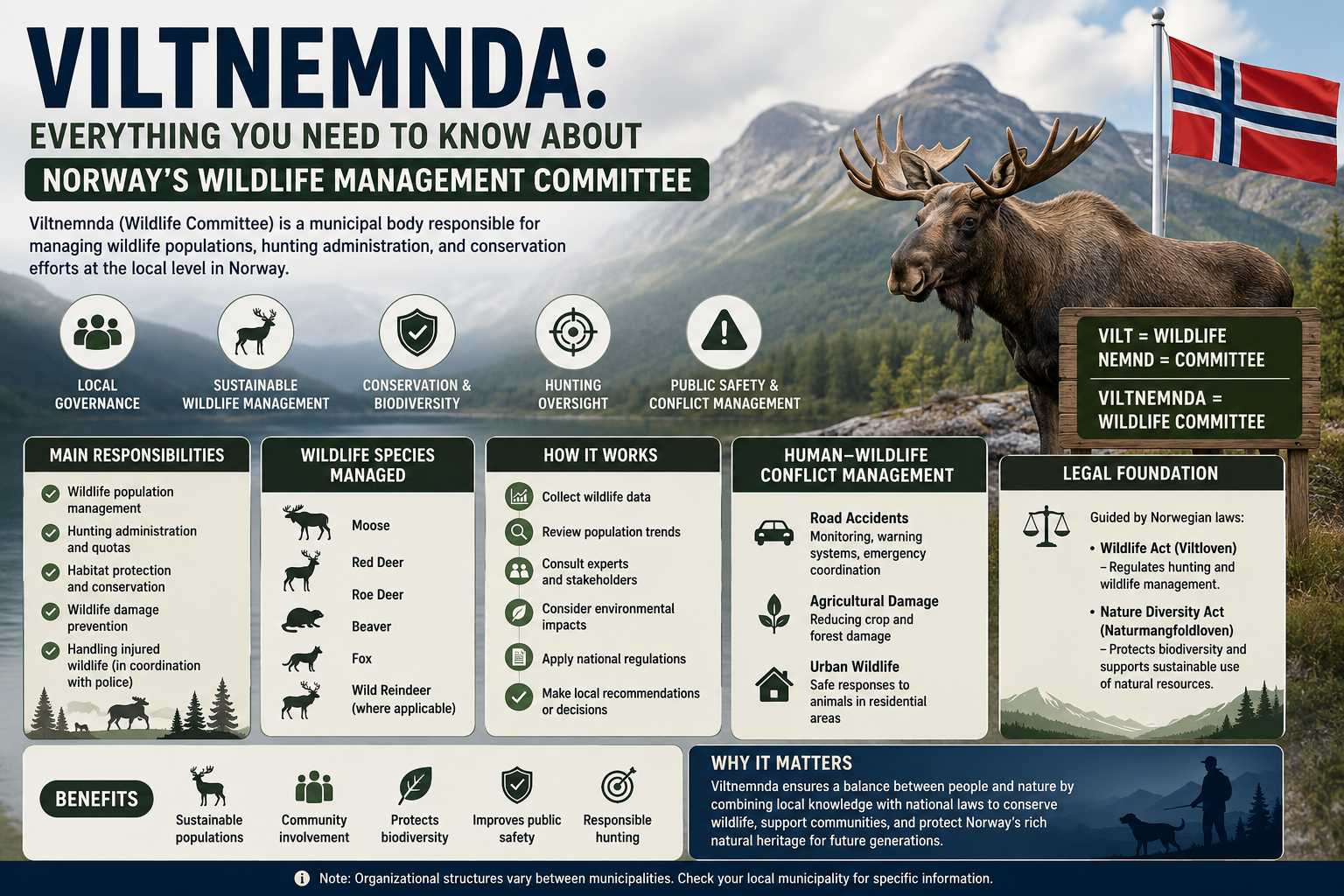
Table of Contents
ToggleViltnemnda: Everything You Need to Know About Norway’s Wildlife Management Committee
Norway is known for its spectacular forests, mountains, fjords, and abundant wildlife. Managing these natural resources requires cooperation between national authorities and local municipalities. One of the most important parts of this system is the Viltnemnda.
Whether you’ve encountered the term while researching Norwegian hunting laws, wildlife conservation, or local government responsibilities, understanding Viltnemnda provides valuable insight into how Norway balances environmental protection with sustainable wildlife use.
This guide explains what Viltnemnda is, its responsibilities, legal framework, decision-making process, and why it remains an important part of Norwegian wildlife management.
What Is Viltnemnda?
Viltnemnda is the traditional Norwegian name for a municipal wildlife management committee responsible for handling wildlife-related matters at the local level.
Its primary role is to help municipalities manage wildlife populations sustainably while balancing:
- Biodiversity conservation
- Hunting interests
- Agriculture
- Forestry
- Public safety
- Animal welfare
Historically, Norway had state-appointed wildlife committees, but since 1993, responsibility for local wildlife management has largely been transferred to municipalities. Today, organizational structures vary between municipalities, and many have replaced the formal committee with other local administrative arrangements while retaining similar responsibilities.
Meaning of the Word Viltnemnda
The Norwegian term consists of two words:
| Norwegian Word | English Meaning |
|---|---|
| Vilt | Wildlife or game animals |
| Nemnd | Committee or board |
Together, Viltnemnda literally means:
Wildlife Committee
It refers specifically to the municipal body responsible for wildlife management.
History of Viltnemnda
Norway has a long tradition of sustainable hunting and wildlife stewardship.
Before 1993
Local wildlife committees existed in municipalities but were appointed under a national framework.
After 1993
The Norwegian government transferred much of the responsibility for local wildlife management directly to municipalities.
Today:
- Municipal councils determine how wildlife management is organized.
- Some municipalities still maintain a dedicated Viltnemnd.
- Others perform the same functions through different committees or municipal departments.
Legal Foundation
Viltnemnda’s work is based primarily on Norwegian legislation governing wildlife management.
Key laws include:
- Wildlife Act (Viltloven) – regulates hunting, wildlife populations, and game management.
- Nature Diversity Act (Naturmangfoldloven) – establishes principles for biodiversity conservation and sustainable use of natural resources.
Municipal decisions must follow national legislation while addressing local conditions.
Main Responsibilities of Viltnemnda
Although responsibilities vary between municipalities, typical duties include:
Wildlife Population Management
The committee helps monitor:
- Moose
- Red deer
- Roe deer
- Wild reindeer (where applicable)
- Small game populations
Population assessments guide local management decisions.
Hunting Administration
Responsibilities often include:
- Reviewing hunting plans
- Managing quotas where municipalities have authority
- Coordinating with hunting associations
- Supporting sustainable harvesting
Wildlife Habitat Protection
Municipal wildlife management also considers:
- Habitat preservation
- Migration routes
- Forest ecosystems
- Wetlands
- Biodiversity
Wildlife Damage Prevention
Wild animals sometimes damage:
- Crops
- Forest plantations
- Gardens
- Roads
Local authorities work with landowners to reduce conflicts.
Injured Wildlife
Municipal wildlife personnel may coordinate responses involving:
- Injured moose
- Deer struck by vehicles
- Sick wild animals
In practice, the police often coordinate emergency reports before municipal wildlife responders are contacted.
How Viltnemnda Works
A typical municipal workflow includes:
- Collect wildlife data
- Review population trends
- Consult experts
- Consider environmental impacts
- Apply national regulations
- Make local recommendations or decisions
Many municipalities also cooperate with:
- Hunters
- Farmers
- Forestry owners
- Environmental organizations
- Police
- Regional authorities
Wildlife Species Managed
Species vary depending on location.
Common examples include:
| Species | Management Focus |
|---|---|
| Moose | Population size and hunting |
| Red Deer | Sustainable harvest |
| Roe Deer | Local management |
| Beaver | Population control where needed |
| Fox | Monitoring |
| Wild Reindeer | Habitat protection in relevant areas |
Large predators such as wolves, bears, lynx, and wolverines are generally managed through broader national and regional frameworks rather than solely by municipalities.
Hunting Management
Norway promotes sustainable hunting based on scientific monitoring.
Viltnemnda or the relevant municipal authority may assist with:
- Hunting districts
- Harvest reporting
- Population estimates
- Hunting season administration
- Community coordination
The objective is to ensure wildlife populations remain healthy over the long term.
Wildlife Conservation
Wildlife management is not only about hunting.
Important conservation goals include:
- Protecting biodiversity
- Maintaining healthy ecosystems
- Conserving habitats
- Preventing overharvesting
- Supporting ecological balance
Norwegian wildlife policy seeks to combine conservation with sustainable resource use.
Human-Wildlife Conflict Management
Modern wildlife management increasingly focuses on reducing conflicts.
Examples include:
Road Accidents
Moose and deer collisions remain a concern in many areas.
Authorities may:
- Improve warning systems
- Monitor migration routes
- Coordinate emergency responses
Agricultural Damage
Large herbivores sometimes damage:
- Crops
- Grasslands
- Young forests
Local management aims to reduce economic losses while maintaining viable wildlife populations.
Urban Wildlife
Animals occasionally enter residential areas.
Municipal wildlife managers may coordinate safe responses depending on the situation.
Membership and Organization
Traditionally, members have been appointed by municipal councils.
Participants often include individuals with experience in:
- Wildlife management
- Forestry
- Agriculture
- Hunting
- Local government
The exact structure differs across municipalities because Norwegian law allows flexibility in local organization.
Municipal Responsibilities
Municipal wildlife authorities typically handle:
- Local wildlife planning
- Population monitoring
- Hunting administration
- Habitat management
- Public information
- Cooperation with national agencies
National authorities continue to establish overarching legislation and policy.
Key Features
| Feature | Description |
|---|---|
| Local governance | Municipality-based |
| Wildlife focus | Sustainable management |
| Hunting oversight | Supports regulated hunting |
| Conservation | Biodiversity protection |
| Public safety | Wildlife incident coordination |
| Scientific approach | Population monitoring |
Benefits
Viltnemnda contributes to:
- Sustainable wildlife populations
- Better local decision-making
- Community involvement
- Reduced human-wildlife conflicts
- Protection of biodiversity
- Responsible hunting management
Drawbacks
Some challenges include:
- Different organizational models between municipalities
- Limited municipal resources
- Balancing competing stakeholder interests
- Adapting to climate and habitat changes
- Coordinating across jurisdictions
Real-World Example
Imagine a municipality where the moose population has increased significantly.
Higher populations may lead to:
- More vehicle collisions
- Forest damage
- Agricultural losses
Municipal wildlife managers review population data, consult local stakeholders, and may adjust hunting recommendations within the legal framework to help maintain a sustainable balance.
Viltnemnda vs Other Wildlife Authorities
| Authority | Primary Role |
|---|---|
| Viltnemnda / Municipal wildlife authority | Local wildlife management |
| National government | Wildlife legislation and national policy |
| Environmental agencies | Conservation policy and regulation |
| Police | Emergency coordination involving injured wildlife and public safety |
Pros and Cons
| Pros | Cons |
|---|---|
| Local expertise | Varies by municipality |
| Community involvement | Resource limitations |
| Sustainable wildlife management | Administrative differences |
| Supports biodiversity | Complex decision-making |
| Improves public safety | Requires coordination among agencies |
Frequently Asked Questions
1. What does Viltnemnda mean?
It means wildlife committee in Norwegian and traditionally refers to a municipal body responsible for local wildlife management.
2. Is every municipality required to have a Viltnemnd?
Not necessarily under that exact name. Municipalities are responsible for local wildlife management, but organizational structures can differ.
3. Does Viltnemnda control hunting?
It may help administer local wildlife management and hunting matters within the framework of national laws.
4. Which animals are commonly managed?
Typical species include moose, red deer, roe deer, beaver, and other local game animals.
5. Does Viltnemnda protect wildlife?
Yes. Wildlife conservation and sustainable management are central responsibilities alongside regulated hunting.
6. Can Viltnemnda respond to injured animals?
Municipal wildlife personnel often assist with injured wild animals, usually in coordination with the police and other authorities.
7. Who appoints the members?
Traditionally, members are appointed by the municipal council, though organizational arrangements vary.
8. What laws govern Viltnemnda?
Its work is guided primarily by Norway’s Wildlife Act and Nature Diversity Act.
9. Is Viltnemnda responsible for predators like wolves and bears?
Large predators are generally managed through national and regional wildlife authorities, although municipalities may participate in local implementation.
10. Why is local wildlife management important?
Local authorities understand regional wildlife populations, habitats, and community needs, enabling more effective management decisions.
Final Thoughts
Viltnemnda represents an important part of Norway’s tradition of decentralized wildlife management. While many municipalities now organize these responsibilities differently than in the past, the underlying goal remains the same: to manage wildlife sustainably while balancing conservation, public safety, agriculture, forestry, and responsible hunting.
Understanding Viltnemnda also provides insight into Norway’s broader environmental philosophy, where local knowledge complements national legislation to protect biodiversity for future generations. Because municipal structures differ, it’s worth checking the relevant municipality’s official information if you need details about a specific area’s wildlife management arrangements.
About the Author




1 thought on “Viltnemnda: Norway’s Municipal Wildlife Management Committee Explained”