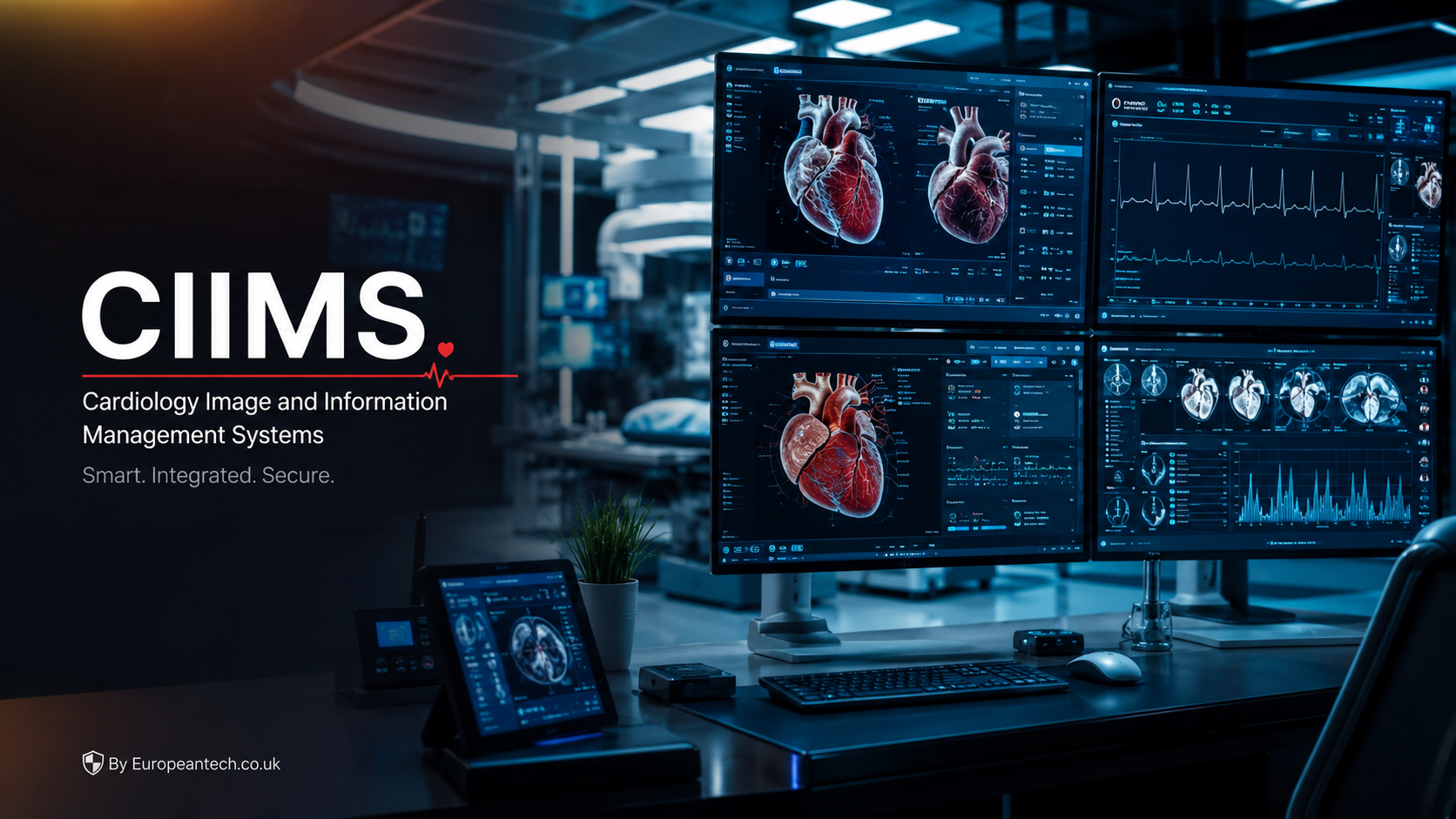
If you work in cardiology IT or healthcare administration, you’ve likely encountered the acronym “CIIMS” and wondered what it means for your department. This article cuts through the jargon to explain exactly what CIIMS systems do, their key features, and how they compare to other cardiology IT solutions.
What is CIIMS?
CIIMS stands for Cardiology Image and Information Management System. These platforms combine cardiovascular picture archiving and communications systems (PACS) with cardiology information systems (CIS) into a single, unified solution for managing cardiac imaging and patient data .
Think of CIIMS as the cardiology department’s central nervous system. It pulls together images from multiple modalities—echocardiography, cardiac CT, MRI, nuclear cardiology, and cath lab procedures—along with reports, hemodynamic data, and ECG results. All this information is accessible from one interface, often through any web-enabled device .
Why CIIMS Matters: Addressing the Fragmentation Problem
Historically, cardiology departments relied on separate siloed systems that didn’t communicate effectively. One system managed echocardiography images. Another handled cath lab hemodynamic data. A third stored ECG reports. Clinicians had to log into multiple platforms, navigate different interfaces, and manually correlate information.
This fragmented approach created several problems:
-
Delayed care when clinicians couldn’t quickly access complete patient data
-
Redundant data entry across multiple systems
-
Increased risk of errors from manual data transfer
-
Inefficient workflows requiring multiple logins and workstations
Modern CIIMS platforms solve this by unifying all cardiology data in a single location with a common interface . Physicians can access integrated images and reports from any location—significantly improving workflow, particularly for clinicians who work across multiple hospitals .
Key Features of CIIMS
Comprehensive Multi-Modality Imaging Support
CIIMS platforms handle the diverse imaging needs of a modern cardiology department. Unlike radiology PACS, where most images are static, cardiology generates a high proportion of dynamic images like echocardiography loops . A robust CIIMS accommodates:
-
Echocardiography (including 3D/4D)
-
Cardiac CT and MRI
-
Nuclear cardiology (SPECT/PET)
-
Cardiac catheterization
-
Vascular sonography
-
Intravascular ultrasound (IVUS)
-
Electrophysiology studies
Seamless Integration with Other Healthcare Systems
Industry experts emphasize that integration capability should be part of a CIIMS from its first implementation . Key integration standards include:
-
DICOM for image handling
-
HL7 for clinical data exchange
-
IHE (Integrating the Healthcare Enterprise) compliance
These standards ensure the CIIMS can communicate effectively with the hospital’s EHR/EMR, radiology systems, and other enterprise platforms .
Unified Reporting and Workflow Tools
Many CIIMS platforms integrate with cath lab hemodynamic systems and reporting systems, enabling clinicians to access both images and reports from one login . Advanced systems may also include:
-
Structured reporting templates
-
Digital dictation and speech recognition
-
Diagnostic presentation tools
-
Advanced visualization packages
Web-Based Access and Cloud Capabilities
Industry trends show a significant shift away from single-hospital server-based systems toward web-based servers and cloud solutions . This enables:
-
Access from any location
-
Support for remote reading and telecardiology
-
Easier deployment and lower IT costs
-
Simplified integration with health information exchanges (HIEs)
CIIMS vs. Alternative Systems: A Comparison
| Feature | CIIMS | Standalone CVIS | Standalone Cardiology PACS | Rad PACS |
|---|---|---|---|---|
| Imaging management | Comprehensive across all cardiac modalities | Limited to specific modalities | Strong | Focused on static images |
| Reporting integration | Unified with imaging | Separate | Separate | Separate |
| Hemodynamic data | Integrated | Often absent | Often absent | Not applicable |
| ECG management | Typically included | Varies | Not included | Not applicable |
| Web-based access | Usually available | Limited | Limited | Often available |
| Single login | Yes | No | No | No |
Benefits of Implementing a CIIMS
1. Improved Workflow Efficiency
By consolidating data and reporting tools, CIIMS eliminates the need to switch between multiple systems. As one consultant observed, “It provides easy access to all these reports on one, single system and from one log-in. It allows for seamless integration between images and these reporting systems. It really improves workflow” .
2. Real-Time Patient Information
CIIMS platforms automatically update information as new data or images are saved, giving clinicians a more real-time view of a patient’s condition . This is particularly valuable in acute cardiac care where timely decisions are critical.
3. Anywhere, Anytime Access
Web-based CIIMS platforms allow cardiologists to access images and reports from remote locations, supporting telecardiology and enabling clinicians to work across multiple hospital sites without carrying physical media .
4. Enterprise-Wide Integration
Modern CIIMS platforms can integrate with enterprise-wide EHR systems and health information exchanges, supporting better care coordination across departments and facilities .
Potential Limitations and Considerations
Vendor Capabilities Vary
Not all CIIMS vendors offer the same level of integration or cover all cardiac imaging modalities and reporting systems . Some vendors offer a truly unified single database, while others weave together existing databases so information appears integrated even if it’s stored separately. Careful vendor evaluation is essential.
Implementation and Training Costs
Deploying a CIIMS requires significant planning, integration, installation, and user training . “The relationship between a hospital and a CIIMS supplier lasts for the life of the system,” emphasizing the need to assess vendor service levels carefully .
Storage Requirements
Cardiology generates substantial data volumes, particularly with dynamic images and advanced modalities. A storage strategy must be mapped out before implementation, often requiring online, near-term, and long-term storage tiers .
The Evolution of CIIMS
The concept of CIIMS has evolved significantly over the past decade. The term itself emerged as the industry recognized the need to consolidate what were previously separate systems. Over the past five to six years, nearly all cardiology data sources have been consolidated into unified systems .
Key trends continue to shape CIIMS development:
Migration to the Cloud: Experts predict cloud-based CIIMS platforms will proliferate and may eventually become the standard, potentially phasing out individual hospital IT departments’ role in maintaining these systems .
Thin-Client Architecture: Web-based “thin-client” systems are increasingly popular because they are easier to deploy, cost less, and don’t require dedicated network connections compared to traditional “thick-client” workstations .
Advanced Visualization: Integration with third-party advanced visualization tools continues to expand, supporting increasingly sophisticated cardiac diagnoses.
Frequently Asked Questions
1. What does CIIMS stand for in cardiology?
CIIMS stands for Cardiology Image and Information Management System, a unified platform that combines cardiology PACS and cardiovascular information systems (CVIS) .
2. How is CIIMS different from a radiology PACS?
Unlike radiology PACS which primarily handles static images, CIIMS must accommodate dynamic imaging (like echocardiography), integrate with cardiac-specific reporting systems, and manage hemodynamic data and ECG results. The multimodality nature of cardiology requires synchronizing information from diverse sources .
3. What imaging modalities does a CIIMS typically support?
A comprehensive CIIMS supports echocardiography, cardiac CT and MRI, nuclear cardiology, cardiac catheterization, vascular sonography, intravascular ultrasound, and electrophysiology studies .
4. Why is integration important for a CIIMS?
Integration with imaging modalities and other hospital information systems is essential for successful CIIMS implementation . It enables seamless workflow, reduces manual data entry, and supports better clinical decision-making.
5. What standards should a CIIMS support?
Industry experts recommend CIIMS platforms support DICOM, HL7, and Integrating the Healthcare Enterprise (IHE) compliance to ensure interoperability with other systems .
6. Can a CIIMS integrate with my hospital’s EHR?
Modern CIIMS platforms are designed to integrate with enterprise EHR/EMR systems and can support health information exchanges, enabling data sharing across departments and facilities .
7. Is web-based access important for a CIIMS?
Yes. The industry is shifting toward web-based or cloud-based CIIMS solutions that allow access from any location, significantly improving workflow for clinicians who work across multiple sites .
8. What factors should I consider when selecting a CIIMS vendor?
Key factors include the level of integration offered, support for all required cardiac modalities, reporting capabilities, web-based access, storage strategy, and the vendor’s service level for planning, installation, training, and ongoing support .
9. How does a CIIMS improve workflow in a cardiology department?
CIIMS provides a single login for accessing images and reports, eliminates the need to switch between multiple systems, automatically updates information as new data is saved, and supports remote access .
10. Are CIIMS and CVIS the same thing?
The terms are often used interchangeably. Both refer to unified cardiology IT platforms that combine imaging and information management. Some vendors prefer “CVIS” (Cardiovascular Information System) while others use “CIIMS” .
Conclusion
CIIMS platforms represent the convergence of multiple cardiology IT functions into a unified system that supports efficient, effective cardiac care. By consolidating imaging, reporting, and clinical data, these systems address the fragmentation that has historically challenged cardiology departments.
About the Author




1 thought on “Understanding CIIMS: A Complete Guide to Cardiology Image and Information Management Systems”