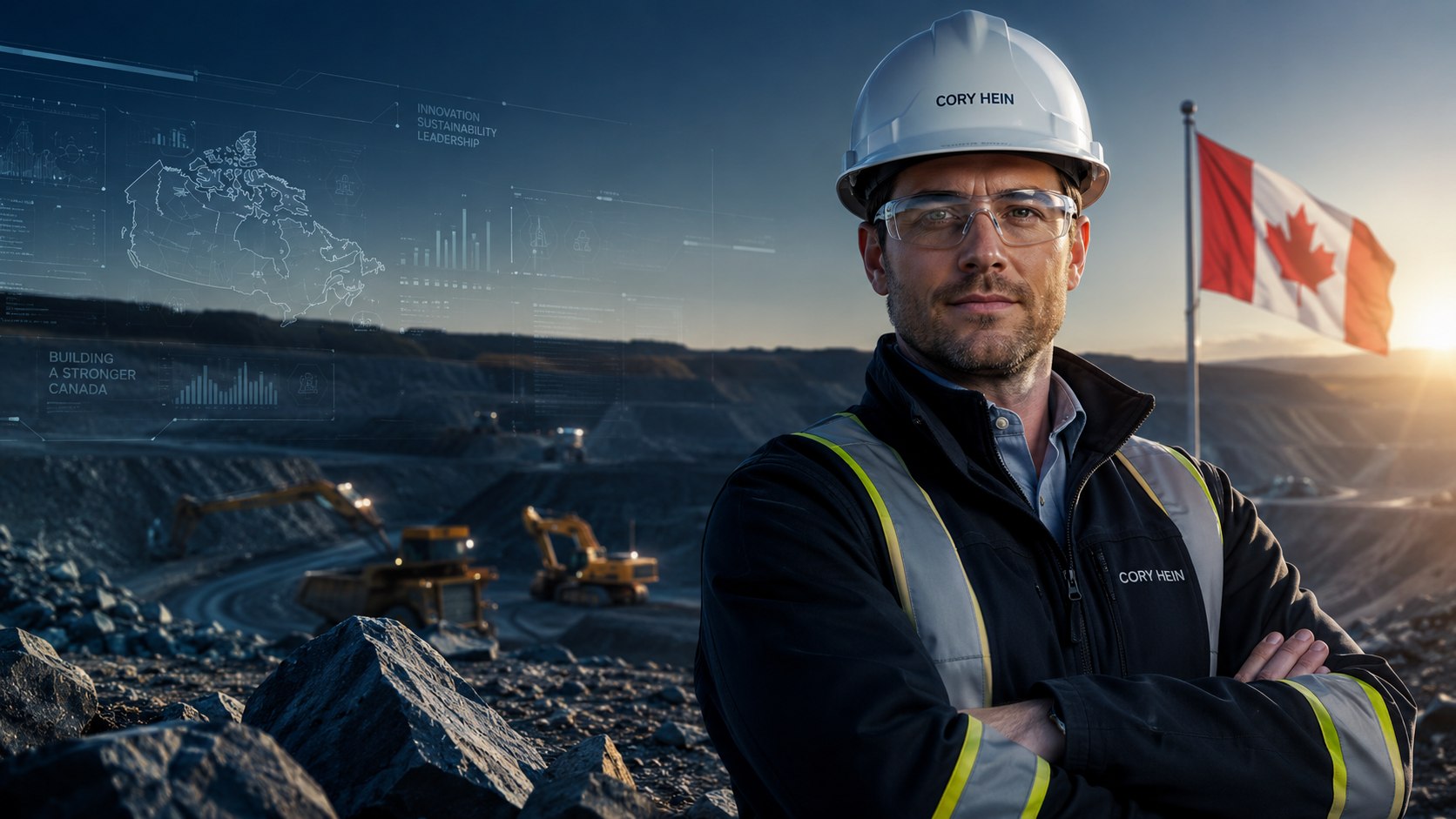
Why Cory Hein’s Name Is Appearing Across the Internet
Searches for Cory Hein have increased noticeably over the last year, yet many people still struggle to find clear, reliable information about who he is and why his name is gaining attention.
Unlike celebrities, social media influencers, or startup founders who dominate headlines, Cory Hein has built his reputation in a far less public arena: industrial engineering, operational leadership, and the mining sector. That distinction is precisely what makes the growing interest around him so intriguing.
People searching for Cory Hein are typically trying to answer several questions:
- Who is Cory Hein?
- What does he do professionally?
- Why is he associated with Teck Resources?
- What makes his leadership approach different?
- Why are industry publications suddenly covering his career?
The challenge is that much of the available information is scattered across profile articles, industry summaries, and leadership-focused publications. Few sources explain the broader significance of his career or why professionals inside engineering and mining circles view his journey as an example of modern industrial leadership.
Understanding Cory Hein requires looking beyond job titles. His story sits at the intersection of engineering expertise, organizational leadership, workforce development, operational reliability, and the changing expectations placed on industrial leaders in the twenty-first century.
Who Is Cory Hein?
Cory Hein is a Canadian mechanical engineer and leadership professional recognized for his work within the mining industry, particularly through his long-term career at Teck Resources Limited, one of Canada’s largest diversified mining companies. Multiple industry profiles describe him as a professional who combines technical engineering expertise with people-centered leadership principles.
Based in Fernie, British Columbia, Hein has spent years working across engineering, maintenance, reliability, and operational leadership roles. Rather than focusing solely on equipment performance or technical outputs, he has developed a reputation for integrating engineering strategy with workforce collaboration and long-term operational improvement.
What makes his profile unusual is that his career reflects a growing trend across heavy industries:
Technical expertise alone is no longer enough.
Modern engineering leaders are increasingly expected to:
- Understand complex systems
- Lead multidisciplinary teams
- Improve workplace culture
- Manage organizational change
- Balance safety, productivity, and sustainability
Many of the discussions surrounding Cory Hein focus on how effectively he combines those responsibilities.
The Educational Foundation Behind His Career
One recurring theme across reports about Cory Hein is the combination of technical and leadership education.
According to multiple sources, he earned a Bachelor of Applied Science in Mechanical Engineering from the University of British Columbia (UBC). Later, he pursued a Master of Arts in Organizational Leadership from Royal Roads University.
This educational combination is particularly significant.
Many engineers spend their careers mastering technical systems but receive little formal leadership training. As a result, organizations often promote highly skilled engineers into management roles without preparing them for challenges involving communication, team development, conflict resolution, or organizational strategy.
Hein appears to have recognized this gap early.
By pairing engineering education with leadership studies, he built a skill set capable of addressing both mechanical systems and human systems.
Why This Matters
Industrial organizations increasingly face challenges that cannot be solved through technical expertise alone:
| Technical Challenge | Human Challenge |
|---|---|
| Equipment reliability | Workforce engagement |
| Process optimization | Change management |
| Automation adoption | Employee adaptation |
| Safety compliance | Safety culture |
| Maintenance planning | Team coordination |
Professionals who understand both sides often become more effective leaders because they can translate technical objectives into organizational action.
That dual capability appears repeatedly throughout discussions of Hein’s career.
Career Journey at Teck Resources
One of the most frequently cited aspects of Cory Hein’s professional story is his long-term progression through Teck Resources.
Unlike many modern careers characterized by constant company changes, Hein’s development appears to have occurred largely within a single organization. This allowed him to gain experience across multiple operational areas while developing a deep understanding of the industry.
Project Engineer
After completing his engineering education, Hein reportedly joined Teck Resources as a Project Engineer around 2008. In this role, he became involved in engineering projects requiring coordination, planning, technical analysis, and operational support.
For young engineers, project engineering often serves as a critical training ground because it exposes them to:
- Equipment systems
- Operational workflows
- Project management
- Safety procedures
- Cross-functional collaboration
These experiences help establish the foundation for future leadership responsibilities.
Senior Reliability Engineer
He later advanced into reliability engineering, a discipline focused on ensuring equipment performs consistently and efficiently over time.
Reliability engineering may not attract public attention, but it plays an enormous role in industrial success.
When critical equipment fails unexpectedly, companies face:
- Production delays
- Increased costs
- Safety risks
- Maintenance disruptions
Reliability engineers work to predict and prevent these failures before they occur.
This requires a blend of:
- Data analysis
- Mechanical expertise
- Predictive maintenance strategies
- Systems thinking
Sources describing Hein’s work frequently highlight his involvement in maintenance optimization and operational reliability initiatives.
Shop Maintenance Foreman
A particularly notable transition occurred when Hein moved into maintenance leadership.
This shift is significant because managing equipment and managing people require entirely different skill sets.
As a maintenance foreman, responsibilities often include:
- Supervising technical teams
- Scheduling work
- Maintaining safety standards
- Coordinating repairs
- Supporting workforce development
Many technically strong professionals struggle during this transition.
Success depends less on technical knowledge and more on leadership capabilities such as:
- Communication
- Decision-making
- Accountability
- Team motivation
- Conflict resolution
Industry profiles frequently reference Hein’s people-focused leadership style during this phase of his career.
Mechanical Engineer and Strategic Contributor
Since moving into senior engineering responsibilities, Hein has reportedly continued contributing to operational optimization, reliability systems, maintenance improvements, and broader organizational objectives.
His role appears to blend:
- Technical problem-solving
- Operational planning
- Leadership support
- Cross-department collaboration
- Long-term performance improvement
This hybrid position reflects how engineering leadership is evolving across major industries.
Why Cory Hein Represents a New Type of Industrial Leader
The traditional stereotype of industrial leadership often centers on authority, hierarchy, and technical expertise.
Today’s reality is different.
Modern industrial organizations increasingly require leaders who can navigate:
- Technological transformation
- Workforce expectations
- Sustainability initiatives
- Operational complexity
- Talent development
Many articles discussing Cory Hein focus on his ability to bridge these areas.
Key Characteristics Frequently Associated With His Leadership
1. Technical Credibility
Employees tend to trust leaders who understand operational realities.
Because Hein advanced through engineering and maintenance roles, he appears to possess firsthand knowledge of the challenges faced by technical teams.
2. People-First Thinking
Several profiles emphasize collaboration, mentorship, and employee development as central elements of his leadership approach.
This reflects a broader shift in industry:
Organizations increasingly recognize that employee engagement directly influences performance outcomes.
3. Continuous Learning
His pursuit of leadership education after engineering school demonstrates a commitment to professional growth.
Industries experiencing rapid technological change require leaders willing to keep learning rather than relying solely on past experience.
4. Systems Thinking
Engineering often teaches professionals to analyze interconnected systems.
Effective leaders apply similar thinking to organizations, understanding how decisions in one area affect outcomes elsewhere.
This perspective appears throughout discussions of Hein’s operational contributions.
Leadership Lessons Professionals Can Learn From Cory Hein
Whether someone works in mining, manufacturing, energy, technology, or construction, several lessons emerge from his career path.
Lesson 1: Technical Excellence Opens Doors
Strong technical skills remain essential.
Without credibility in engineering fundamentals, advancement becomes significantly harder in highly technical industries.
Lesson 2: Leadership Is a Learnable Skill
One of the biggest misconceptions in business is that leadership is purely natural talent.
In reality, leadership can be developed through:
- Education
- Mentorship
- Experience
- Reflection
- Practice
Hein’s academic pursuit of organizational leadership illustrates this principle.
Lesson 3: Career Growth Often Happens Gradually
Many successful professionals follow nonlinear, step-by-step paths rather than dramatic breakthroughs.
His progression through multiple operational roles demonstrates the value of accumulating expertise over time.
Lesson 4: Relationships Matter
Engineering achievements rarely happen in isolation.
Projects succeed through coordination between:
- Engineers
- Operators
- Technicians
- Managers
- Executives
Leaders who build trust across these groups often generate stronger results.
The Growing Importance of Reliability Engineering
One reason industry observers find careers like Cory Hein’s interesting is that reliability engineering is becoming increasingly important.
As industrial operations become more sophisticated, organizations depend heavily on:
- Predictive maintenance
- Data analytics
- Equipment monitoring
- Asset management
A single equipment failure can cost millions of dollars in lost productivity.
Reliability specialists help organizations:
- Reduce downtime
- Improve safety
- Extend equipment life
- Increase efficiency
This area of expertise has become one of the most strategically valuable functions within mining and manufacturing operations worldwide.
Common Misconceptions About Mining Leadership
Many people outside the industry misunderstand what modern mining leadership looks like.
Myth #1: Mining Is Only About Machinery
Reality:
Mining companies increasingly rely on advanced technology, automation, analytics, and sustainability initiatives.
Myth #2: Leadership Is Separate From Engineering
Reality:
Engineering leaders often make strategic decisions that influence workforce performance, safety outcomes, and organizational culture.
Myth #3: Technical Skills Alone Guarantee Advancement
Reality:
Communication, collaboration, and leadership skills increasingly determine long-term career progression.
Myth #4: Sustainability Is Not an Engineering Issue
Reality:
Modern engineers play central roles in improving environmental performance, energy efficiency, and resource optimization.
What Makes Cory Hein Relevant Today?
The attention surrounding Cory Hein reflects broader changes occurring across industrial sectors.
Companies increasingly seek professionals who can:
Understand technology
Lead people effectively
Improve operational performance
Support innovation
Build sustainable systems
Create collaborative workplaces
His career narrative aligns closely with these priorities.
Rather than representing a traditional engineer or a conventional manager, he appears to embody a hybrid professional model that many organizations now value highly.
Career Blueprint: What Young Engineers Can Learn
For students and early-career professionals, Hein’s trajectory offers a useful framework.
Stage 1: Build Technical Foundations
- Study engineering fundamentals
- Learn problem-solving methods
- Develop analytical thinking
Stage 2: Gain Operational Experience
- Work directly with equipment
- Understand field operations
- Learn workplace realities
Stage 3: Develop Leadership Skills
- Improve communication
- Practice team collaboration
- Learn conflict management
Stage 4: Expand Strategic Thinking
- Understand business objectives
- Analyze long-term outcomes
- Connect technical work to organizational goals
Stage 5: Continue Learning
- Pursue advanced education
- Seek mentorship
- Stay adaptable
This progression mirrors many of the themes highlighted throughout discussions of Hein’s professional development.
Frequently Asked Questions About Cory Hein
Who is Cory Hein?
Cory Hein is a Canadian mechanical engineer and leadership professional known for his work at Teck Resources Limited and his contributions to engineering reliability, operational improvement, and leadership development within the mining industry.
Where does Cory Hein work?
Industry profiles identify him as a Mechanical Engineer at Teck Resources Limited, a major Canadian mining company.
What is Cory Hein known for?
He is recognized for combining engineering expertise with people-centered leadership, particularly in areas such as reliability engineering, maintenance optimization, operational efficiency, and workforce collaboration.
What education does Cory Hein have?
According to multiple profiles, he earned a Mechanical Engineering degree from the University of British Columbia and later completed a Master’s degree in Organizational Leadership from Royal Roads University.
Why is Cory Hein becoming more visible online?
Interest appears to stem from growing coverage of his career achievements, leadership philosophy, and contributions within Canada’s mining and engineering sectors.
What leadership style is associated with Cory Hein?
Sources commonly describe his approach as collaborative, people-focused, development-oriented, and grounded in both technical excellence and organizational growth.
What industry does Cory Hein work in?
He works within the mining and resource sector, particularly in engineering, maintenance, reliability, and operational leadership functions.
Why does his career attract attention?
His progression demonstrates how technical professionals can evolve into influential leaders by combining engineering expertise with communication, strategy, and workforce development skills.
Final Thoughts
The growing interest in Cory Hein is less about celebrity and more about relevance.
His career reflects a larger transformation happening across engineering, mining, and industrial leadership. Organizations no longer need leaders who simply understand machines. They need professionals who understand systems, people, technology, and long-term organizational performance simultaneously.
That combination remains relatively rare.
Whether viewed as an engineer, operational strategist, reliability specialist, or leadership professional, Cory Hein represents the type of multidisciplinary expertise increasingly shaping the future of industry. In a sector often defined by equipment, production targets, and technical precision, his story highlights a different reality: sustainable success depends just as much on leadership, collaboration, and human development as it does on engineering itself.
About the Author



1 thought on “Cory Hein: The Engineer Quietly Reshaping Leadership in Canada’s Mining Industry”