Introduction
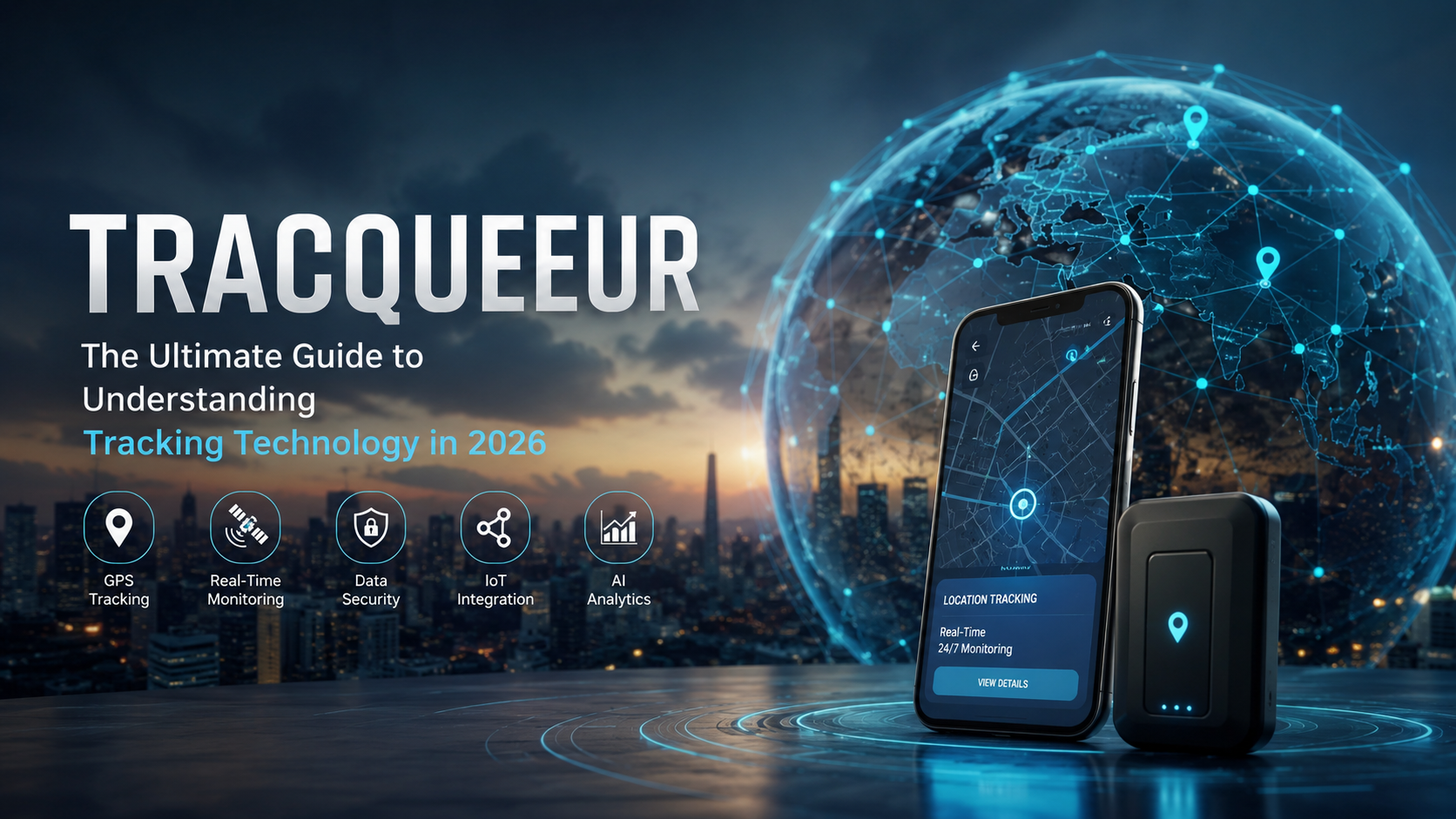
From the traditional hunter tracking game through dense forests to the modern digital tools that trace our every move, the concept of a “tracqueur” has undergone a remarkable evolution. In today’s interconnected world, tracking technology shapes everything from how we find lost keys to how businesses measure their visibility in AI search engines.
This guide provides a comprehensive overview of the diverse meanings and applications of “tracqueur” (and its variant “traqueur”) in 2026. Whether you’re curious about the linguistic roots, researching IoT vehicle recovery systems, or exploring AI-powered visibility tools, you’ll find clear, practical information here.
Table of Contents
-
What is a Tracqueur? Definitions and Origins
-
Traditional Tracking: The Hunting Origins
-
Modern Tracking Technologies
-
Vehicle Recovery and Fleet Management
-
Personal Item Trackers
-
Research and Urban Planning Tools
-
-
AI-Powered Tracking for Digital Visibility
-
Traqer.ai: Tracking Your Brand in AI Search
-
Topic-Based GEO Framework
-
-
Time Tracking Tools vs. Tracking Tools
-
How to Choose the Right Tracking Solution
-
Pros and Cons of Modern Tracking Technology
-
Frequently Asked Questions
-
Conclusion
What is a Tracqueur? Definitions and Origins
The French word “traqueur” (often spelled “tracqueur” in modern usage) has deep roots in the French language. Its primary, historical definition refers to a hunter who drives game towards other hunters in a hunt. The term appears in French dictionaries dating back to 1798, where it was defined simply as “one who tracks game”.
Over time, the word’s meaning expanded to describe anyone who pursues or tracks something – whether literal prey or metaphorical mysteries. As Montherlant wrote in 1939, a person could be described as “half traqueur, half traqué” – half hunter, half hunted. By the 19th century, figures like Inspector Javert in Hugo’s Les Misérables were described as “traqueurs” – relentless pursuers of their quarry.
In contemporary usage, “traqueur” encompasses:
-
Celui qui poursuit quelqu’un – someone who pursues another person
-
A tracker or monitoring device – in technological contexts
-
Informally, someone prone to anxiety – “someone who worries easily” in familiar French usage
Today, the word has been adopted into technological vocabulary to describe everything from Bluetooth trackers to software that monitors digital presence and behavior.
Traditional Tracking: The Hunting Origins
The original traqueur was an integral part of traditional hunting in France. These trackers operated in organized groups, working together to drive game through the forest:
“The number of trackers must always be significant given the average width of the area to be beaten. They must be a few meters apart from each other, armed with sticks and advance slowly in lines as straight as possible.”
This historical practice required coordination, patience, and intimate knowledge of both the terrain and animal behavior. The role demonstrates the fundamental principle that still underpins modern tracking: collecting information systematically to locate or understand a target.
Modern Tracking Technologies
Vehicle Recovery and Fleet Management
One of the most significant modern applications of tracking technology is in vehicle recovery and fleet management. Traqueur Group, founded in 1997, represents a prime example of how the tracking concept has evolved.
Key facts about Traqueur Group:
| Aspect | Details |
|---|---|
| Founded | 1997 |
| Specialization | Stolen vehicle recovery, telematics, fleet management |
| Market Position | French leader in stolen vehicle recovery |
| International Network | Part of LoJack international network |
| Reach | Over 9 million vehicles equipped worldwide |
| Alliance | Founder of ETNA (European Tracking Network Association) |
This type of tracking technology combines GPS positioning, cellular communication, and often integration with law enforcement to locate and recover stolen vehicles. For fleet managers, similar technology provides real-time visibility into vehicle location, driver behavior, and operational efficiency.
Personal Item Trackers
Bluetooth trackers represent the consumer-facing side of tracking technology. Devices like the Nedis Bluetooth Smart Tag allow users to attach small sensors to valuable items like keys, wallets, or bags.
Key specifications:
-
Technology: Bluetooth 5.1
-
Range: Up to 40 meters
-
Compatibility: Apple Find My network, iPhone, and iPad
-
Battery: CR2032, one-year lifespan
-
Dimensions: 44 × 8 × 44 mm
-
Weight: 14 grams
-
Features: Global tracking through Apple community, audible alert for finding items nearby
These devices leverage crowdsourced networks to locate items beyond direct Bluetooth range. When a tracker is detected by any compatible device in the network, its location is relayed to the owner. This approach, pioneered by companies like Apple with the Find My network, has made personal item tracking accessible to millions.
Research and Urban Planning Tools
TRACKEUR (note the spelling) developed at Erasmus University Rotterdam demonstrates how tracking technology serves academic and governmental research.
Core capabilities:
-
App-based data collection with user permission
-
Real-time location tracking
-
Survey integration
-
Analysis of public space usage
TRACKEUR helps researchers understand questions like:
-
How are cycling paths and public transport areas used?
-
How do tourists navigate city centers?
-
Where do people go in relation to tourist hotspots?
Target users:
-
Governments seeking evidence for policy decisions
-
Companies needing insights for business planning
-
Researchers validating real-world behavior patterns
The tool collects both “hard data” (precise location information) and “soft data” (survey responses), enabling researchers to validate findings through multiple data streams.
AI-Powered Tracking for Digital Visibility
Perhaps the most interesting evolution of tracking technology is its application to digital presence. As AI search engines like ChatGPT, Perplexity, and Claude become primary discovery channels for many users, businesses face a new challenge: understanding whether – and how – their brand appears in AI-generated responses.
Traqer.ai: Tracking Your Brand in AI Search
Traqer.ai represents a new category of tracking tool designed specifically for the age of generative AI. Founded by content marketing agency Grow and Convert, Traqer evolved from a pressing business need: clients wanted to know if they appeared when people asked AI for recommendations.
“We’ve gotten more leads from ChatGPT in the last 6 months than we have from SEO ever.” – Owner of a 7-figure consulting practice, Austin
Traditional SEO tracking is built for Google search, where keywords are short and user behavior is relatively predictable. AI search is fundamentally different:
Key differences:
-
Users engage in long conversations, not one-off queries
-
Responses are personalized based on user history
-
The same prompt yields different results for different users
-
Behavior is largely untrackable and unreproducible
Topic-Based GEO Framework
Traqer.ai takes a novel approach called Topic-Based Generative Engine Optimization (GEO). Instead of trying to guess the exact prompts users enter, Traqer measures visibility by topic area:
“If a conversation moves to a certain topic, how likely are you to be mentioned?”
This framework tracks multiple prompts within a topic area to gauge how often a brand appears when users type in relevant queries. For agencies, Traqer offers unlimited brand tracking – making it practical for client management at scale.
What Traqer.ai provides:
-
Visibility tracking across ChatGPT, Perplexity, Claude, and Google AI
-
Monitoring of specific keywords and topic areas
-
Visibility gap analysis for content strategy
-
Free 7-day trial for initial assessment
Important note: As the creators themselves acknowledge, no tool can precisely measure personalized conversations. The goal is to establish a reliable indicator of presence rather than exact ranking data.
Time Tracking Tools vs. Tracking Tools
It’s worth distinguishing between tracking tools like those discussed above and time tracking software – a related but distinct category.
Traqq (note spelling) is a time tracking software designed for remote teams. While not a “traqueur” in the tracking sense, it’s often confused with tracking tools:
Traqq Features:
-
Automated time tracking by project
-
AI-powered activity analysis (keyboard/mouse activity)
-
Ethical monitoring with blurred screenshots
-
App and website usage reporting
-
Offline tracking capability
-
Free plan for up to 3 users; paid plans from $7/seat/month
| Pros | Cons |
|---|---|
| Ethical monitoring with privacy-protected screenshots | No native mobile app |
| Offline time tracking available | Limited third-party integrations |
| Detailed productivity reports | Lacks advanced AI predictions |
The distinction matters: tracking tools focus on locating objects or monitoring presence in channels, while time tracking tools measure worker productivity and project efficiency.
How to Choose the Right Tracking Solution
Selecting the right tracking tool depends entirely on your specific needs. Consider this framework:
For Vehicle Tracking and Fleet Management
Choose a provider with:
-
Real-time GPS tracking
-
Integration with law enforcement (for recovery)
-
European coverage (for operations in Europe)
-
Proven reliability and established partnerships
Traqueur Group and similar providers work through the ETNA alliance for pan-European coverage.
For Personal Item Tracking
Consider:
-
Ecosystem compatibility (Apple Find My, Android Find My Device, or cross-platform)
-
Battery life (typically 1-3 years for Bluetooth trackers)
-
Range and network size
-
Physical durability and attachment options
For AI Visibility Tracking (Brands and Agencies)
Evaluate tools on:
-
Coverage across major AI search platforms
-
Topic-based approach vs. keyword-only tracking
-
Ability to track multiple brands or keywords
-
Actionable insights for content strategy
For Research and Government Use
Prioritize:
-
Data privacy compliance
-
Transparent data collection with user permission
-
Integration with analysis tools
-
Real-time capabilities
Pros and Cons of Modern Tracking Technology
| Pros | Cons |
|---|---|
| Locate lost items quickly and easily | Privacy concerns over continuous tracking |
| Improve fleet efficiency and reduce theft | Dependence on network coverage and battery life |
| Gain valuable behavioral insights for planning | Potential for misuse or surveillance |
| Measure brand presence in new AI channels | Attribution remains challenging and imperfect |
| Enable data-driven decision-making in research | Varying regulatory frameworks across countries |
Frequently Asked Questions
What does “traqueur” mean in French?
The French word “traqueur” traditionally means a hunter who tracks or drives game. In modern usage, it can also refer to anyone who pursues or tracks something, or (informally) someone who worries easily.
Is “tracqueur” spelled with two “r”s or one?
Both “traqueur” and “tracqueur” appear in usage. The original French dictionary spelling is “traqueur,” but “tracqueur” is increasingly common in product names and modern contexts.
How does Traqer.ai work?
Traqer.ai monitors brand visibility across AI search platforms like ChatGPT, Perplexity, and Claude. Instead of tracking specific prompts, it uses a topic-based approach to measure how likely a brand is to appear in AI conversations on relevant topics.
Can I track my brand in ChatGPT for free?
Traqer.ai offers a 7-day free trial. There are also manual methods – asking AI search engines about your brand and competitors – but these aren’t scalable or reliable.
What’s the difference between Traqer and Traqq?
Traqer (or Traqer.ai) tracks brand visibility in AI search. Traqq is a time tracking software for remote teams – they serve entirely different purposes.
Is Traqueur Group legitimate?
Yes. Founded in 1997, Traqueur Group is the French leader in stolen vehicle recovery, part of the LoJack international network, and founder of the ETNA alliance serving all of Europe.
What is TRACKEUR at Erasmus University?
TRACKEUR is an app-based research tool developed by Erasmus University Rotterdam. It collects real-time location data and survey responses from users with their permission, helping researchers understand public space usage.
How do Bluetooth trackers work?
Bluetooth trackers use short-range wireless technology to connect to your smartphone. If the item goes out of range, crowdsourced networks (like Apple Find My) allow other devices in the network to detect the tracker and relay its location to you.
What’s the difference between AI visibility tracking and traditional SEO?
Traditional SEO tracks keyword rankings in Google search. AI visibility tracking monitors whether your brand is mentioned in AI-generated responses – a more complex challenge since AI conversations are personalized and not standardized.
Should I use tracking software for my team?
For remote or distributed teams, time tracking software like Traqq can provide transparency on project hours without invasive monitoring. But always communicate clearly with your team about what’s being tracked and why.
Conclusion
The concept of the “tracqueur” has journeyed far from its origins in French hunting parties. Today, tracking technology helps us find lost belongings, recover stolen vehicles, understand urban behavior, and even measure our digital footprint in AI search.
Each type of tracking serves a specific purpose:
-
Vehicle tracking provides security and efficiency
-
Personal item trackers offer peace of mind for everyday items
-
Research tools enable data-driven planning and policy
-
AI visibility tracking is becoming essential for modern marketing
While the diversity of tracking tools can seem overwhelming, the key is to identify your specific need and choose accordingly. Ask yourself: What exactly am I trying to locate or measure? Once you have a clear answer, the right solution becomes obvious.
As AI continues to reshape how people discover information – and as tracking technology becomes ever more sophisticated – understanding these tools will only grow in importance. Whether you’re a business owner, a marketing professional, or simply someone who wants to keep track of their keys, there’s a tracqueur for you.
About the Author