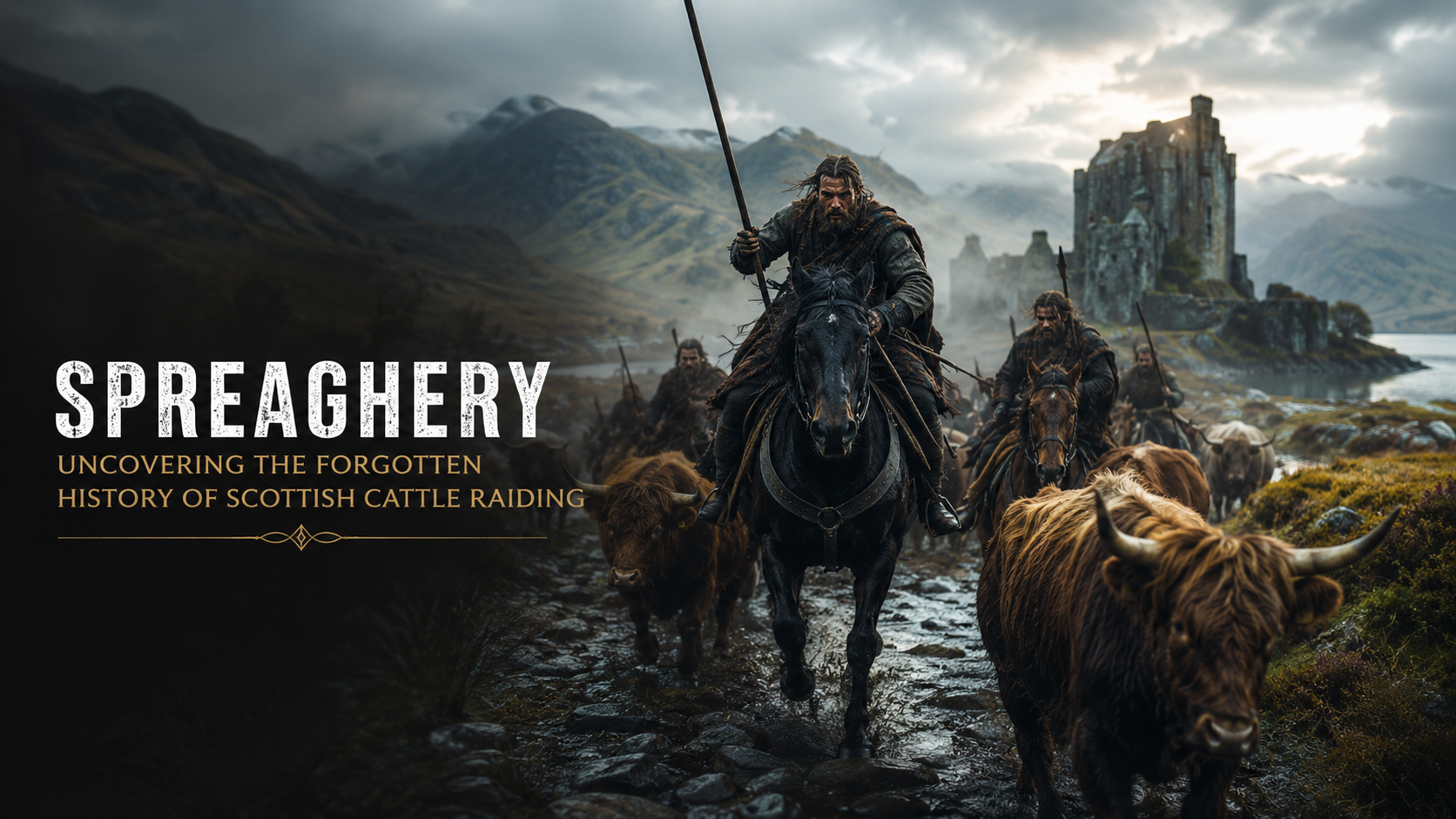
In the misty valleys and rugged glens of the Scottish Highlands, a way of life once revolved around a practice that sounds almost mythical today: the cattle raid. This activity had a specific name—spreaghery—a term that evokes images of clan warfare, border skirmishes, and the struggle for survival in one of Britain’s most unforgiving landscapes. While the word itself has largely faded from modern usage, its history offers a fascinating window into a world where livestock was the primary currency of wealth and power. This article explores the origins, meaning, and historical context of spreaghery, shedding light on a term that remains essential for understanding Scottish history and culture.
What is Spreaghery?
Spreaghery is a historical term originating from Scotland that refers to the activity or crime of raiding cattle. At its core, it describes the act of cattle-lifting or stealing livestock, typically executed as a raid or foray. However, the term carries a much richer connotation than simple theft. It was closely tied to the clan system, feuds, and a distinct Highland culture where the ownership of cattle signified social standing and wealth.
Definition and Pronunciation
Pronunciation: /ˈsprɛxərɪ/ (SPREKH-uh-ree)
Part of Speech: Noun
Synonyms: Cattle-raiding, cattle-lifting, reiving, creagh (an Irish term for the same activity), depredation, foray.
Variant: Sprechery
The word is derived from spreagh, which itself is an alteration of the Scottish Gaelic word spréidh, meaning “cattle” or “wealth”. This linguistic link is crucial: in the Gaelic world, cattle were not simply animals; they were the primary measure of a person’s prosperity. To take someone’s cattle was to attack their very livelihood and status.
The Historical Context of Spreaghery
To truly understand spreaghery, one must look beyond the dictionary definition and consider the world in which it thrived. This practice was most prominent in the Scottish Highlands and the Border regions from the late medieval period through the 18th century. It was not merely a crime of opportunity; it was often a formalized activity woven into the fabric of clan life.
The Significance of Cattle in Highland Society
In the rugged terrain of the Highlands, large-scale agriculture was difficult. Cattle represented a portable and resilient form of wealth. They provided food, milk, and hides and were the foundation of the Highland economy. A successful clan chief’s status was often measured by the size of his herds.
Because cattle were so valuable, they became the primary target during conflicts. A “spreagh,” or raid, served multiple functions:
-
Acquisition of Wealth: Stealing cattle was a quick way to increase a clan’s resources.
-
Revenge: Raids were frequently carried out as retribution for a previous offense or slight.
-
Rite of Passage: Young warriors often had to prove their mettle by participating in a successful spreagh.
Clan Warfare and the Cattle Raid
Clan society was organized around kinship and loyalty to a chief. Disputes between clans were common, and cattle raiding was a key tactic of warfare. These raids were often highly organized affairs, involving dozens of men who would ride into enemy territory, drive away as many cattle as possible, and return to their own lands before a counter-raid could be launched.
The famous Scottish novelist Sir Walter Scott, who helped popularize many aspects of Highland culture, wrote extensively about this practice. In his novel Rob Roy, he mentions meeting an old follower of the famed outlaw who “had been at many a spreagh (foray) with that redoubted freebooter”. Scott used the term explicitly, defining it in plain terms as “stealing a herd of nowte” (cattle). Another character in his novel Quentin Durward notes, “To drive a spreagh, or so, is no thievery”, highlighting the cultural perception of the act as a legitimate, if aggressive, pursuit rather than common theft.
The Border Reivers
While spreaghery is typically associated with the Scottish Highlands, a similar, even more notorious practice occurred in the Anglo-Scottish Border region. Here, the perpetrators were known as Border Reivers. While the term “spreaghery” was primarily used in a Scottish context, the activity on the Borders was essentially the same: cattle raiding, pillaging, and blackmailing.
The Border Reivers operated in a lawless region between two kingdoms, conducting raids deep into England and Scotland. This cross-border raiding was a significant political issue for centuries, eventually leading to the harsh measures of the “King’s Wardens” and the eventual pacification of the Borders following the union of the crowns in 1603. While the word “spreaghery” is less commonly applied to the Border Reivers, the underlying concept of organized cattle theft was identical.
Spreaghery in Literature and Culture
Much of what we know about spreaghery comes from its representation in literature. Sir Walter Scott’s works, in particular, were instrumental in transforming the Highland cattle raider from a feared criminal into a romanticized, almost heroic figure. He used words like spreaghery and its variant sprechery to add authenticity and local color to his narratives.
In Scott’s novel Waverley, a character references the “quantity of useless sprechery which they have collected on their march”. This use illustrates another nuance of the word. While its primary meaning was the act of raiding, it could also refer to the plunder or booty itself—the items (often of “inferior description”) stolen during a raid. This dual meaning—both the act of raiding and the spoils of the raid—is common in historical terms related to plunder.
The Decline of Spreaghery
The practice of cattle raiding and the word spreaghery declined for several reasons:
-
The Jacobite Risings: The defeat of the Jacobite uprising at the Battle of Culloden in 1746 led to the brutal suppression of Highland culture. The British government enacted laws to dismantle the clan system, prohibiting traditional weapons, tartans, and the gathering of clansmen. Without a functional clan system, organized cattle raiding became far more difficult and dangerous.
-
The Highland Clearances: Beginning in the late 18th century, clan chiefs began evicting their tenants to make way for large-scale sheep farming. This process, known as the Highland Clearances, destroyed the traditional social and economic structures that had supported the clan system, eliminating the economic context for cattle raiding.
-
Legal Changes: The British legal system gradually extended its reach into the Highlands and Borders. The “Wardens of the Marches” were replaced by a more integrated legal framework, making it easier to prosecute thieves and bringing an end to the lawlessness that had once allowed raiding to flourish.
-
Industrialization: As the Industrial Revolution took hold, the economy and population centers shifted away from the rural Highlands. Cattle were increasingly driven to markets in the Lowlands, where they were sold legally, making the risks of raiding less worthwhile.
The Modern Legacy
Today, the word spreaghery is rarely used in everyday English. It is considered an archaic term, primarily found in historical texts, dictionaries, and literary analyses. Yet its legacy persists.
A Connection to Heritage
For those researching Scottish ancestry, encountering a word like spreaghery in family histories or historical documents provides a tangible link to the past. It suggests ancestors who were either participants in or victims of a system where cattle were the primary currency of power. The term can bring a deeper understanding of the challenges and realities of life in the Scottish Highlands.
The Romance of the Raid
The romanticized image of the Highland cattle raider—brave, hardy, and fiercely independent—continues to capture the imagination. Popular culture, from historical novels to films like Braveheart and Rob Roy, often perpetuates this image, keeping the spirit of the “spreagh” alive in a highly stylized form. This legacy, however, often glosses over the very real violence and hardship that cattle raiding represented for its victims.
Pros and Cons of the Cattle-Raiding Lifestyle (Historical Context)
Understanding the motivations and drawbacks of spreaghery helps contextualize it as a historical reality.
| Pros | Cons |
|---|---|
| Economic Gain: A successful raid could significantly boost a clan’s wealth and resources, providing food and trade goods. | Extreme Danger: Raids often resulted in serious injuries or death for those involved. |
| Social Status: Participation enhanced a warrior’s reputation and standing within the clan. | Feuds: Raids invariably led to bloody feuds and cycles of vengeance that could last for generations. |
| Political Power: A powerful clan known for successful raiding could intimidate rivals and expand its influence. | Escalation: Raids could escalate into large-scale battles and attract the attention of the Crown, leading to harsh reprisals. |
| Survival: In lean times, raiding could be a matter of survival for a clan facing starvation. | Instability: Constant raiding created a lawless environment that prevented economic development and peaceful commerce. |
Frequently Asked Questions About Spreaghery
What is the definition of spreaghery?
Spreaghery is a Scottish historical term that refers to the activity or crime of raiding cattle. It can also refer to the plunder or booty taken during such a raid.
How do you pronounce spreaghery?
The correct pronunciation of spreaghery is /ˈsprɛxərɪ/, which sounds like SPREKH-uh-ree.
Is spreaghery the same as cattle rustling?
While similar, spreaghery has a specific historical and cultural context. It was an organized activity often carried out as part of clan warfare, and carried significant cultural and political meaning. Cattle rustling is a more general term for the theft of livestock.
What is the origin of the word spreaghery?
The word originates from the Scottish Gaelic term spréidh, meaning cattle or wealth. It is derived from spreagh, which refers to the raid itself, or the cattle taken.
Are there any synonyms for spreaghery?
Yes, synonyms include sprechery (a variant spelling), cattle-lifting, reiving, creagh (an Irish term), foray, and depredation.
Where did spreaghery take place?
Spreaghery was primarily practiced in the Scottish Highlands and the Anglo-Scottish Border regions. It was a key feature of life in these areas from the late medieval period until the 18th century.
Why did cattle raiding end in Scotland?
The decline of cattle raiding was due to a combination of factors, including the suppression of the clan system after the Jacobite Risings of 1745-46, the Highland Clearances, stricter law enforcement, and economic changes brought about by the Industrial Revolution.
Is the word spreaghery used today?
No, spreaghery is considered an archaic or historical term. It is not used in modern English but is encountered in historical texts, dictionaries, and studies of Scottish culture.
How is spreaghery related to Sir Walter Scott?
Sir Walter Scott, the famous Scottish novelist, used words like spreaghery and sprechery in his novels, such as Rob Roy and Waverley, to add historical authenticity to his stories about Scottish life.
What is a spreagh?
A spreagh is a single cattle raid or the cattle taken during the raid. It is the root word from which spreaghery is derived.
Conclusion: Understanding Spreaghery as More Than a Word
Spreaghery is much more than an obsolete dictionary entry. It is a historical artifact that encapsulates a specific way of life, a code of conduct, and the harsh realities of survival in a bygone era. It represents a time when cattle were not just livestock but the very bedrock of society—a portable currency that determined power, status, and survival.
Understanding spreaghery and its linguistic roots is essential for anyone interested in Scottish history, genealogy, or culture. It provides a valuable lens through which to view the clan system and the dynamics of a society structured around kinship, honor, and conflict. So, the next time you encounter this peculiar word, you’ll know it’s a portal to the dramatic and often bloody history of the Scottish Highlands.
About the Author