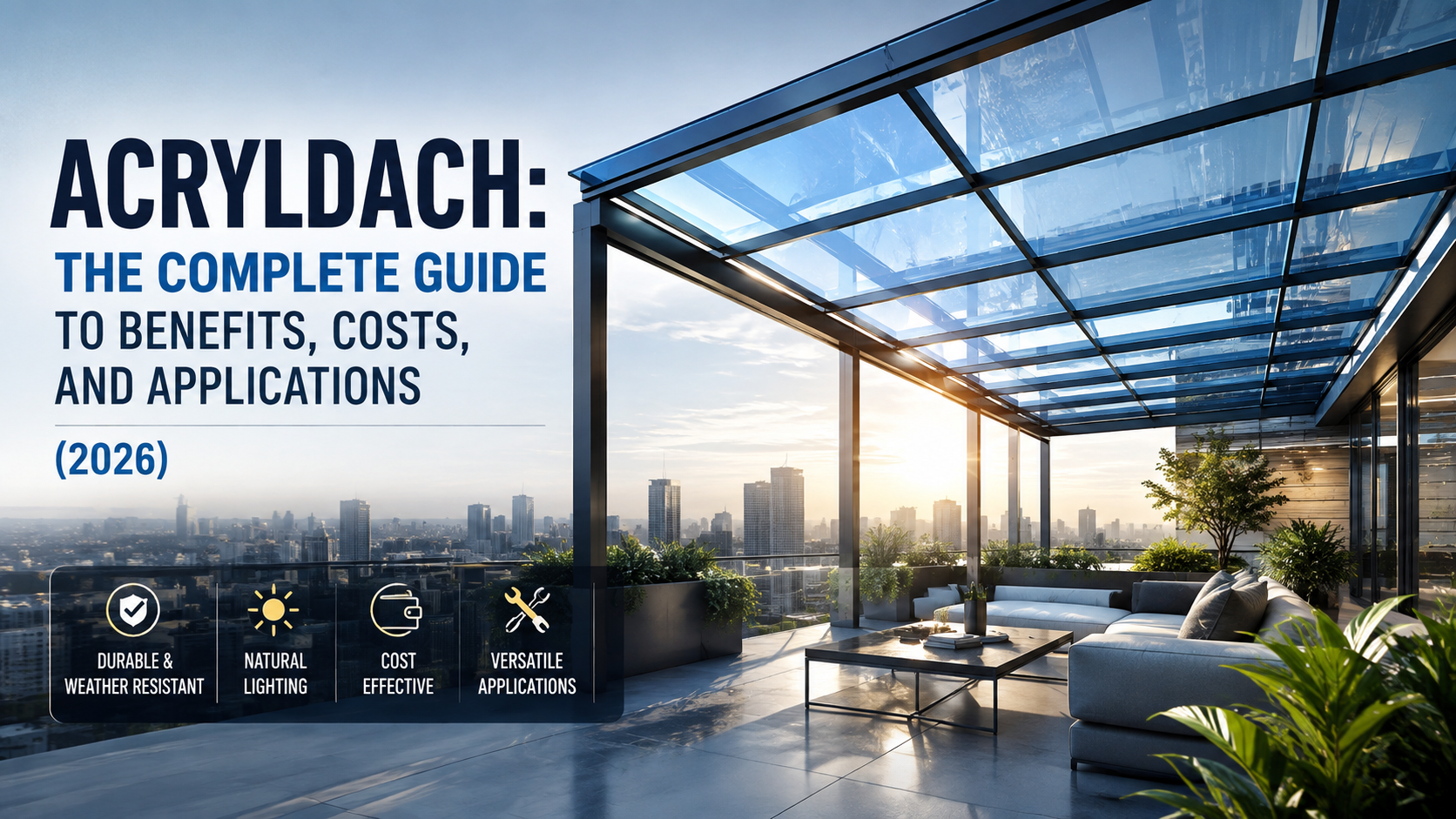
A Modern Alternative to Glass Roofing
Imagine cutting your roofing costs by more than half while keeping the same sleek, transparent aesthetic. That is the reality offered by acrylic roofing—known in the industry as Acryldach. In an era where construction and renovation budgets face constant pressure, this material has emerged as a practical solution for everything from car showrooms to patio covers.
While glass has long been the standard for transparent roofing, acrylic has matured from a brittle, yellowing plastic into a durable, UV-stabilized building material. Today, over 2.5 million square meters of acrylic roofing have been installed by specialists like Roda GmbH since 1983. This guide examines acrylic roofing from every angle—costs, durability, installation, and applications—so you can determine if it fits your project.
Table of Contents
-
What Is an Acryldach?
-
Key Benefits of Acrylic Roofing
-
Cost Comparison: Acrylic vs. Glass
-
Common Applications and Use Cases
-
Technical Specifications and Material Properties
-
Comparison Table: Acrylic vs. Glass vs. Polycarbonate
-
Pros and Cons
-
Frequently Asked Questions
-
Conclusion
What Is an Acryldach?
An Acryldach is a transparent or translucent roofing system constructed primarily from acrylic glass—chemically known as polymethyl methacrylate (PMMA). Developed as an alternative to traditional glass, acrylic roofing delivers a strikingly similar aesthetic with significantly lower weight and cost.
Acrylic roofing first gained traction in the automotive industry for vehicle display areas and showrooms. Today, it is used across residential and commercial sectors. The material is available in various thicknesses, typically starting at 4 mm for DIY products like awnings and carports, and can be fabricated into large curved panels for commercial structures.
Why Choose Acrylic Over Glass?
Acrylic offers a compelling combination of transparency and practicality. It is approximately five times lighter than glass and costs about €220 per square meter—less than half the price of a comparable glass roof, which can exceed €550 per square meter. This weight reduction means less structural support is needed, leading to further savings on the building frame.
Key Benefits of Acrylic Roofing
1. Cost-Effectiveness
The cost advantage is the most persuasive argument for acrylic roofing. A glass roof can cost up to €550 per square meter, while acrylic typically runs about €220 per square meter. This allows large commercial spaces to be covered affordably.
2. Lightweight Construction
Acrylic’s low density creates numerous knock-on benefits. Because acrylic weighs only about one-fifth as much as glass, structural requirements are simpler and less expensive. For car dealerships, this means support pillars can be spaced up to 15 meters apart, eliminating obstructions and allowing unimpeded vehicle maneuvering.
3. High Light Transmission
Acrylic offers light transmission of 92% to 93%—essentially identical to glass. Modern acrylic has also largely overcome the yellowing problem associated with older plastics. High light stability prevents discoloration even after years of outdoor exposure.
4. Impact Resistance
Acrylic is significantly more impact-resistant than glass. It withstands hail and debris strikes that would shatter glass, though it is more susceptible to cracking under extreme stress than its cousin polycarbonate. For car dealerships, protecting vehicles from golf-ball-sized hail is a priority—insurers often provide premium discounts for covered display areas.
5. Self-Cleaning Properties
Curved acrylic roofing, in particular, benefits from a self-cleaning effect. Rainwater effectively washes away dust and debris. Regular professional cleaning every two years is typically sufficient to maintain optical clarity.
Cost Comparison: Acrylic vs. Glass
| Material | Cost per m² | Weight | Light Transmission | Impact Resistance |
|---|---|---|---|---|
| Acrylic (PMMA) | ~€220 | ~6 kg | ~92-93% | Good (shatter-resistant) |
| Glass | Up to €550 | ~30 kg | ~90% | Poor (shatters) |
| Polycarbonate | Mid-range | Lightweight | ~88-90% | Excellent (250x stronger than glass) |
Common Applications and Use Cases
Automotive Dealerships
The automotive sector has been a primary driver of acrylic roofing adoption. Covered display areas keep vehicles clean and ready for test drives, while covered service bays allow maintenance work to continue outdoors without weather interruption. One auto workshop owner reported installing a covered brake-testing station and lift area without interrupting daily operations, resulting in an architectural upgrade to the building.
Commercial and Retail Spaces
Retail parking lots, distribution centers, and walkways benefit from acrylic roofing that keeps customers dry while maintaining a bright, open atmosphere. The ability to span large distances without columns is a major advantage for retail settings where clear sightlines are essential.
Residential Applications
DIY acrylic roofing kits are widely available for carports, patio covers, and entrance awnings. The Palram-Canopia “Nancy” model, for example, features 4 mm thick acrylic with 100% UV protection and aluminum framing, supporting easy assembly without special tools.
Public and Specialty Structures
Acrylic roofing provides 180-degree views in architectural projects like the “Ithaa” underwater restaurant in the Maldives. While extreme, this demonstrates the material’s ability to withstand harsh environmental conditions when properly engineered.
Technical Specifications and Material Properties
UV Resistance
Modern acrylic incorporates UV stabilizers to prevent yellowing. When certified with high light stability, acrylic retains its clarity and resists degradation even after years of outdoor exposure. Industry experts note that the old belief that plastics quickly yellow is outdated.
Temperature Performance
Acrylic performs well in most climates but has limitations. It becomes brittle at -20°C and may soften above 80°C. For moderate climates, this is rarely an issue, but extreme environments may require alternative materials.
Fire Rating
Fire resistance varies by product. Acrylic can be flammable, while polycarbonate often carries a UL94 V-0 self-extinguishing rating. Building codes may influence material choice in fire-sensitive applications.
Cleaning and Maintenance
Acrylic requires gentle care. Mild soap solutions and soft cloths are recommended, as harsh chemicals or abrasive tools can scratch the surface. The smooth surface resists moss growth and is generally easy to maintain.
Comparison Table: Acrylic vs. Glass vs. Polycarbonate
| Feature | Acrylic (PMMA) | Glass | Polycarbonate |
|---|---|---|---|
| Cost per m² | ~€220 | ~€550 | Mid-range |
| Weight | Very light (~6 kg/m²) | Heavy (~30 kg/m²) | Very light |
| Light Transmission | 92-93% | ~90% | 88-90% |
| Impact Resistance | Good | Poor | Excellent (250x glass) |
| UV Stability | Good (modern grades) | Excellent | Good (with coatings) |
| Scratch Resistance | Moderate | Excellent | Moderate |
| Best For | Cost-effective transparency | Premium aesthetics | Extreme impact/security |
Pros and Cons
Pros
-
Cost-Effective: Approximately €220/m² versus €550/m² for glass, cutting roofing costs by more than half.
-
Lightweight: Reduces structural requirements and allows wider spans.
-
Excellent Transparency: Achieves light transmission nearly identical to glass.
-
Modern UV Stability: Resists yellowing, maintaining clarity over time.
-
Impact Resistant: Offers good protection against hail and debris.
Cons
-
Prone to Scratching: Requires careful cleaning with non-abrasive materials.
-
Temperature Sensitivity: May soften in high heat or become brittle in extreme cold.
-
Fire Risk: Unless treated, acrylic can be flammable, unlike some polycarbonate alternatives.
-
Potential for Cracking: Can become brittle and crack over time, especially in cold climates.
Frequently Asked Questions
How long does an acrylic roof last?
With proper care, acrylic roofs can last 10 to 20 years. High-quality, UV-stabilized materials resist degradation and maintain clarity for many years. However, they may need replacement sooner than glass, which can last decades.
Is acrylic roofing suitable for extreme weather?
Acrylic performs well in moderate climates but may struggle in extreme environments. In very cold weather it can become brittle, and in intense heat it may soften. Polycarbonate is generally recommended for extreme weather applications.
Can I install an acrylic roof myself?
Yes, many products are designed for DIY installation. Kits like the Palram-Canopia “Nancy” awning come as complete sets requiring no special tools. Larger commercial installations should be handled by professionals.
Does acrylic roofing yellow over time?
Modern acrylic with high light stability does not yellow, even after years of outdoor exposure. This problem has been effectively addressed by advances in UV stabilization.
What is the best way to clean acrylic roofing?
Use a mild soap solution with a soft cloth. Avoid abrasive cleaners, sponges, or anything that could scratch the surface. Acrylic’s smooth surface naturally resists dirt buildup, and rain effectively rinses it clean.
How does acrylic compare to glass for patio covers?
Acrylic is lighter, less expensive, and less likely to shatter than glass. However, it scratches more easily and may have a shorter lifespan. Choose acrylic for affordability and safety, and glass for longevity and scratch resistance.
Can acrylic roofing support snow loads?
Acrylic’s ability to support snow depends on its thickness and structural support. In heavy snow regions, proper engineering with adequate thickness and a steep pitch to shed snow is essential.
What is the fire rating of acrylic roofing?
This varies by product. Standard acrylic can be flammable, but fire-retardant grades are available. For commercial buildings, check local building codes for required fire ratings.
Is acrylic roofing recyclable?
Yes, acrylic is a thermoplastic and can be recycled. However, recycling facilities for acrylic are less common than for glass. Check with local recyclers for specific capabilities.
Can I walk on an acrylic roof?
No. Acrylic roofing is not designed to support human weight. Standing on it can cause cracking or complete failure. Always use proper ladders and fall protection when performing maintenance.
Conclusion
Acrylic roofing presents a proven, modern solution for anyone seeking the aesthetic of glass without the weight and cost. Its light transmission, durability, and price advantage make it suitable for a wide range of applications—from protecting vehicles in a showroom to creating a bright, welcoming entrance at home.
While acrylic may not be ideal for the most extreme climates, most residential and commercial users will find its performance perfectly adequate. Before committing, consider your local climate, building regulations, and personal expectations for maintenance and longevity.
For most projects, acrylic roofing is an intelligent choice that balances form, function, and budget. If you need extreme impact resistance, polycarbonate may be the better alternative; if you require the ultimate in scratch resistance and longevity, glass remains superior. But for the vast majority of transparent roofing needs, Acryldach is a material that deserves close consideration.
About the Author