Introduction
If you’ve searched for dougahozonn, you’re probably trying to figure out whether it’s a website, an app, a software tool, or simply an unfamiliar internet term. The confusion is understandable. Unlike established technology brands or dictionary words, dougahozonn appears across blogs, search results, and online discussions without much authoritative explanation.
The answer is simpler than it first appears.
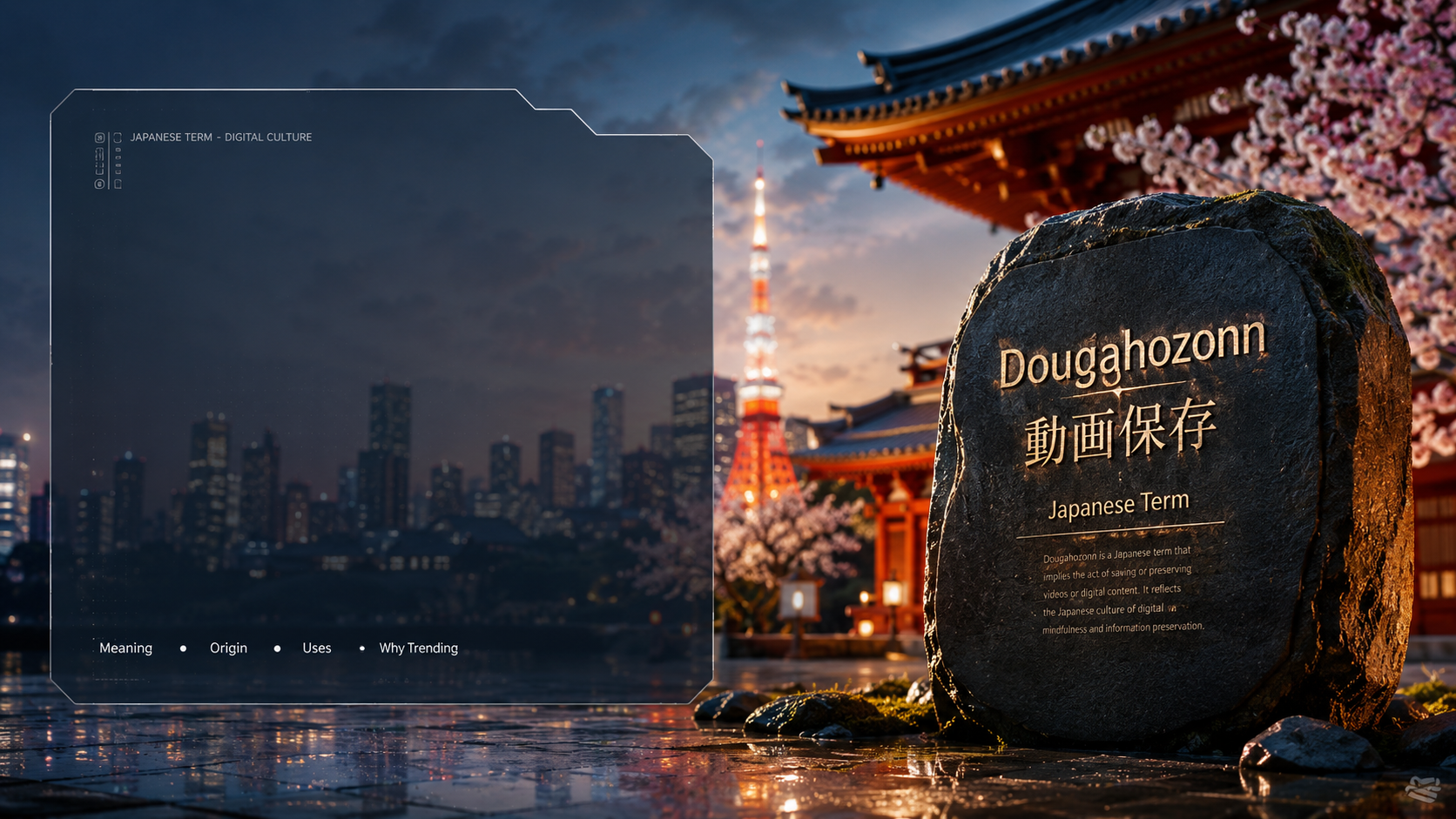
Dougahozonn is a stylized romanization of the Japanese phrase (dōga hozon), which literally translates to “video saving” or “video preservation.” Rather than referring to one specific application or service, it generally describes the act of saving, storing, downloading, or archiving digital videos for future use.
Interest in the keyword has grown because people increasingly encounter it in Japanese software interfaces, online tutorials, anime communities, browser extensions, and discussions about downloading or preserving online videos. As a result, many users search for its meaning before understanding the context.
This guide separates verified facts from common assumptions, explains the linguistic origin of the term, explores its practical uses, discusses legal and ethical considerations, and explains why the keyword has recently become more visible across the internet.
Quick Answer
| Question | Answer |
|---|---|
| What does Dougahozonn mean? | A stylized spelling of the Japanese phrase 動画保存 (dōga hozon), meaning “video saving” or “video preservation.” |
| Is it an app? | No. The term itself is not the name of a specific application. |
| Is it Japanese? | Yes. It originates from Japanese language. |
| Why is it trending? | Increased curiosity, Japanese software usage, and discussions about saving online videos. |
| Is downloading videos always legal? | No. It depends on copyright law, platform terms, and local regulations. |
Understanding the Meaning of Dougahozonn
Breaking the word into its original Japanese components makes its meaning clear.
- (Douga) = video or moving image
- (Hozon) = preservation, storage, or saving
Together:
= Video Saving / Video Preservation
The extra “n” in dougahozonn is generally considered a stylistic or non-standard romanization rather than the conventional spelling dōga hozon. Despite this variation, online users often search for “dougahozonn,” making it a recognizable keyword.
Why Are People Searching for Dougahozonn?
Several factors explain the growing search volume.
1. Japanese Software and Apps
Many Japanese applications include menu options labeled , leading international users to search the romanized version.
2. Anime and Gaming Communities
Fans using Japanese websites or software often encounter the phrase while downloading or managing media.
3. Video Download Tutorials
Many tutorials discussing offline viewing or media preservation reference the Japanese terminology.
4. Curiosity Around Unknown Keywords
Once an unfamiliar word appears repeatedly in search suggestions or social media discussions, curiosity alone can drive additional searches.
Dougahozonn Is Not a Specific Website
One of the biggest misconceptions is that Dougahozonn refers to a dedicated platform.
Current publicly available information does not support that claim.
Instead, the term generally represents the broader concept of saving or preserving videos. Although some websites have published articles treating “Dougahozonn” almost like a branded idea, there is no authoritative evidence that it is an official company, software product, or online service.
What Does Video Preservation Mean?
Video preservation extends beyond downloading a file.
It includes practices such as:
- Saving videos for offline viewing
- Backing up personal recordings
- Archiving educational content
- Preserving historical footage
- Organizing media libraries
- Maintaining multiple backups
- Protecting files against corruption or accidental deletion
For professionals, preservation also involves metadata, file formats, storage redundancy, and long-term accessibility.
Why Video Preservation Matters
Digital media is surprisingly fragile.
Videos may disappear because:
- Accounts are deleted.
- Platforms remove content.
- Copyright claims take videos offline.
- Websites shut down.
- Storage devices fail.
- Files become corrupted.
- Formats become obsolete.
For creators, educators, journalists, researchers, and families, preserving valuable videos helps prevent permanent loss.
Common Uses of Dougahozonn
Personal Use
Many people save:
- Family videos
- Vacation recordings
- Wedding footage
- School projects
Education
Students often preserve:
- Online lectures
- Tutorials
- Research presentations
- Demonstrations
Content Creation
Creators archive:
- Raw footage
- Edited projects
- Social media uploads
- Client work
Business
Organizations preserve:
- Training videos
- Marketing campaigns
- Product demonstrations
- Internal communications
Best Practices for Video Preservation
Professionals typically recommend:
Keep Multiple Copies
Follow the well-known 3-2-1 backup strategy:
- Three copies
- Two different storage media
- One off-site backup
Use Reliable Storage
Examples include:
- External SSDs
- NAS systems
- Cloud storage
- Enterprise archival solutions
Organize Files Clearly
Use:
- Descriptive filenames
- Folder structures
- Dates
- Categories
Preserve Original Quality
Avoid repeatedly compressing or re-encoding videos whenever possible.
Verify Backups
Occasionally check archived files to ensure they remain accessible.
Legal and Ethical Considerations
The concept of Dougahozonn should not be confused with unrestricted downloading.
Whether saving videos is lawful depends on several factors:
| Situation | General Consideration |
| Saving your own videos | Usually acceptable |
| Downloading copyright-protected content without permission | May violate copyright laws |
| Saving videos for personal offline viewing | Rules vary by platform and jurisdiction |
| Redistributing copyrighted videos | Often prohibited |
Always review the platform’s terms of service and applicable copyright laws before downloading or sharing protected content.
Common Misconceptions
“Dougahozonn is an App”
False.
No authoritative evidence identifies Dougahozonn itself as a standalone application.
“Dougahozonn is Illegal”
Not necessarily.
The term simply refers to video saving or preservation. Legality depends on how the activity is carried out.
“It Only Applies in Japan”
False.
Although the phrase originates from Japanese, the underlying concept of video preservation is universal.
“It’s Just Downloading”
Not entirely.
Professional video preservation also includes organization, backup, long-term storage, metadata management, and accessibility.
Why the Keyword Has Become More Visible
Recent blog posts and discussions have likely contributed to increased interest, but much of the available content repeats similar explanations rather than introducing new verified information. Searches appear to be driven by curiosity about the Japanese phrase and its association with saving online videos, rather than by a newly launched product or service.
Practical Example
Imagine you’re producing educational videos for your business.
Instead of keeping only one copy on your laptop, you:
- Save the original file.
- Upload another copy to cloud storage.
- Keep a backup on an external drive.
- Organize videos by date and project.
- Periodically verify that each file still opens correctly.
That workflow reflects the broader idea behind dougahozonn—preserving important video content so it remains available in the future.
Expert Perspective
As streaming platforms become the primary way people consume media, ownership of digital content has become less certain. Videos can disappear because of licensing changes, platform policies, or account removals. A thoughtful preservation strategy helps creators, educators, and organizations retain access to material they are legally entitled to keep. While the Japanese phrase simply means “video saving,” it also highlights the broader importance of treating valuable digital content as something worth maintaining over time.
Frequently Asked Questions
What does Dougahozonn mean?
Dougahozonn is a stylized romanization of the Japanese phrase 動画保存 (dōga hozon), meaning “video saving” or “video preservation.”
Is Dougahozonn a software application?
No. Current public information does not identify Dougahozonn as a specific software product or online service.
Why are people searching for Dougahozonn?
People encounter the term in Japanese software, online tutorials, and discussions about saving videos, prompting searches for its meaning.
Is Dougahozonn only about downloading videos?
No. It also encompasses organizing, backing up, storing, and preserving video files for long-term access.
Is downloading online videos always legal?
No. Copyright law, licensing, and platform terms determine whether downloading is permitted.
Why is video preservation important?
Videos may disappear because of platform removals, account deletions, hardware failures, or changing file formats. Proper preservation helps reduce the risk of permanent loss.
Is Dougahozonn an official English word?
No. It is a romanized Japanese phrase rather than a standard English dictionary term.
Does the extra “n” have a special meaning?
The additional “n” is generally viewed as a stylistic or alternative romanization rather than a change in meaning.
Final Thoughts
For most users, dougahozonn simply means saving or preserving video content. Its roots lie in the Japanese phrase (dōga hozon), and there is no reliable evidence that it refers to a single app, platform, or official online service. As online media becomes increasingly temporary, the concept of preserving important videos—whether personal memories, educational resources, or creative projects—continues to grow in relevance. Understanding the term also helps separate genuine digital preservation practices from misconceptions that often arise around unfamiliar internet keywords.
About the Author




1 thought on “What Is Dougahozonn? Meaning, Origin, Uses, and Why the Japanese Term Is Gaining Attention Online”