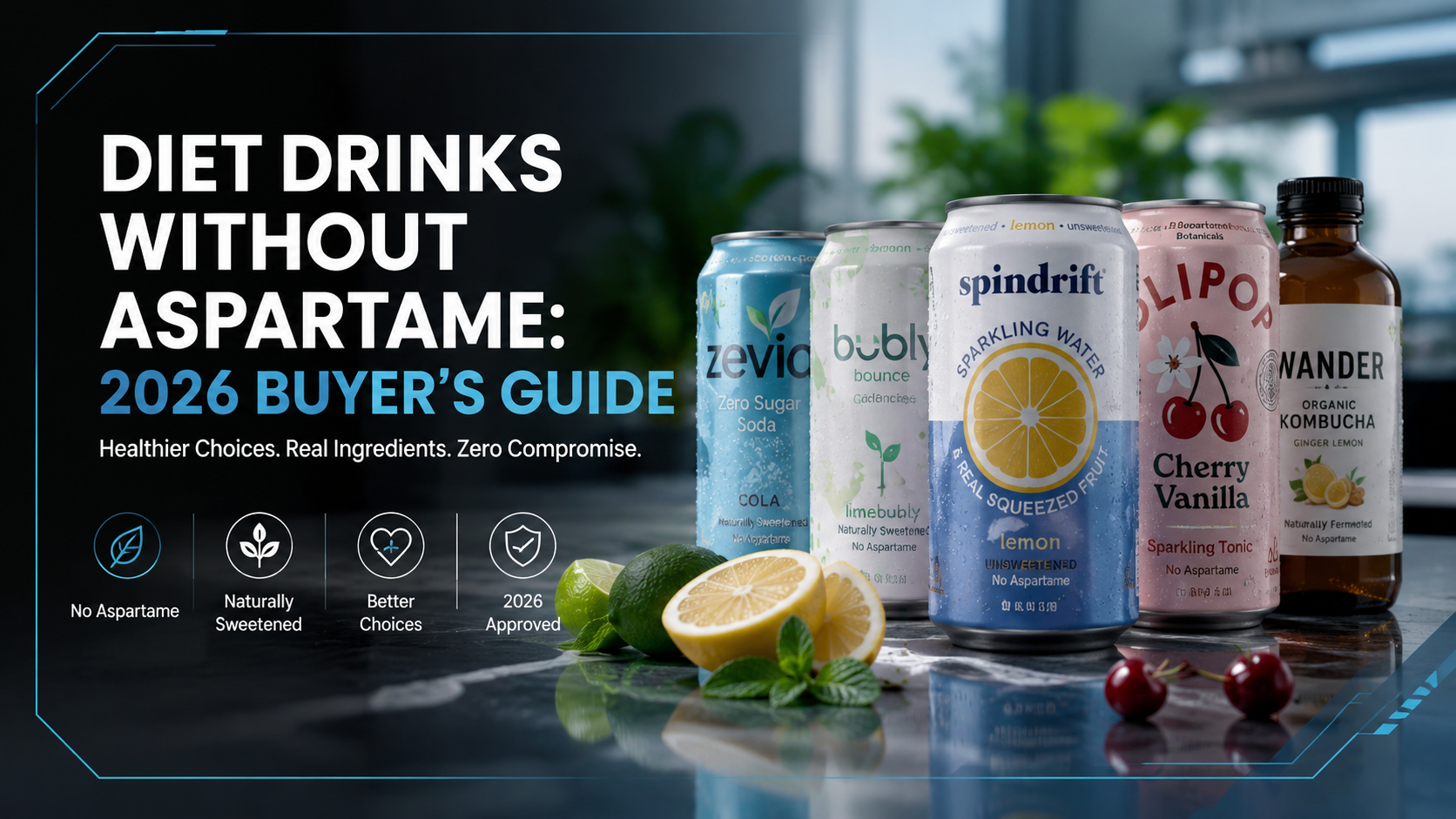
If you’ve started reading nutrition labels more closely, you’ve probably noticed how often aspartame shows up in diet soda, flavored water, and “zero sugar” drinks. For some people that’s a non-issue. For others — maybe you get headaches after a can of diet cola, or you just read the 2023 WHO headlines and decided you’d rather avoid it — the search for diet drinks without aspartame can feel more complicated than it should be.
The good news: you have more real options than a decade ago. Stevia-sweetened sodas, sucralose-based colas, monk fruit sparkling waters, and prebiotic soda alternatives have all carved out shelf space next to the traditional diet soda aisle. The confusing part is that formulas change often, vary by country, and sometimes get quietly reformulated without much announcement.
This guide breaks down what “aspartame-free” actually means, which brands and products currently fit the bill, how the alternative sweeteners compare, and what the science actually says — without the fear-mongering or the false reassurance.
In this article, you’ll learn:
- What aspartame is and why some people choose to avoid it
- Which sweeteners commonly replace it, and how they differ
- A practical list of aspartame-free diet drinks by category
- A side-by-side comparison table and pros/cons breakdown
- How to verify a product is aspartame-free yourself (labels change)
- Answers to the most common questions people search for on this topic
Table of Contents
- What Does “Aspartame-Free” Actually Mean?
- Why People Look for Diet Drinks Without Aspartame
- Common Sweeteners Used Instead of Aspartame
- Best Diet Drinks Without Aspartame in 2026
- Comparison Table: Aspartame-Free Diet Drinks
- Pros and Cons of Switching Away from Aspartame
- How to Verify a Drink Is Actually Aspartame-Free
- Frequently Asked Questions
- Final Thoughts
What Does “Aspartame-Free” Actually Mean?
Aspartame is a non-nutritive, artificial sweetener that’s roughly 200 times sweeter than table sugar, which is why only a tiny amount is needed to sweeten a can of soda. It’s been used in food and drinks since the 1980s — everything from diet soda to chewing gum, yogurt, and even some medications.
“Aspartame-free” simply means a product uses a different sweetening system entirely — usually another artificial or non-nutritive sweetener like sucralose or acesulfame potassium, a plant-derived sweetener like stevia or monk fruit, a sugar alcohol like erythritol, or some blend of these.
Here’s the catch worth understanding upfront: swapping sweeteners isn’t automatically a health upgrade. It’s a trade-off. Each alternative has its own safety profile, taste characteristics, and open research questions. This guide treats it that way rather than pretending one option is obviously “clean” and another is obviously “bad.”
Why People Look for Diet Drinks Without Aspartame
There are a few common, legitimate reasons people search for this specifically:
- The 2023 WHO/IARC classification. In July 2023, the International Agency for Research on Cancer (IARC), part of the World Health Organization, classified aspartame as “possibly carcinogenic to humans” (Group 2B), based on limited evidence for liver cancer. On the same day, the Joint FAO/WHO Expert Committee on Food Additives (JECFA) reaffirmed aspartame’s existing acceptable daily intake (ADI) of 40 mg per kilogram of body weight, concluding there was no sufficient reason to change it.
- Reported sensitivity. Some people say they get headaches or digestive discomfort after aspartame, though individual sensitivity is hard to study definitively and reactions are self-reported in most cases.
- Phenylketonuria (PKU). People with this rare genetic condition must strictly avoid aspartame because their bodies can’t metabolize phenylalanine, one of its breakdown products. This is a well-established medical requirement, not a lifestyle preference.
- Taste preference. Some people simply find stevia- or sucralose-sweetened drinks taste better to them, or dislike aspartame’s aftertaste.
- General preference for fewer artificial additives, even without a specific medical reason.
It’s worth being precise here: the IARC’s classification is a hazard assessment (could this substance cause cancer under any circumstance, at any dose?), not a risk assessment (how likely is that to happen at normal consumption levels). The FDA, and regulators in the EU and Canada, continued to maintain that aspartame is safe within approved limits. For context, an adult weighing about 70 kg (154 lbs) would need to drink somewhere in the range of 9–14 cans of diet soda a day, every day, to approach the acceptable daily intake limit — far more than typical consumption.
Common Sweeteners Used Instead of Aspartame
Sucralose (Splenda)
Sucralose is a chlorinated sugar derivative that’s about 600 times sweeter than sugar, with minimal absorption in the digestive tract and virtually no calories. It’s heat-stable, which makes it popular in a wide range of products. It’s the sweetener behind Diet Coke with Splenda and many diet colas positioned as aspartame alternatives.
Advantages: Closely mimics sugar’s sweetness profile; widely regulator-approved; heat stable. Limitations: Some research, including a JAMA Network Open study, found sucralose may affect appetite and brain reward responses differently than sugar in certain groups — an area still being studied.
Acesulfame Potassium (Ace-K)
Often blended with sucralose or stevia rather than used alone, Ace-K adds sweetness without calories and is heat-stable. It’s common in “diet” sodas from brands like Hansen’s.
Advantages: Works well in sweetener blends to round out flavor; stable in carbonated drinks. Limitations: Like other non-nutritive sweeteners, it’s approved by regulators but still studied for long-term effects at high intake.
Stevia Leaf Extract
Derived from the stevia plant, this is the sweetener behind Zevia and several “naturally sweetened” sodas. It’s calorie-free and often marketed as more “clean label” since it comes from a plant rather than a lab-synthesized molecule.
Advantages: Plant-derived; appeals to people avoiding synthetic additives; zero calories. Limitations: Can have a noticeable licorice-like or bitter aftertaste for some people, especially in higher concentrations.
Monk Fruit Extract
Extracted from the monk fruit (luo han guo), this sweetener is gaining traction in newer “better-for-you” soda brands and flavored waters.
Advantages: Zero calories; often blended with erythritol for a rounder taste; increasingly common in prebiotic sodas. Limitations: Tends to be pricier; less widely used than stevia or sucralose, so fewer product options.
Erythritol and Other Sugar Alcohols
Erythritol is a sugar alcohol often blended with stevia (as in Virgil’s Zero Sugar) to smooth out sweetness and reduce aftertaste.
Advantages: Low glycemic impact; blends well with stevia to reduce bitterness. Limitations: Large amounts of sugar alcohols can cause digestive upset (bloating, gas) in sensitive individuals.
Best Diet Drinks Without Aspartame in 2026
Formulations change by country and over time, so always double-check the label before assuming a product is aspartame-free — a few brands sell both an aspartame version and a Splenda/stevia version side by side. That said, here are current, commonly available options grouped by category.
Diet Sodas
- Diet Coke with Splenda — Coca-Cola’s sucralose-sweetened version of Diet Coke, sold alongside the standard aspartame formula, so check the can carefully.
- Diet Rite — One of the longest-running aspartame-free diet soda lines, typically sweetened with sucralose, available in cola and fruit flavors.
- Zevia Zero Calorie Soda — Naturally sweetened with stevia leaf extract, with a wide flavor range including cola, ginger ale, root beer, and fruit flavors.
- Hansen’s Diet Sodas — Uses a sucralose and Ace-K blend across a lineup that includes cola, vanilla, ginger ale, and pomegranate.
- Virgil’s Zero Sugar — A premium craft soda alternative using a stevia and erythritol blend, positioned for people who want a “real soda” taste profile.
Sparkling and Flavored Waters
- LaCroix, bubly, and Polar Seltzer — Most mainstream flavored sparkling waters in this category are naturally flavored and unsweetened or lightly sweetened without aspartame; check individual flavor labels since formulations can vary.
- Bai flavored waters — Typically sweetened with erythritol and stevia rather than aspartame.
Prebiotic and “Functional” Sodas
Newer brands like Olipop and Poppi have built entire product lines around plant fiber and prebiotics, generally sweetened with stevia or monk fruit rather than aspartame. These aren’t traditional “diet” sodas — they contain some natural sugar per serving — but they’re frequently searched by people specifically trying to avoid aspartame.
Diet Energy and Sports Drinks
Some diet energy drinks, including certain Celsius and Bang formulations, use sucralose or stevia rather than aspartame, but this varies by flavor and product line, so label-checking is essential here too.
Comparison Table: Aspartame-Free Diet Drinks
| Product/Brand | Primary Sweetener | Calories | Flavor Range | Best For |
|---|---|---|---|---|
| Diet Coke with Splenda | Sucralose | 0 | Cola only | Classic cola taste, wide retail availability |
| Diet Rite | Sucralose | 0 | Cola, cherry, tangerine, more | Budget-friendly variety |
| Zevia | Stevia leaf extract | 0 | Very wide (cola to root beer) | Plant-based sweetener preference |
| Hansen’s Diet Soda | Sucralose + Ace-K | 0 | Cola, vanilla, ginger ale, more | Long-established flavor variety |
| Virgil’s Zero Sugar | Stevia + erythritol | 0 | Cola, root beer, cream soda | Craft-style taste with less aftertaste |
| Bai flavored water | Erythritol + stevia | 0–10 | Fruit-forward flavors | Light flavor, minimal sweetness |
| Olipop / Poppi | Stevia or monk fruit | ~35–45 per can | Cola, root beer, fruit sodas | Gut-health-focused sipping, not zero-calorie |
Calorie and formula details can change; always confirm on the current label or brand website before purchasing.
Pros and Cons of Switching Away from Aspartame
| Pros | Cons |
|---|---|
| Avoids a sweetener flagged by IARC as a possible carcinogen (Group 2B, limited evidence) | Alternative sweeteners have their own open research questions |
| May reduce aspartame-related headaches some people report | Stevia can carry a noticeable aftertaste for some palates |
| Necessary and non-negotiable for people with PKU | Sugar alcohol blends (like erythritol) can cause digestive upset in large amounts |
| Often pairs with “cleaner label” branding and fewer synthetic ingredients | Fewer flavor options than mainstream aspartame-sweetened diet sodas in some categories |
| Wider variety now exists than a decade ago | Formulations vary by country and change over time, requiring label vigilance |
How to Verify a Drink Is Actually Aspartame-Free
- Read the full ingredient list, not just the front label. “Diet” or “zero sugar” branding doesn’t tell you which sweetener is used.
- Look for phenylalanine warnings. In the U.S., any product containing aspartame must carry a phenylalanine warning by law — its absence is a useful (though not foolproof) signal.
- Check the country of purchase. The same global brand can use different sweetener blends in different markets.
- Watch for product-line splits. Some brands, like Diet Coke, sell both an aspartame version and a Splenda version under similar packaging — the sweetener name is usually on the front or side panel.
- Recheck occasionally, even for products you buy regularly. Reformulations happen without much fanfare.
Frequently Asked Questions
Is Coke Zero Sugar aspartame-free? In most markets, including the U.S., Coca-Cola Zero Sugar contains aspartame. Some international markets have offered aspartame-free variants, so check the local label rather than assuming.
Is Diet Pepsi aspartame-free? Diet Pepsi’s sweetener has changed over the years and can vary by market, so it’s not something to assume either way — check the can’s ingredient list for sucralose, acesulfame potassium, or aspartame before buying.
Which diet soda tastes the most like a regular sugary soda? Sucralose-based diet sodas, such as Diet Coke with Splenda or Diet Rite, tend to be described as closer to a “real soda” flavor profile than aspartame-based versions, though taste perception is subjective.
Is stevia healthier than sucralose or aspartame? “Healthier” isn’t a settled question here. Stevia is plant-derived and generally well tolerated, but it isn’t automatically superior in every study — nonnutritive sweeteners as a category have shown no clear long-term weight-management benefit in systematic reviews, and each one carries its own set of open research questions.
Can I drink aspartame-free diet soda every day? Moderation is still the sensible approach with any non-nutritive sweetener. Regulatory bodies set acceptable daily intake limits for a reason, and drinking multiple cans of any sweetened beverage daily isn’t inherently a “health” habit just because it’s aspartame-free.
Are prebiotic sodas like Olipop or Poppi the same as diet soda? Not exactly. They’re typically lower in sugar and calories than regular soda but usually aren’t zero-calorie or zero-sugar the way traditional diet sodas are, since they contain some natural sugars and fiber.
Does aspartame-free mean sugar-free? Not automatically. A drink can be aspartame-free and still contain regular sugar. “Diet” or “zero sugar” claims specifically indicate low or no sugar and calories — check both claims separately.
Is it true that aspartame causes cancer? The IARC classified aspartame as “possibly carcinogenic to humans” in 2023 based on limited evidence, primarily related to liver cancer. This is a hazard classification, not proof of risk at typical consumption levels. The FDA and JECFA both maintained that aspartame remains safe within existing daily intake limits.
Why do some diet sodas use a blend of sweeteners instead of just one? Blending sweeteners, such as sucralose with acesulfame potassium, often produces a more balanced sweetness curve and reduces the aftertaste that can come from using a single non-nutritive sweetener alone.
Do aspartame-free diet drinks have less caffeine? Caffeine content depends on the specific product, not the sweetener used. Check the label for caffeine content regardless of which sweetener a drink uses.
Final Thoughts
If your main goal is simply avoiding aspartame, you’re no longer stuck choosing between “boring seltzer” and “drinks that taste like chemicals.” Sucralose-based colas like Diet Rite and Diet Coke with Splenda get you closest to a familiar diet soda taste. Stevia-based options like Zevia appeal if you’d rather stick with a plant-derived sweetener, even with the trade-off of a slightly different aftertaste. And if you’re open to something outside the strict “diet soda” category, prebiotic sodas and flavored sparkling waters offer a genuinely different sipping experience.
The one habit worth keeping regardless of which brand you land on: read the ingredient panel every time, not just the front-of-can marketing. Formulas shift, regions differ, and the only way to know for certain what’s in your can is to check it yourself.
About the Author



1 thought on “Diet Drinks Without Aspartame: 2026 Buyer’s Guide”