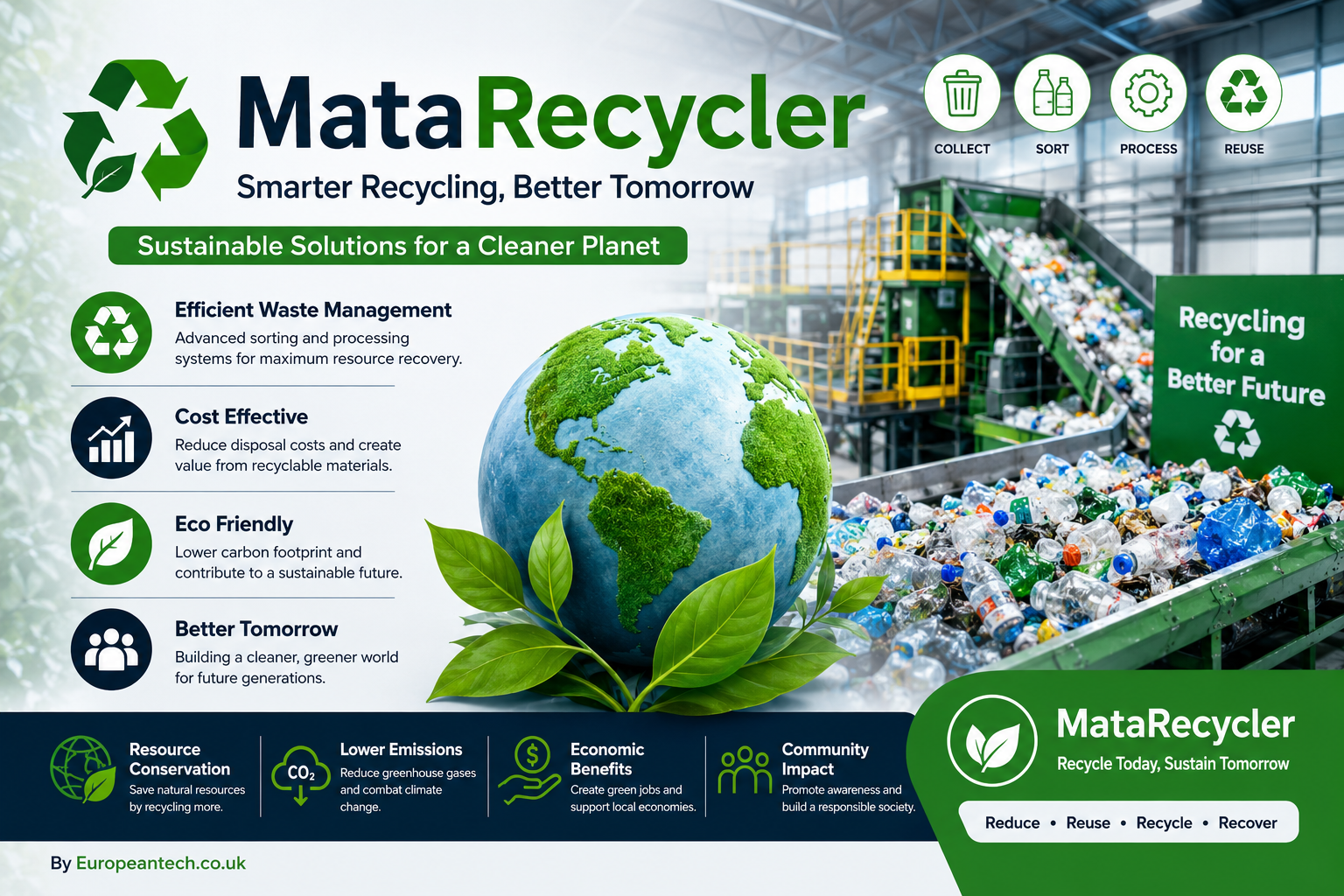
MataRecycler: Everything You Need to Know
As sustainability and circular economy initiatives continue to grow worldwide, organizations and individuals are searching for smarter ways to manage waste and recover valuable materials. MataRecycler has become a keyword associated with recycling solutions, resource recovery, and environmentally responsible waste management.
Whether you’re researching MataRecycler for educational purposes, business applications, or environmental awareness, this comprehensive guide explains everything in simple language.
Table of Contents
- What is MataRecycler?
- How MataRecycler Works
- Main Features
- Benefits of MataRecycler
- Industries Using MataRecycler
- Types of Materials Processed
- Why Recycling Matters
- Environmental Impact
- Business Benefits
- Challenges
- Future of MataRecycler
- Frequently Asked Questions
- Final Thoughts
What is MataRecycler?
MataRecycler refers to a recycling-focused solution or concept designed to improve material recovery, reduce waste, and support sustainable resource management. Its purpose is to maximize the reuse of recyclable materials while minimizing environmental impact.
Depending on the context, MataRecycler may refer to:
- Recycling management systems
- Material recovery processes
- Environmental recycling initiatives
- Waste sorting technologies
- Sustainable resource recovery programs
The main objective is reducing landfill waste while encouraging the efficient reuse of valuable resources.
Why MataRecycler is Important
Modern cities generate millions of tons of waste every year. Without proper recycling systems, this waste contributes to pollution, greenhouse gas emissions, and depletion of natural resources.
MataRecycler supports:
- Better waste segregation
- Higher recycling efficiency
- Lower environmental pollution
- Resource conservation
- Circular economy practices
As governments introduce stricter environmental regulations, recycling technologies continue becoming increasingly valuable.
How MataRecycler Works
Although implementations may vary, the general recycling process follows several important stages.
1. Waste Collection
Materials are gathered from:
- Residential homes
- Businesses
- Factories
- Construction sites
- Public recycling centers
2. Sorting
Collected materials are separated into categories such as:
- Plastic
- Glass
- Paper
- Cardboard
- Aluminum
- Steel
- Electronics
- Organic materials
Modern facilities often use:
- AI-assisted sorting
- Optical scanners
- Magnets
- Air classifiers
- Conveyor systems
3. Cleaning
Recyclable materials undergo cleaning to remove contaminants like:
- Food waste
- Dirt
- Oil
- Chemicals
- Labels
This improves recycling quality.
4. Processing
Materials are transformed into reusable raw materials.
Examples include:
- Plastic pellets
- Recycled paper pulp
- Metal ingots
- Glass fragments
5. Manufacturing
Recovered materials are then used to manufacture new products instead of relying entirely on virgin resources.
Main Features of MataRecycler
Some common capabilities include:
Smart Waste Sorting
Advanced sorting systems improve recycling accuracy.
Material Identification
Different materials are automatically recognized.
Resource Recovery
Valuable materials are extracted efficiently.
Waste Tracking
Some systems include digital tracking for waste management.
Environmental Monitoring
Organizations can monitor recycling performance and sustainability goals.
Data Analytics
Reports help optimize recycling operations.
Benefits of MataRecycler
Using efficient recycling systems provides numerous advantages.
Environmental Benefits
- Less landfill waste
- Reduced pollution
- Lower carbon emissions
- Conservation of natural resources
- Improved ecosystem protection
Economic Benefits
Businesses can benefit through:
- Lower disposal costs
- Revenue from recyclable materials
- Reduced raw material expenses
- Improved operational efficiency
Social Benefits
Communities gain:
- Cleaner neighborhoods
- Better public health
- Increased environmental awareness
- Green job creation
Industries Using MataRecycler
Many sectors rely on recycling systems.
Manufacturing
Factories recycle:
- Metals
- Plastics
- Packaging materials
Construction
Construction companies recover:
- Steel
- Concrete
- Wood
- Asphalt
Electronics
Electronic recycling includes:
- Mobile phones
- Computers
- Batteries
- Circuit boards
Healthcare
Hospitals recycle:
- Packaging
- Paper products
- Certain plastics
- Medical equipment components
Municipal Waste Management
Cities use recycling systems to manage residential waste efficiently.
Types of Materials Processed
Plastic
Includes:
- PET bottles
- HDPE containers
- Packaging films
- Plastic containers
Paper
Examples:
- Newspapers
- Office paper
- Magazines
- Cardboard
Metals
Such as:
- Aluminum
- Steel
- Copper
- Brass
Glass
Including:
- Bottles
- Jars
- Industrial glass
Electronic Waste
Examples include:
- Smartphones
- Tablets
- Laptops
- Televisions
- Computer hardware
Environmental Impact
Effective recycling significantly reduces environmental damage.
Benefits include:
- Lower greenhouse gas emissions
- Reduced mining activities
- Less water pollution
- Lower energy consumption
- Reduced deforestation
Circular Economy and MataRecycler
A circular economy focuses on keeping materials in use for as long as possible.
Instead of:
Take → Use → Throw Away
The process becomes:
Collect → Recycle → Reuse → Manufacture → Use Again
This reduces waste while preserving valuable resources.
Business Advantages
Organizations implementing recycling initiatives often experience:
Lower Operating Costs
Reduced landfill fees and disposal expenses.
Sustainability Goals
Companies can improve ESG (Environmental, Social, and Governance) performance.
Regulatory Compliance
Recycling programs help meet environmental regulations.
Improved Brand Reputation
Consumers increasingly support environmentally responsible businesses.
Challenges
Despite its benefits, recycling systems face several obstacles.
Contaminated Waste
Mixed waste reduces recycling efficiency.
Public Awareness
Many people still dispose of recyclable materials incorrectly.
Infrastructure Costs
Advanced recycling facilities require significant investment.
Market Demand
Prices for recycled materials fluctuate depending on market conditions.
Best Practices
Organizations should:
- Educate employees
- Separate waste correctly
- Reduce contamination
- Monitor recycling performance
- Invest in modern sorting technology
Future of MataRecycler
The future of recycling is expected to involve:
Artificial Intelligence
AI improves material recognition and sorting accuracy.
Robotics
Automated robots increase processing speed.
Smart Sensors
IoT devices monitor waste collection and recycling efficiency.
Blockchain
Some recycling programs use blockchain for material traceability.
Renewable Energy Integration
Facilities increasingly operate using clean energy sources.
Advantages at a Glance
| Feature | Benefit |
|---|---|
| Waste Sorting | Better recycling accuracy |
| Material Recovery | Higher resource efficiency |
| Automation | Faster processing |
| Sustainability | Lower environmental impact |
| Cost Savings | Reduced disposal expenses |
| Data Analytics | Better operational decisions |
Tips for Better Recycling
To maximize recycling success:
- Separate recyclable items properly.
- Rinse containers before recycling.
- Avoid mixing hazardous waste with household recyclables.
- Follow local recycling guidelines.
- Reduce single-use plastics whenever possible.
Frequently Asked Questions (FAQs)
What is MataRecycler?
MataRecycler is a recycling-focused concept or solution that promotes efficient waste management, material recovery, and sustainable resource use.
Who can use MataRecycler?
It can be beneficial for municipalities, businesses, educational institutions, manufacturers, and environmentally conscious individuals.
What materials can be recycled?
Common recyclable materials include paper, cardboard, plastics, glass, metals, and many types of electronic waste, depending on local recycling capabilities.
Why is recycling important?
Recycling conserves natural resources, reduces pollution, lowers greenhouse gas emissions, and supports a more sustainable economy.
Does MataRecycler support sustainability?
Yes. Recycling initiatives like MataRecycler align with sustainability goals by minimizing waste and encouraging the reuse of valuable materials.
Final Thoughts
MataRecycler represents the growing importance of smarter recycling practices in a world facing increasing environmental challenges. By improving waste sorting, enhancing material recovery, and supporting the principles of a circular economy, recycling systems help conserve natural resources while reducing pollution and landfill use.
For businesses, adopting effective recycling strategies can lower operational costs, strengthen environmental compliance, and enhance brand reputation. For communities and individuals, responsible recycling contributes to cleaner neighborhoods, healthier ecosystems, and a more sustainable future.
About the Author




1 thought on “MataRecycler: Complete Guide (2026) – Features, Benefits & How It Works”