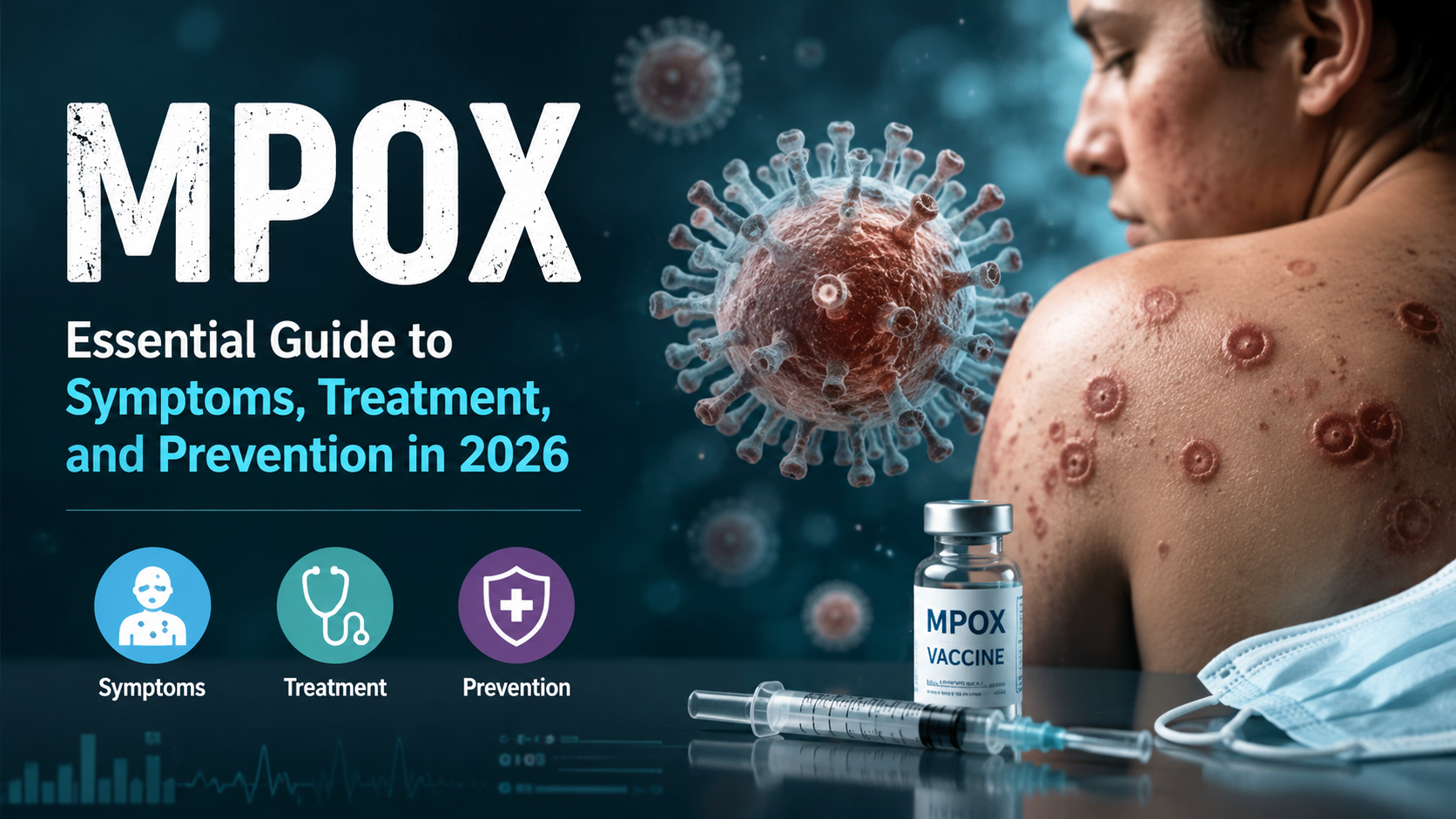
Mpox, formerly known as monkeypox, has re-emerged as a significant global health concern. While the 2022 global outbreak raised awareness, the landscape continues to evolve with new virus variants, changing transmission patterns, and updated clinical guidance. This article provides a comprehensive, evidence-based look at mpox in 2026, covering everything you need to know about symptoms, treatment options, prevention strategies, and the latest global developments.
Table of Contents
-
What is Mpox? Understanding the Basics
-
Mpox Clades: Clade I, Clade II, and the New Variants
-
How Mpox Spreads: Transmission Routes Explained
-
Mpox Symptoms: From Early Signs to Full Recovery
-
Potential Complications and Long-Term Effects
-
Diagnosing Mpox: When and How to Get Tested
-
Treatment Options for Mpox
-
Antiviral Therapies
-
Supportive Care and Symptom Management
-
Special Considerations for High-Risk Groups
-
-
Vaccination for Mpox
-
Pre-Exposure Prophylaxis (PrEP)
-
Post-Exposure Prophylaxis (PEP)
-
Comparing the Available Vaccines
-
-
Pros and Cons of Key Mpox Interventions
-
Comparison Table: Tecovirimat vs. Alternative Antivirals
-
Frequently Asked Questions (FAQs)
-
Conclusion
What is Mpox? Understanding the Basics
Mpox is a viral infection caused by the monkeypox virus (MPXV), a member of the Orthopoxvirus genus, which also includes the variola virus (the cause of smallpox). The disease was first identified in humans in 1970 in the Democratic Republic of Congo (DRC) and has since been endemic in parts of Central and West Africa. While historically considered a rare zoonotic disease with limited human-to-human transmission, the global outbreak that began in May 2022 fundamentally changed this perception.
The virus is closely related to the smallpox virus, but mpox is generally less severe and less transmissible. However, it can still cause significant illness, particularly in vulnerable populations.
Mpox Clades: Clade I, Clade II, and the New Variants
Understanding the different “clades,” or genetic groups, of the mpox virus is crucial for assessing risk and following the global situation. The virus is divided into two main clades:
-
Clade I: This clade is historically found in Central Africa, particularly the Congo Basin. It has been associated with more severe illness and higher mortality rates compared to Clade II. A systematic review and meta-analysis found that the case fatality rate (CFR) for mpox in Africa, where Clade I is prevalent, is approximately 4%, an order of magnitude higher than the global average. This highlights persistent health inequities in access to vaccines and treatments.
-
Clade II: This clade is endemic to West Africa. It has two subclades: Clade IIa and Clade IIb. The 2022 global outbreak was driven by Clade IIb, which typically causes milder disease than Clade I.
The Emergence of Clade Ib
In 2026, a significant development has been the spread of a new variant, Clade Ib. Originally confined to Central Africa, Clade Ib has now been identified in Europe and other regions. In early 2026, Milan, Italy, reported a cluster of Clade Ib cases in six male patients, marking its emergence in Europe. The characteristics of Clade Ib appear to be a combination of the severity of Clade I and the efficient transmission of Clade IIb.
In Singapore, two locally transmitted cases of Clade Ib were also identified, with health authorities assessing the risk to the general public as low. These cases were linked to sexual contact, underscoring a key transmission route for this variant. The World Health Organization (WHO) has extended its emergency recommendations for mpox due to the spread of Clade Ib.
How Mpox Spreads: Transmission Routes Explained
Mpox transmission occurs primarily through direct contact with an infected person or animal. Understanding these routes is essential for prevention.
-
Direct Contact with Lesions: The most common route of transmission is through direct skin-to-skin contact with the rash, scabs, or bodily fluids of an infected person. This is why sexual contact has been a major driver of the 2022 and subsequent outbreaks.
-
Contact with Contaminated Materials: Fomites, such as clothing, bedding, or towels that have come into contact with infectious material, can also transmit the virus. While this is a concern, particularly in household settings, it is thought to be a less common route of transmission than direct contact. Viral DNA has been found on surfaces in patient care environments, including in bathrooms and anterooms, emphasizing the need for strict hygiene measures.
-
Respiratory Droplets: The virus can be spread through respiratory droplets, but this typically requires prolonged face-to-face contact. It is not considered an airborne threat like measles or COVID-19. Interestingly, a 2022 healthcare investigation in the U.S. found that none of the 313 healthcare personnel exposed to mpox patients became infected, even those who did not wear an N95 respirator during aerosol-generating procedures. This suggests that the risk of airborne transmission in typical healthcare settings is low.
-
Other Body Fluids: Mpox viral DNA has been detected in semen, saliva, urine, and feces. While it is unclear if semen can transmit the infection, studies have shown high rates of PCR positivity in these fluids. In one multi-country study, 29 out of 32 semen samples had detectable MPXV DNA. In at least one case, replication-competent virus was isolated from a semen sample, though the risk of transmission through this route is still being researched.
Mpox Symptoms: From Early Signs to Full Recovery
The clinical presentation of mpox can vary, but it generally follows a pattern. The incubation period (the time from exposure to symptom onset) is typically 5 to 21 days.
Early Symptoms (Prodromal Phase)
The illness often begins with a fever, headache, muscle aches (myalgia), back pain, and fatigue. A key distinguishing feature of mpox compared to other “pox” diseases is pronounced lymphadenopathy (swollen lymph nodes), which can occur in the neck, armpit, or groin. In a 2026 Italian cluster of Clade Ib, all patients presented with systemic symptoms before the rash appeared.
The Rash Phase
Typically, one to three days after the onset of fever, a rash develops. The rash often starts on the face and then spreads to other parts of the body, including the palms of the hands and soles of the feet (centrifugal distribution). However, the 2022 outbreak showed that the rash can also be localized, often starting in the genital or perianal area and not spreading widely.
The rash progresses through several stages:
-
Macules: Flat, discolored spots.
-
Papules: Raised bumps.
-
Vesicles: Blisters filled with clear fluid.
-
Pustules: Blisters filled with yellowish fluid (pus).
-
Scabs: The pustules will crust over and form scabs.
The entire process usually lasts for two to four weeks, with the lesions eventually falling off. In the Milan Clade Ib cluster, all patients presented with predominant cutaneous involvement, including pustular and ulcerative lesions. Facial lesions were observed in all cases.
Potential Complications and Long-Term Effects
While many mpox cases are mild and self-limiting, the disease can lead to serious complications, especially in specific populations.
-
Bacterial Superinfection: A common complication is a secondary bacterial infection of the skin lesions. In the Milan study, one patient developed a facial methicillin-resistant Staphylococcus aureus (MRSA) skin infection.
-
Severe Pain: The lesions can be intensely painful, particularly in the anogenital area. Anorectal involvement, documented in three of the Milan patients, was associated with severe pain, and one patient reported rectal bleeding.
-
Hospitalization: While many cases can be managed at home, some require hospitalization for pain management or treatment of complications. The hospitalization rate among all mpox patients is relatively low, estimated at 4.4% based on a recent meta-analysis.
-
Severe Disease and Mortality: The risk of severe disease and death is significantly higher in immunocompromised individuals, children under one year of age, and pregnant women. A large global meta-analysis found that non-severe mpox is associated with a very low mortality rate (<0.5%), but severe disease carries a substantial risk of life-threatening complications and mortality.
-
Long-Term Effects: Mpox can cause long-term complications. These may include facial skin scars from the lesions, eye complications like conjunctivitis and corneal scarring, which can potentially lead to permanent vision loss, and neurological effects such as altered consciousness and seizures in severe cases. About 50% of those who develop conjunctivitis become bed-ridden.
Diagnosing Mpox: When and How to Get Tested
Diagnosing mpox can be challenging, as its early symptoms can resemble other common infections like chickenpox, syphilis, or herpes. If you develop a new rash, especially accompanied by fever and lymphadenopathy, it is crucial to seek medical attention.
-
PCR Testing: The most reliable method for diagnosis is a polymerase chain reaction (PCR) test performed on a sample taken directly from the lesions (skin swab). This is the gold standard.
-
Blood and Other Swabs: PCR can also be performed on oropharyngeal swabs, anal swabs, and blood samples, though viral loads are typically lower in these sites compared to skin lesions. In the Milan study, the median cycle threshold (CT) values, which are a surrogate marker of viral load, were 17.5 for skin lesions, 20 for oropharyngeal swabs, 29.5 for anal swabs, and 33 for blood samples. Lower CT values indicate higher viral load.
-
Clade Differentiation: It is now becoming standard practice to determine the specific clade of the virus through whole-genome sequencing, as this can have implications for disease severity and public health response.
Treatment Options for Mpox
Currently, there is no specific antiviral treatment approved exclusively for mpox. However, several antiviral drugs developed for smallpox have been repurposed and are used to manage severe cases or those at high risk.
Antiviral Therapies
| Drug | Mechanism | Role | Limitations/Concerns |
|---|---|---|---|
| Tecovirimat (TPOXX) | VP37 protein inhibitor (prevents viral release from cells). | First-line treatment for severe disease or high-risk patients. | Can cause resistance, especially in immunocompromised patients on long courses. Can interact with antiretroviral therapy (ART). |
| Cidofovir (Vistide) | DNA polymerase inhibitor. | Reserved for unusual circumstances (e.g., severe disease, tecovirimat resistance/unavailability). | Nephrotoxic (toxic to kidneys). Teratogenic evidence in animal studies. |
| Brincidofovir (CMX001) | DNA polymerase inhibitor (with better cellular uptake than cidofovir). | Reserved for unusual circumstances due to potential toxicity. | Can increase serum transaminases and bilirubin (liver toxicity). Teratogenic in animals. |
Tecovirimat is generally recommended as the first-line treatment when antiviral treatment is indicated. In the Milan cluster, three patients received tecovirimat, which led to a rapid improvement in painful symptoms within four days.
However, the safety and efficacy of these drugs are not firmly established. A Cochrane review found no evidence from randomized controlled trials concerning the safety and efficacy of tecovirimat, cidofovir, or brincidofovir for mpox. Very low-certainty evidence from non-randomized studies indicated no serious safety concerns, but this highlights the need for more research.
Tecovirimat Resistance is a growing concern, particularly in immunocompromised patients. Cases and clusters of laboratory-confirmed tecovirimat resistance have been reported, especially in patients on multiple or long courses of the drug. There have even been instances of resistance in people with no documentation of previous tecovirimat treatment, suggesting the circulation of a resistant variant. Worsening, non-healing, or recurrent skin lesions in immunocompromised patients receiving tecovirimat should raise the possibility of resistance.
Special Considerations for High-Risk Groups
-
Immunocompromised Patients (e.g., HIV): Treatment with tecovirimat should be started as soon as possible, and the course may need to be extended beyond the standard 14 days on a day-by-day basis. For patients not improving or progressing on tecovirimat, the addition of other therapeutics like cidofovir or vaccinia immunoglobulin may be considered. It is critical to continue or start antiretroviral therapy (ART) for HIV while managing mpox, as treatment interruption could lead to rebound viremia and complicate the disease course.
-
Pregnant and Breastfeeding Women: Due to a probable increased risk of severe disease during pregnancy and the risk of transmission to the fetus or newborn, pregnant or recently pregnant women should be prioritized for treatment. Tecovirimat is recommended first-line, though human data are limited. Cidofovir and brincidofovir are not recommended during the first trimester of pregnancy or in breastfeeding women due to evidence of teratogenicity in animal studies.
-
Children: Treatment in children and adolescents should be considered on a case-by-case basis for those with severe disease or risk factors, such as children under 1 year. The management is generally the same as for adults.
Vaccination for Mpox
Vaccination is a cornerstone of mpox prevention. The vaccines originally developed for smallpox are also effective against mpox. Several vaccines are available, but JYNNEOS (also known as MVA-BN) has become the most widely used due to its favorable safety profile.
Pre-Exposure Prophylaxis (PrEP)
PrEP is recommended for individuals at high risk of exposure, including laboratory workers handling orthopoxviruses, clinicians caring for symptomatic patients, and men who have sex with men (MSM) with multiple or anonymous sexual partners.
Post-Exposure Prophylaxis (PEP)
PEP involves vaccinating individuals after a known or suspected exposure to prevent or modify the course of the disease.
-
Timing: PEP should ideally be given within 4 days of exposure, but it can be considered for up to 14 days.
-
Indications: PEP is typically recommended for high-risk exposures. For intermediate-risk exposures, the need for PEP is determined on a case-by-case basis. The two-dose MVA vaccine series is the preferred option. If this is not available, ACAM2000 may be considered in select immunocompetent patients, but its use is limited by more side effects.
-
Effectiveness: Real-world data from the 2023 U.S. outbreak showed that the vaccine was effective in reducing the risk of developing mpox. For those who received two doses of the JYNNEOS vaccine, the vaccine effectiveness was estimated at 82%.
Comparing the Available Vaccines
| Vaccine | Type | Vaccine Effectiveness (VE) | Key Features | Contraindications/Concerns |
|---|---|---|---|---|
| JYNNEOS (MVA-BN) | Live, non-replicating Modified Vaccinia Ankara. | 82% (two doses). | Superior safety profile. Can be used in immunocompromised individuals. Favored for PEP. | Myocarditis, though rare (4.77 cases per million doses). Advised to consult with a healthcare provider if allergic to gentamicin, ciprofloxacin, or eggs. |
| ACAM2000 | Live, replication-competent vaccinia virus. | Effective, but data less robust for mpox. | Associated with more side effects. Used only as a second-line option in immunocompetent individuals when JYNNEOS is unavailable. | Contraindicated in immunocompromised individuals, pregnant women, and those with heart conditions. |
| LC16 | Live, attenuated, replication-competent. | Effective. | Used in some countries, but not as widely available as JYNNEOS. | Contraindicated in immunocompromised individuals. |
Pros and Cons of Key Mpox Interventions
| Intervention | Pros | Cons |
|---|---|---|
| Tecovirimat Treatment | – Recommended first-line antiviral for severe disease. – Rapid improvement of symptoms, particularly pain. – Generally well-tolerated. |
– Resistance is a growing concern, especially in immunocompromised patients. – No proven efficacy from randomized controlled trials. – Requires close monitoring for post-treatment lesions. |
| JYNNEOS Vaccination | – 82% vaccine effectiveness for two doses. – Excellent safety profile with few serious side effects. – Can be used as PEP and PrEP, including for immunocompromised individuals. |
– Two doses required for optimal protection. – Peak immunity takes about 14 days after the second dose. – Availability can be an issue in some regions. |
| ACAM2000 Vaccination | – Effective smallpox vaccine that also protects against mpox. | – More side effects and contraindications than JYNNEOS. – Replicating virus can cause severe complications in immunocompromised individuals and pregnant women. |
Comparison Table: Tecovirimat vs. Alternative Antivirals
| Feature | Tecovirimat | Cidofovir | Brincidofovir |
|---|---|---|---|
| Primary Role | First-line for severe mpox. | Reserve for resistant, severe, or complicated cases. | Reserve for resistant, severe, or complicated cases. |
| Mechanism | Prevents viral release (VP37 inhibitor). | Inhibits viral DNA polymerase. | Inhibits viral DNA polymerase (pro-drug of cidofovir). |
| Key Safety Concerns | Potential for resistance. | Nephrotoxicity, teratogenicity. | Hepatotoxicity, teratogenicity. |
| Evidence Base | Limited; no RCT evidence for mpox. | Very limited; primarily from smallpox use. | Very limited; primarily from smallpox use. |
| Use in Pregnancy | Recommended first-line (limited data). | Contraindicated in first trimester/breastfeeding. | Contraindicated in first trimester/breastfeeding. |
Frequently Asked Questions (FAQs)
1. What is the difference between mpox and chickenpox?
Mpox and chickenpox are caused by entirely different viruses. Mpox is an orthopoxvirus (related to smallpox), while chickenpox is caused by the varicella-zoster virus (a herpesvirus). In mpox, a key distinguishing feature is pronounced lymphadenopathy (swollen lymph nodes) before the rash appears; this is uncommon in chickenpox. Additionally, mpox lesions are often larger, deeper, and progress through stages more slowly than chickenpox lesions.
2. I was vaccinated against smallpox as a child. Am I protected against mpox?
If you were vaccinated decades ago, your protection is likely minimal. The level of immunity wanes over time. The CDC and WHO recommend vaccination for individuals at current risk of exposure, even if they have been previously vaccinated.
3. How long after exposure will I know if I have mpox?
The incubation period is usually 5 to 21 days. Monitor for the development of fever, swollen lymph nodes, and the characteristic rash.
4. Can I get mpox from a toilet seat or other surfaces?
It is possible but considered less common. The virus can survive on surfaces and fomites like linens and clothing. However, transmission through this route is less efficient than direct skin-to-skin contact.
5. What should I do if I think I have mpox?
Seek medical advice immediately. Do not go to a clinic or emergency room without calling ahead first so they can take precautions to prevent exposing others. Inform your healthcare provider about your symptoms and potential exposures.
6. Is there a treatment for mpox?
Yes, for severe cases or high-risk individuals. The antiviral drug tecovirimat (TPOXX) is the first-line treatment. Symptomatic management (pain relief, hydration) is also a key part of care.
7. What is the risk of severe disease or death from mpox?
The overall risk is low for healthy individuals. A 2026 meta-analysis found that for non-severe mpox, complications and death are extremely rare (<0.5%). However, the risk is significantly higher for people who are immunocompromised, very young children, and pregnant women, with mortality rates in these groups being substantially higher.
8. How can I protect myself from mpox?
Avoid close, skin-to-skin contact with people who have a rash or sores. Practice good hand hygiene. If you are in a high-risk group, talk to a healthcare provider about vaccination (PrEP). During sexual contact, avoiding contact with lesions is crucial.
9. Is mpox considered a sexually transmitted infection (STI)?
While mpox is not exclusively an STI, sexual activity, particularly among men who have sex with men, has been a primary driver of the global outbreak. This is because the virus spreads through close physical contact, which often occurs during sex. It can also spread through non-sexual routes.
10. Are there different variants of the mpox virus, and do they matter?
Yes, the two main clades are Clade I (historically more severe) and Clade II (milder). The emergence of Clade Ib in 2026 is a significant development, as it seems to combine the severity of Clade I with the efficient spread of Clade IIb. This makes it a greater public health concern and highlights the need for continued surveillance and vaccination.
Conclusion
Mpox in 2026 presents a continually evolving public health challenge. The emergence of new clades like Ib demonstrates the virus’s capacity to adapt and spread. While the general public’s risk remains low in many regions, the disease persists in communities with close contact, particularly within specific sexual networks.
Key takeaways for staying safe and informed:
-
Vaccination is effective: The JYNNEOS vaccine offers 82% effectiveness after two doses. If you are in a high-risk group, seek vaccination.
-
Be aware of the symptoms: Fever and swollen lymph nodes followed by a rash are the hallmarks. Early testing and diagnosis are critical, especially for severe cases.
-
Seek early treatment: If you develop severe symptoms or belong to a high-risk group (e.g., immunocompromised, pregnant), prompt treatment with tecovirimat is recommended.
-
Global health inequities: The higher CFR in Africa highlights the urgent need for equitable global access to vaccines, antivirals, and diagnostics. This is not just a local problem but a global one that requires sustained international collaboration and investment.
About the Author