Introduction
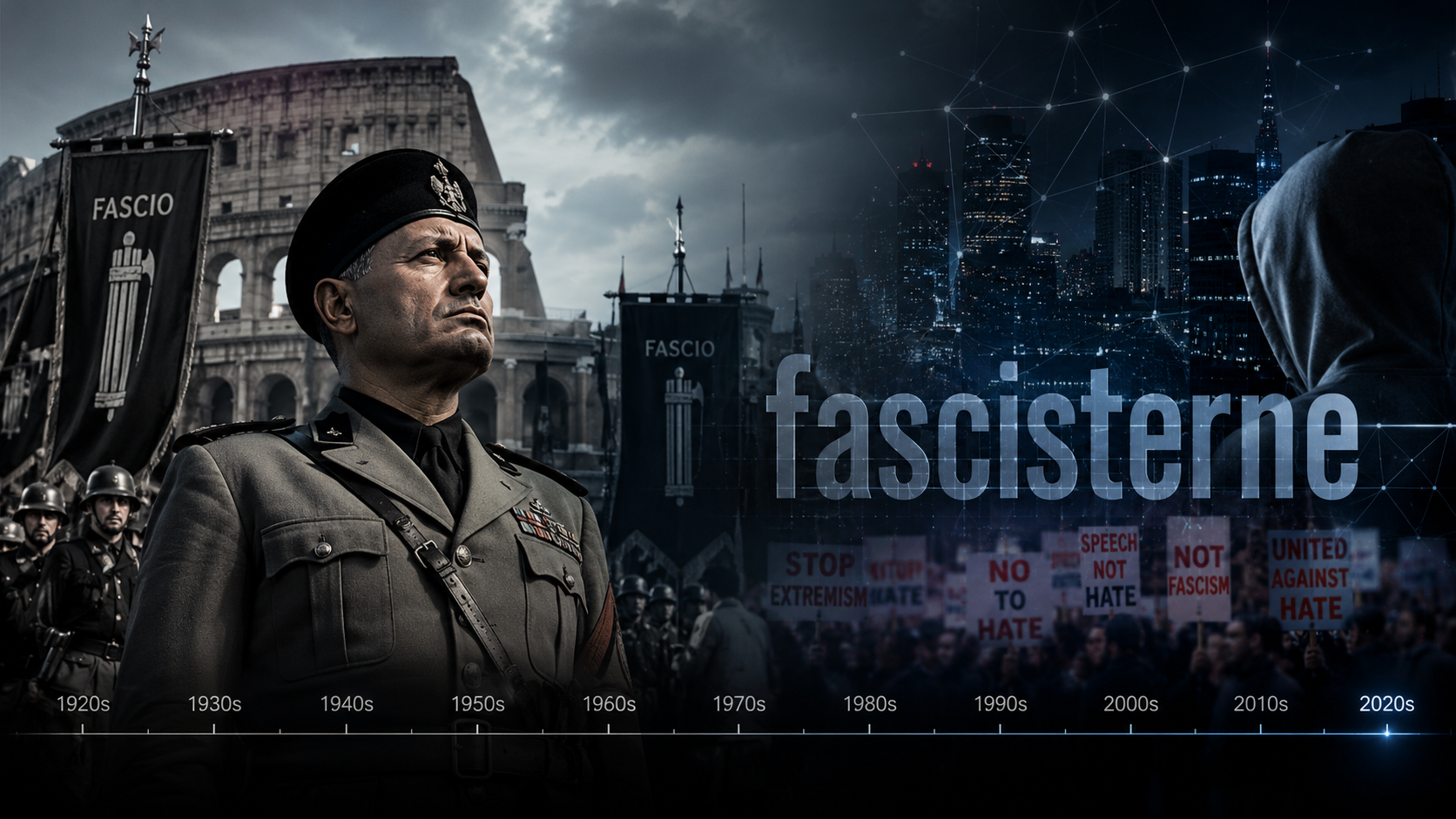
In the turbulent landscape of 20th-century Europe, few political movements left as profound a scar as fascism. In the Danish language, the word used to describe the adherents of this ideology is fascisterne — simply meaning “the fascists” . But this term is far more than a direct translation. It is a historical label, a political accusation, and a warning from the past.
The word carries the weight of dictatorship, war, and the violent suppression of freedom . Understanding fascisterne is not merely an academic exercise; it is a crucial tool for recognizing authoritarian patterns in our own time. This article delves deep into the origins of fascism, the historical context of “fascisterne” in Denmark, and the modern relevance of the term.
Table of Contents
-
The Origins of Fascism
-
The Italian Roots and Mussolini
-
Core Ideology of Fascism
-
-
“Fascisterne” – The Danish Context
-
The Word’s Etymology and Usage
-
Fascism in Denmark During the 1930s and WWII
-
The Influence of the Nazi Occupation
-
-
Key Beliefs Associated with Fascisterne
-
Ultranationalism and Authoritarianism
-
Opposition to Democracy
-
-
Fascisterne in the Modern Era
-
Neofascism and Right-Wing Movements
-
The Italian Example: CasaPound
-
-
The Legacy and Modern Usage of the Term
-
From Historical Label to Modern Insult
-
The Importance of Remembering
-
The Origins of Fascism
The Italian Roots and Mussolini
To understand the term fascisterne, we must start in Italy. The ideology was founded by Benito Mussolini, a former socialist journalist who embraced nationalism. In 1919, Mussolini formed the Fasci Italiani di Combattimento (Italian Fasces of Combat). The name comes from the Latin word fasces, an ancient Roman symbol of authority: a bundle of rods tied around an axe . This symbolized unity and strength under a powerful leader.
Mussolini skillfully exploited the fear of socialism and the chaos that plagued Italy after World War I. His followers, known as the Fascisti (or “fascisterne” in Danish plural), wore black shirts and used violence against their political opponents to establish control . In October 1922, Mussolini marched on Rome and was appointed Prime Minister, effectively seizing power .
Core Ideology of Fascism
Fascism is notoriously difficult to define precisely, but scholars like Stanley G. Payne describe it as a form of revolutionary ultranationalism that seeks to regenerate the nation through authoritarianism, corporatism, and the use of violence . It is characterized by:
-
A Dictatorial Leader: The belief in one supreme leader who embodies the nation’s will.
-
The Cult of the State: The state is considered more important than the individual.
-
Ultranationalism: An extreme, often expansionist, form of nationalism that views other nations as inferior.
-
Anti-Communism and Anti-Liberalism: Fascism arose as a violent reaction to the spread of socialism and the perceived weaknesses of liberal democracy.
“Fascism does not, generally speaking, believe in the possibility or utility of perpetual peace… War alone keys up all human energies to their maximum tension and sets the seal of nobility on those peoples who have the courage to face it.” – Benito Mussolini, The Doctrine of Fascism (1932)
“Fascisterne” – The Danish Context
The Word’s Etymology and Usage
The Danish word fascisterne is the plural, definite form of fascist, which has its roots in the Italian fascista . It translates directly to “the fascists.” The term was adopted in Denmark early on to describe Mussolini’s followers and, later, the German Nazis . It is, and has always been, primarily a derogatory term used by opponents of the ideology .
Fascism in Denmark During the 1930s and WWII
While fascism gained massive support in Germany and Italy, it never achieved the same level of popularity in Denmark. Danish society was deeply rooted in democratic traditions, and movements that mirrored fascist ideology remained on the political fringes .
The most notable Danish fascist party was the National Socialist Workers’ Party of Denmark (Danmarks Nationalsocialistiske Arbejderparti, DNSAP). It was directly inspired by Hitler’s NSDAP in Germany. However, the DNSAP consistently failed to win significant support in elections, never securing more than a few seats in the Danish parliament (Folketing) .
The Influence of the Nazi Occupation
The German occupation of Denmark from 1940 to 1945 changed the dynamics for Danish fascists. While some Danish fascists and right-wing nationalists collaborated with the occupying forces, they largely remained a marginalised group. The occupation itself was a devastating blow to their reputation. Most Danes viewed the German presence as a violation of their sovereignty and directed their anger toward the occupiers and their collaborators .
This period is a stark reminder of how fascist movements often rely on external force to gain a foothold. The term fascisterne became intrinsically linked with the brutal realities of Nazi occupation, cementing its place as a term of contempt in Danish memory.
Key Beliefs Associated with Fascisterne
Ultranationalism and Authoritarianism
The ideology of the fascisterne hinges on the idea that the nation is a supreme entity to which all individuals must submit. This often translates into xenophobia and a strict hierarchy. In Italy, Mussolini’s fascists believed in the rejuvenation of the Italian people and the creation of a “new man” – a disciplined, powerful, and obedient subject .
This ultranationalism often manifests in anti-immigration sentiment and the targeting of minorities. Modern research emphasizes that a core element of fascism is this belief in “the people” versus “the enemy,” and the use of violence to eliminate the perceived threat .
Opposition to Democracy
The fascisterne fundamentally rejected democracy and the concept of individual rights. They viewed democratic systems as weak, slow, and corrupt, advocating instead for a strong, authoritarian leader who could act decisively without parliamentary debate. They also despised egalitarianism, believing in a rigid social hierarchy where everyone “knew their place” .
Fascisterne in the Modern Era
Neofascism and Right-Wing Movements
While the classical fascist movements of the 1930s and 40s are largely gone, the ideas of the fascisterne have not vanished. Modern neofascist and radical right-wing groups often recycle fascist aesthetics and core ideas, though they may use updated rhetoric.
The Italian Example: CasaPound
A prominent example of a modern movement that draws heavily from fascist tradition is Italy’s CasaPound (literally “Pound House,” named after the American poet Ezra Pound, who was an admirer of Mussolini). This neo-fascist group occupies buildings and operates as a social center for its supporters, even housing families .
CasaPound is open about its admiration for Mussolini and uses the old fascist symbol of the fasces. Like the original fascisterne, they employ the Roman salute (a stiff-armed salute mimicking the Nazi salute) and are known for using intimidation tactics against political opponents and migrants .
How CasaPound operates:
-
Social Activism: They attempt to build support by providing services like housing to those in need, a tactic known as “social fascism.”
-
Street Patrols: They conduct “street patrols” and “beach patrols” targeting immigrants and individuals they deem “undesirable,” claiming to restore order .
-
Anti-Immigration: They fiercely oppose immigration, demanding that migrants be sent back to their home countries and aggressively opposing housing for refugees.
“Immigrationen skal bekæmpes. Stop bådene over middelhavet nu… de der er kommet hertil skal sendes hjem.” – Anonymous CasaPound activist
The Legacy and Modern Usage of the Term
From Historical Label to Modern Insult
Today, the word fascisterne is used primarily in historical and academic discussions. However, it also frequently appears in modern political debates. Using the term today is a powerful and often controversial act. To label someone a fascist is to accuse them of being authoritarian, intolerant, and dangerous .
It is important to distinguish between the historical fascisterne — who were part of a specific 20th-century political movement — and the modern usage, which often serves as a warning or an accusation against authoritarian behavior. Using the term lightly can dilute its meaning, but it remains a necessary label for ideologies that advocate the suppression of democratic rights.
The Importance of Remembering
Understanding the history of fascisterne is more important than ever. The conditions that allowed fascism to rise—economic instability, fear of social change, and a yearning for strong leadership—are still present in many societies . By studying the past, we can better identify the warning signs of authoritarianism in the present and defend the democratic values that the fascisterne sought to destroy.
Frequently Asked Questions
1. What does “fascisterne” literally mean?
It is the Danish definite plural form of the word “fascist,” simply translating to “the fascists” .
2. Where did the word “fascist” come from?
The English and Danish words derive from the Italian fascista, which comes from fascio (“bundle”). This symbol (fasces) was an ancient Roman symbol of authority, representing strength through unity .
3. Was there a fascist government in Denmark?
No. Denmark remained a democracy throughout the 20th century. While there were small fascist parties, like the DNSAP, they never gained significant power .
4. What is the difference between a “fascist” and a “populist”?
While both may oppose the establishment and use nationalist rhetoric, fascism is authoritarian and anti-democratic. It often justifies the use of violence to achieve its goals, which distinguishes it from most forms of populism .
5. What does “fascistone” mean?
This is an Italian term. It is a derogatory term used by anti-fascists to describe a fervent or hardcore fascist, often someone with influence or deep conviction .
6. Are there any fascist movements today?
Yes. Groups like CasaPound in Italy openly identify with and promote fascist ideology . Many other far-right groups around the world also adopt neo-fascist ideas.
7. Why is it important to learn about the fascisterne?
History often repeats itself in new forms. By understanding how fascism rose, we can more easily recognize the warning signs of authoritarianism today and safeguard democratic values .
8. Was anti-Semitism a key part of fascism?
Yes. Anti-Semitism was a core component of Nazi ideology and was also present in many other fascist movements across Europe .
Conclusion
The word fascisterne is a powerful historical relic that remains relevant in our modern world. It encapsulates a dark chapter in European history when ultranationalism, authoritarianism, and violence threatened to destroy democracy. From the rise of Mussolini in Italy to the marginal fascist groups in Denmark and the neo-fascist groups like CasaPound today , the label serves as a stark warning.
By understanding the true meaning and historical weight of fascisterne, we equip ourselves to identify and resist similar ideologies in our own time. As the saying goes, those who do not learn from history are doomed to repeat it. The study of fascism is a vital lesson in the fragility of freedom and the eternal vigilance required to protect it.
About the Author